
Nighttime Exchange of Fire in Iran, Trump Says a Deal May Be Near
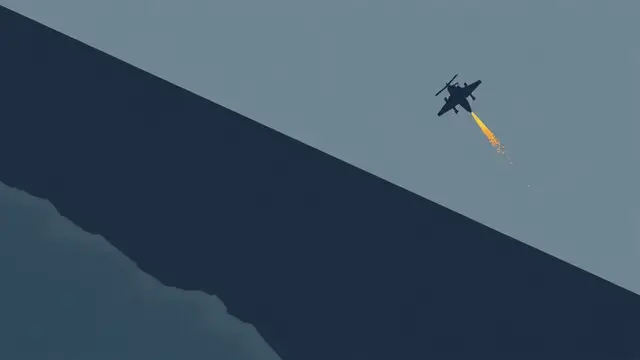
The United States struck 20 targets in Iran overnight Wednesday in response to the downing of an American Apache helicopter, according to U.S. Central Command (CENTCOM). The statement said the strikes were a "proportional response to Iran's unjustified aggression." In response, Iran launched a barrage of missiles and drones toward American targets in the Gulf states and Jordan.
After the attack, Iran strongly condemned the "American aggression" and continued to issue threats in a statement released by the Iranian Foreign Ministry: "We remind that the countries of the region are responsible for preventing the use of their territory and facilities by the American military and the Israeli entity. The United States attacked ruthlessly in southern Iran under the pretext of shooting down an Apache helicopter over the Strait of Hormuz. This is a blatant violation of the UN Charter, which proves the criminal nature of the current American administration."
Meanwhile, U.S. President Donald Trump reposted the CENTCOM statement and posted on his social network, adding a video of a famous scene from the series "The West Wing," in which an American president opposes a proportional response. In addition, an American official told CNN: "The strikes were meant as a warning shot, the president believes they will not hurt the negotiations to end the war."
At the same time, the Iranian news agency Mehr reported that a distant explosion was heard on Qeshm Island. According to the report, "it is possible that the source of the explosion was movements made in the Strait of Hormuz." The American attack helicopter, an Apache, crashed yesterday near the Strait of Hormuz, and the two crew members were rescued safely.
The American strikes came after Trump referred to the helicopter downing and said: "The Iranians shot down one of our most sophisticated helicopters, which was patrolling over the Strait of Hormuz." Trump wrote on his Truth social network, which he owns: "Two pilots were involved in the incident, both were unharmed. Nevertheless, the United States must, naturally, respond to this attack." Shortly afterward, a senior American official told the Saudi Al-Hadath network that the Iranian drone collided with the helicopter off the coast of Oman: "We assess that it was deliberate."
Meanwhile, Iran's ambassador to the UN, Amir Saeid Iravani, confirmed yesterday that talks between Washington and Tehran are still continuing and are being mediated by Pakistan, with both sides continuing to exchange positions in an attempt to reach a final version of an agreement. However, the chairman of the National Security Committee in the Iranian parliament, Ebrahim Azizi, told CNN that unlike the American president, he does not believe the agreement is close. "If we could be convinced that there is sincerity among the Americans," he said, taking a jab at Trump, "and especially the President of the United States, and if we could be sure that the Americans comply with the rules of negotiations, we would have no problem conducting such talks."
When asked about the points of contention in the negotiations, Azizi denied Trump's remarks and said there is "no discussion" about the issues related to nuclear matters. At the same time, he outlined the Islamic Republic's terms for an agreement, stressing the economic and financial sphere and the lifting of sanctions. He also referred to the issue of Lebanon and said: "Under no circumstances will we give up the resistance axis."
The same event, reported separately by each outlet. Open a few to compare what different newsrooms emphasize — and what they leave out.



Not the same event — other stories that share this one’s people, places, or theme: background, reactions, and follow-ups.

