ISIS Rebuilds Near Israel's Golan Heights, Raising Regional Security Concerns

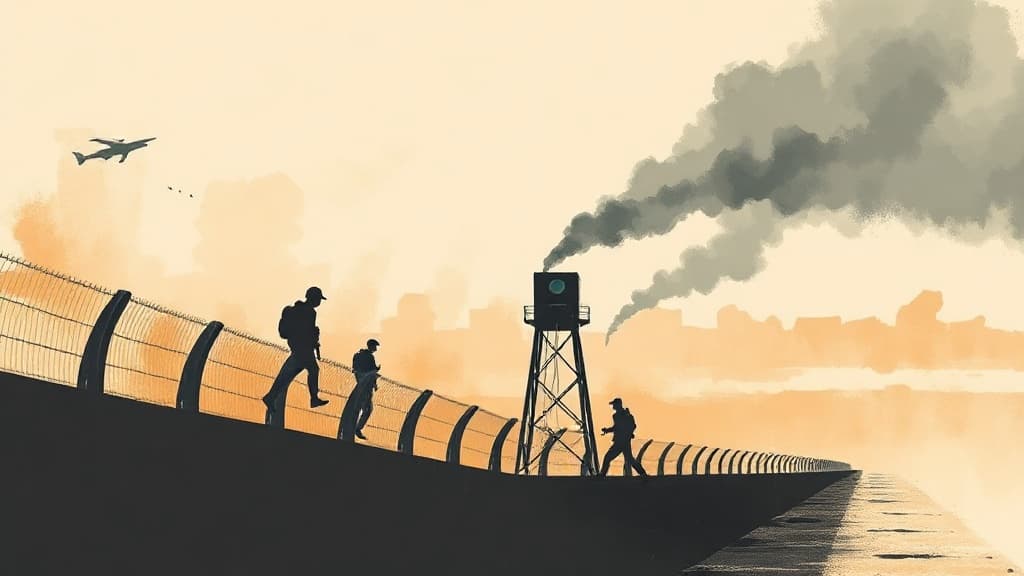
A report by the Alma Center for Security Challenges in the North warns that ISIS is transitioning from hiding to establishing a logistical foothold in southern Syria near the Israeli border. The research highlights that southern Syrian provinces, especially Quneitra and Daraa, have evolved into geopolitically significant areas adjacent to the Golan Heights and borders with Jordan and Lebanon.
The report details recent activities showing ISIS's shift from low-profile concealment to active logistical consolidation. Syrian internal security forces recently dismantled a terror cell in Khan Arnabah near Quneitra, which operated a workshop for manufacturing weapons, storing arms, preparing explosives, and supplying other cells deeper in southern Syria. The cell was led by a field operative using multiple aliases, indicating high operational security and deep local embedding.
The Alma Center identifies a "triangle of death" in southern Syria, posing three interconnected risks: proximity to Israel enabling potential attacks or provocations near the Golan Heights; active smuggling routes used by multiple militias including Hezbollah to replenish arms in Lebanon; and ISIS exploiting the complex terrain and regional distractions to rebuild with relative impunity. The report warns that these smuggling networks blur lines between different armed groups, potentially facilitating weapon flows to various jihadist factions.
The center cautions that southern Syria's continued status as a haven for terrorist groups and a logistical corridor for arms trafficking threatens regional stability. Failure to dismantle these infrastructures and block smuggling routes could allow the ISIS threat to spill over into Lebanon, Jordan, and Israel. The report stresses that addressing the threat requires a comprehensive approach treating southern Syria as a single strategic zone, combining border control, terror infrastructure dismantling, and supply network disruption.
In conclusion, the Alma Center warns that as long as the security vacuum persists in southern Syria, ISIS is likely to transform from a scattered presence into a stable operational infrastructure dangerously close to Israel, Jordan, and Lebanon.