
Ahmad Vahidi emerges as Iran’s hard-line power broker after missile strike on Israel
Translated & summarized from Ynet by baba
Ahmad Vahidi, the commander of Iran’s Revolutionary Guards, is said to have driven the latest missile attack on Israel and is now shaping Tehran’s negotiations with the United States. The Wall Street Journal reports that his hard-line position is complicating a possible deal, while Iran has not approved the draft agreement.
The story in 5 lines · by baba
- Vahidi pushed Iran to fire ballistic missiles at Israel, overriding more cautious leaders.
- The strike came amid talks with the United States over a possible initial deal.
- Vahidi now strongly influences Iran’s stance on Hezbollah, Hormuz, and frozen assets.
- He has a long security background and led the Quds Force in the past.
- He is sanctioned by the U.S. and wanted by Interpol over the 1994 Buenos Aires bombing.
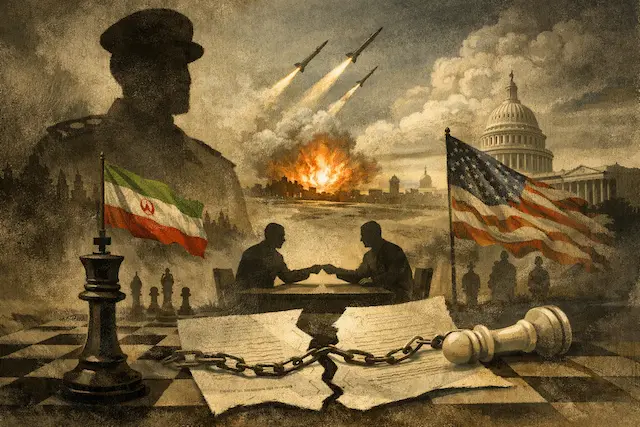
Iran’s decision to fire ballistic missiles at Israel for the first time in months was not just a military signal to Jerusalem, but also evidence of a new balance of power in Tehran. According to a Wall Street Journal report, the push came from Islamic Revolutionary Guard Corps commander Ahmad Vahidi, who has become one of the regime’s most influential figures.
Iranian and Arab sources quoted by the paper said Vahidi pressed for a forceful strike on Israel to halt attacks on Hezbollah in Beirut. More moderate officials wanted to wait, fearing an attack could derail contacts with the United States and a possible deal that could help rescue Iran’s economy. Vahidi won the argument, persuaded Iran’s Supreme National Security Council to back the launch, and the attack led to the first exchange of fire between Iran and Israel since the April 8 ceasefire.
The report says Vahidi has also become a central voice in negotiations with Washington, pushing a hard line that makes a deal harder. President Donald Trump and mediators said a first agreement could be close, possibly even by Monday, but Tehran has not accepted the draft. The proposed deal would reportedly open the Strait of Hormuz and lift the American blockade, while delaying harder issues such as Iran’s nuclear program and frozen overseas assets. Vahidi and the Guard are described as the main obstacle.
At 67, Vahidi took command after his predecessor, Mohammad Pakpour, was killed on the first day of Operation Roar of the Lion. He began in the Guards’ intelligence wing in 1982, helped found the Quds Force and later led it, and in the 1990s helped turn Hezbollah into Lebanon’s dominant military power. He has also served as defense minister, interior minister and a Guard deputy commander, was sanctioned by the United States in 2010, and is wanted by Interpol over Argentina’s 1994 Buenos Aires Jewish center bombing. He later oversaw the crackdown on the 2022 hijab protests and continues to shape Iran’s stance on talks, Hezbollah, and the Strait of Hormuz.
Mentioned





