Researchers Discover How Deep-Sea Isopods Survive for Years Without Food

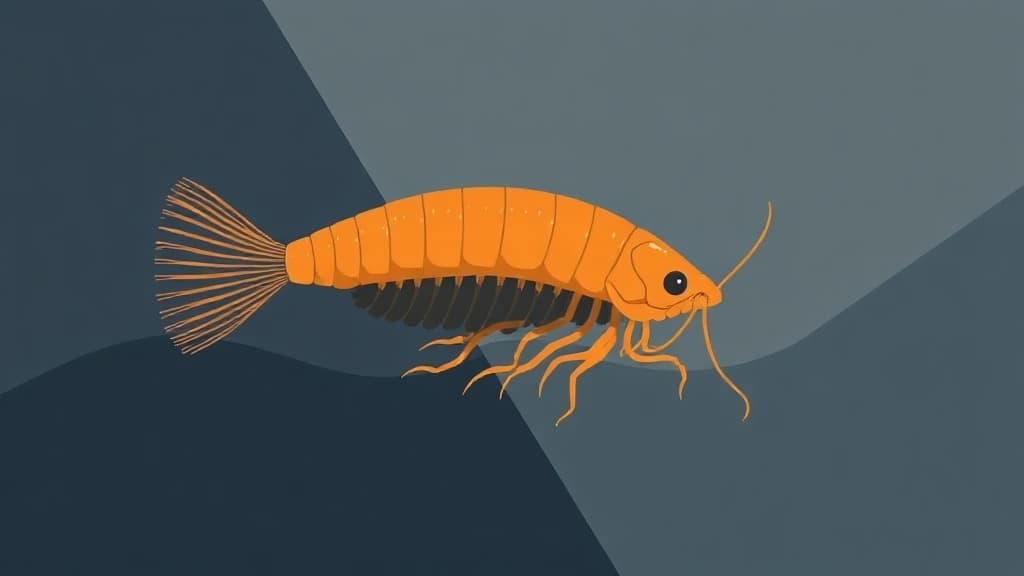
A new study reveals how giant deep-sea isopods combine a bacterial gene with epigenetic mechanisms to slow their metabolism, a finding that could change our understanding of survival in extreme conditions and may even have medical implications. Giant isopod, this animal can live for up to 5 years without food (Photo: Prof. Li Xinzheng)
In the depths of the ocean, far from sunlight and in conditions of extreme food scarcity, there are extraordinary creatures with almost unimaginable survival abilities. One of them is the giant isopod, also known as an equal-legged crustacean, a crab-like creature capable of surviving for more than five years without food. Now, a new study published in the journal Cell reveals the biological mechanism that makes this possible, and even shows that it can be transferred to human cells.
The study, conducted by a team from the Institute of Oceanology of the Chinese Academy of Sciences, focused on two species of isopods from the genus Bathynomus, which live hundreds of meters below sea level. The researchers sought to understand how relatively large creatures manage to survive in such a resource-poor environment. The findings point to a dual survival strategy. First, the isopods have a huge stomach that takes up about two-thirds of their body volume, allowing them to store large amounts of food when a rare opportunity arises, such as whale carcasses. Their stomachs also contained special chlamydia bacteria associated with fat storage, not normal digestion.
The second, and more fascinating, part lies in a gene called ND1, a gene that originated in a symbiotic bacterium and was transferred to the isopods through horizontal gene transfer. After integrating into the genome, the gene underwent duplication and epigenetic changes that led to especially high expression. The result is the ability to dramatically regulate the rate of metabolism. Operational report: This is how the United States is preparing for a crazy attack on Iran David Cohen and B. Nisani | 15:04
To test the gene's effect, the researchers inserted ND1 into zebrafish, worms and human cells. The results were surprising: at normal temperatures, the gene דווקא accelerated metabolism and reduced resistance to starvation. However, under cold conditions, which simulate the deep-sea environment, the opposite effect occurred, mitochondrial activity decreased, the metabolic rate slowed, and resistance to starvation increased. In zebrafish, for example, there was a 37% increase in the ability to survive without food.
The researchers explain that this is a kind of temperature-dependent metabolic switch, allowing the animal to balance energy consumption with survival needs. According to them, this is the first case in which a large marine creature uses a combination of horizontal gene transfer and epigenetic optimization to control energy allocation. Beyond the biological understanding, the discovery could have broad implications. The ability to control metabolic rates in human cells is drawing interest in medicine, especially in the contexts of starvation, metabolic diseases, and perhaps even lifespan extension.

