
One Year After Air India Crash, Sole Survivor From Seat 11A Says the Trauma Still Hasn’t Ended
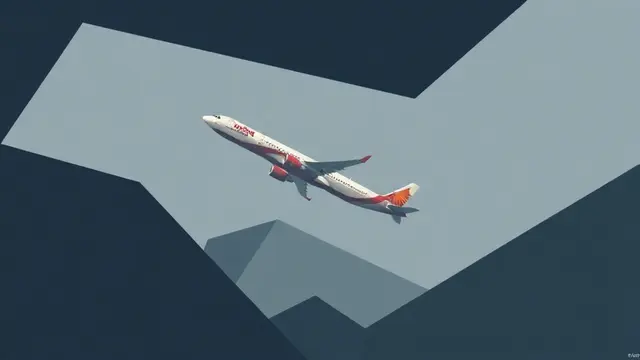
Exactly one year after the crash of an Air India plane in India that killed 260 people, the sole survivor among the aircraft’s passengers says today, Thursday, that he is still struggling to recover from the trauma, carrying emotional scars and facing financial hardship. He is particularly troubled by the fact that he has not yet received full answers about the disaster, in which he lost his brother, who was also on the plane.
The disaster in India occurred on June 12, 2025, when an Air India Boeing 787 Dreamliner took off from Ahmedabad for London, but shortly after takeoff crashed into a medical college. The crash killed 241 passengers and crew members on board, including 169 Indian citizens and 52 Britons, as well as 19 people on the ground. Another 67 people were seriously injured. The large number of Britons who died makes the disaster one of the deadliest aviation accidents ever for Britons.
The sole survivor among the passengers was 39-year-old Vishwash Kumar Ramesh, a dual British-Indian citizen, who was on his way back to the British city of Leicester, where he has lived for about 20 years, after visiting family in India. Around the world, people were stunned when he emerged from the plane injured but walking on his own, and media outlets across the globe published a photo of his boarding pass showing he was seated in 11A, relatively near the front of the plane. His brother, who was sitting several rows behind him, did not survive.
Even now, one year after the disaster, the full results of the crash investigation have not been published. A preliminary investigation released last year found that two of the aircraft’s fuel switches moved to the “cutoff” position immediately after takeoff, stopping fuel supply to the engine, but the full circumstances have not been revealed. India’s civil aviation minister said the investigation has reached its final stage, and that the report will be completed no later than the anniversary of the crash, meaning tomorrow.
The Wall Street Journal reported in July last year that, according to sources familiar with the investigation, a recording of a conversation between the two pilots obtained from the black box indicates that the captain, 56-year-old Sumeet Sabharwal, was the one who moved the switches to the cutoff position, and that first officer Clive Kunder asked him why he had done so. According to the report, Kunder expressed surprise and then panic, while Sabharwal, the more experienced of the two, appeared to remain calm. The report did not say whether the assessment was that he had cut off the fuel supply accidentally or intentionally.
In an interview with the British news agency Press Association marking one year since the disaster, Ramesh said today that he is still waiting for answers. “What many people may not fully understand is that the trauma did not end on the day of the disaster,” he said. “I live with significant emotional scars, with the loss of my brother and with the constant unanswered questions about how and why this happened. I know these questions are not only in my mind, they are on every affected family’s mind. More than anything else, people need integrity, transparency and answers. Nothing will ever change what happened, but the families deserve clarity.”
Ramesh told the British agency that he is still struggling to cope with the death of his brother Ajay, who was killed in the disaster. “His death took away all my happiness,” he said.
In Britain, it has been reported that after the disaster Ramesh received 21,500 pounds from Air India to support his wife and 5-year-old son, but he continues to face financial difficulties as well as mental and emotional challenges. His lawyer said that following the crash he was unable to return to work as normal, and his family is living on less than 1,000 pounds a month. According to Ramesh, all his attempts to meet with Air India’s chief executive have been unsuccessful.




Ask About This Article
Duki reads it, and every newsroom on the same story, then answers with sources.