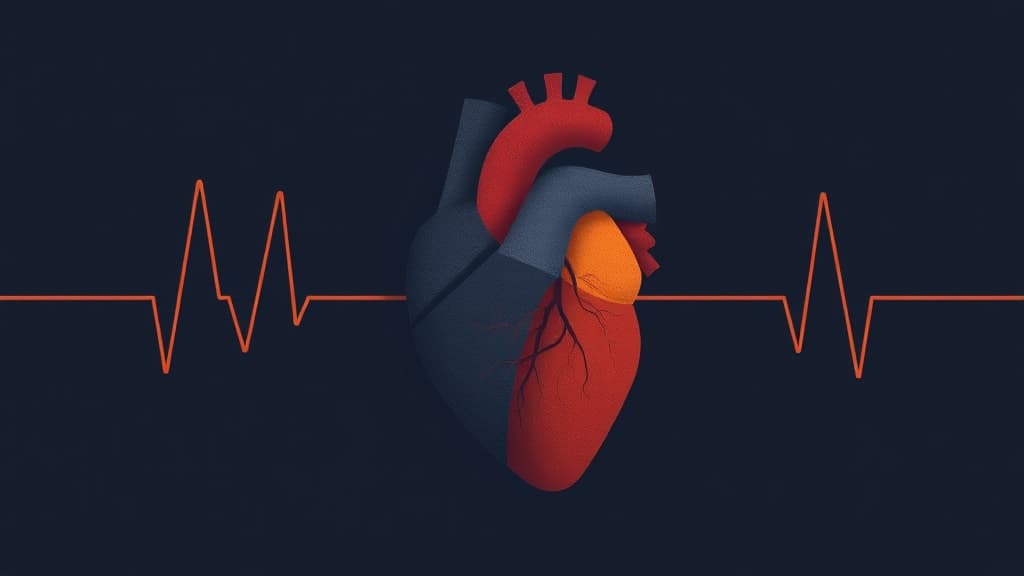
Rare condition: Woman with reversed heart position undergoes pacemaker implantation

A 70-year-old woman from Safed suffered for weeks from weakness, dizziness and shortness of breath until an ECG revealed a conduction disorder in her heart that required a pacemaker. But then doctors at Ziv Medical Center had to deal with a rare case in which the heart was located on the right side.
Yafa, 70, from Safed, has spent years teaching at-risk youth and leads an active lifestyle that includes daily walks and Pilates classes. But in recent weeks she began to feel that something was wrong. “Every time I climbed two or three stairs I started to gasp for air,” she said. “I felt that something bad was happening to me.” She described more than a month of weakness, dizziness and near-fainting sensations. Because of this, Yafa turned to community doctors and underwent various examinations, but she said no one understood the source of the problem. “They did tests on me and said it might be related to the spine, maybe diabetes or even stress because of the war.”
Last week Yafa went to her family doctor after feeling that her condition was worsening. “He did an ECG and then said I had to go to the hospital immediately.”
She arrived at Ziv Medical Center in Safed for further evaluation and treatment, and told the staff that since childhood she has known that her heart is on the right side. When doctors performed an X-ray to confirm the heart’s location, it turned out that not only the heart was on the opposite side, but also the liver and spleen. The findings confirmed that Yafa was living with a rare condition of complete organ reversal, a phenomenon in which the body’s organs are arranged as a mirror image of the normal anatomical structure.
Dr. Mousa Saad, a senior cardiologist and head of electrophysiology at Ziv Medical Center, explained that she was suffering from advanced atrioventricular conduction block that required a pacemaker implantation. “We knew in advance that this was a patient with complete organ reversal, dextracardia, so careful planning was needed before the procedure,” he said.
According to him, the team carried out a special CT scan to map the chest. “In such cases there may also be changes in the anatomy of the major blood vessels and their connection to the heart, so it is important to understand the anatomy exactly before proceeding. We wanted to make sure there were no surprises along the way.”
Dr. Saad explained that doctors who implant pacemakers are used to working when the heart is on the left side of the body. “All the accumulated experience over the years is based on a certain anatomy. In this case you need to make a switch in your head and understand that everything is reversed. I tend to compare it to a situation where, suddenly, you have to write and read Hebrew from left to right. That may sound not very complex, but when it comes to entering blood vessels and reaching the heart chambers, it is a real challenge.”
According to him, this is an extremely rare condition. “Complete organ reversal occurs in about one in 15,000 people, but the need for a pacemaker in such a patient is even rarer. Even during a year and a half of fellowship at a large medical center in Toronto I did not encounter a similar case, and senior, experienced doctors who have worked in the field for many years said they had never encountered such a case before.” The procedure, he said, ended successfully and the patient is already recovering at home.
The same event, reported separately by each outlet. Open a few to compare what different newsrooms emphasize — and what they leave out.

Not the same event — other stories that share this one’s people, places, or theme: background, reactions, and follow-ups.
