U.S. Military Strikes in Iran After American Helicopter Downed
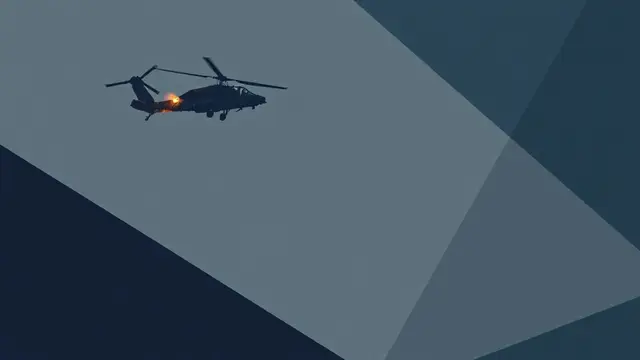
The U.S. military launched strikes in Iran overnight, between Tuesday and Wednesday, in response to the downing of an Apache helicopter. According to U.S. Central Command, the strikes were “defensive and proportionate.” Iranian reports said explosions were heard in the area of Sirik Port in the south of the country and on Qeshm Island.
Last night, U.S. President Donald Trump said that Iran was responsible for bringing down the American helicopter in the Strait of Hormuz area. Trump warned, “We will have to respond.” The two pilots aboard survived. “I have just been informed by our great military that last night the Iranians shot down one of our most sophisticated Apache helicopters while it was patrolling over the Strait of Hormuz,” Trump wrote on Truth Social. “There were two pilots in the helicopter. Both are safe and unharmed. However, the United States must, due to the circumstances, respond to this attack. Thank you for your attention to this matter!”
The American helicopter went down during the night in the Strait of Hormuz area. At first, the cause of the crash was unclear, and U.S. authorities addressed the incident only after reports in various media outlets. A review by the U.S. military found that an Iranian UAV was what hit the helicopter. The pilots were forced to bail out, and the U.S. military did not know what had become of them. After a search that lasted about two hours, they were located with the help of an advanced maritime UAV and taken to hospital with minor injuries. According to a senior American official, it is not clear whether the hit on the helicopter was intentional. Sources familiar with the details told The New York Times in the morning that the Apache helicopter had “fallen” near the Strait of Hormuz during operational activity in the area. During the years of the war, the Americans lost several aircraft in Iran. However, most fell due to operational malfunctions and accidents.
In Iran, officials are threatening: “We will respond with force.” Speaker of the Iranian parliament Mohammad Bagher Ghalibaf tweeted on his X account in response to Trump’s threat, “We prefer the language of diplomacy, but we speak other languages much more quickly. Break your commitments, and we will move on to what we know best. You are riding the horse you saddled!”
Iranian Foreign Minister Abbas Araghchi referred indirectly to the helicopter’s downing on his X account. “Foreign forces near our territory are constantly at risk due to human error, simple accidents, or the potential of being caught in crossfire,” he wrote. “To reduce the risk, the best solution is for them to leave.” At the same time, a senior Iranian official told Al Jazeera: “We will respond with force and immediately to any American attack against Iran.” An Iranian member of parliament also threatened, “If the Americans intend to violate the ceasefire or launch any aggression, Iran will not hesitate to defend itself. All American military bases in the region are within our defensive capabilities, and Iran will respond firmly and decisively to any threat if the enemy dares.”
Earlier today, IDF Chief of Staff Lt. Gen. Eyal Zamir visited commander training exercises in the north. He referred to the brief round of fighting with Iran and made clear, “Iran’s attempt to set equations and change reality will fail. The strike we carried out in Iran was preparation for a much more significant and heavy blow.”
Zamir said, “We will continue to act and deepen the damage to the Hezbollah terrorist organization and defend the communities in the north. The IDF is alert and will act with force anywhere we identify a threat to the citizens of the State of Israel.” He added, “The IDF has maintained, and continues to maintain, immediate alertness and readiness to return to fighting in Iran. All our defensive and offensive systems were alert and ready. We intercepted the threats launched at us and struck in Iran quickly and forcefully. We are prepared to again deliver another deep and severe blow to Iran.”
The same event, reported separately by each outlet. Open a few to compare what different newsrooms emphasize — and what they leave out.




Not the same event — other stories that share this one’s people, places, or theme: background, reactions, and follow-ups.