Behind the Words: The Hidden Bridge and the Secret of Every Good Column
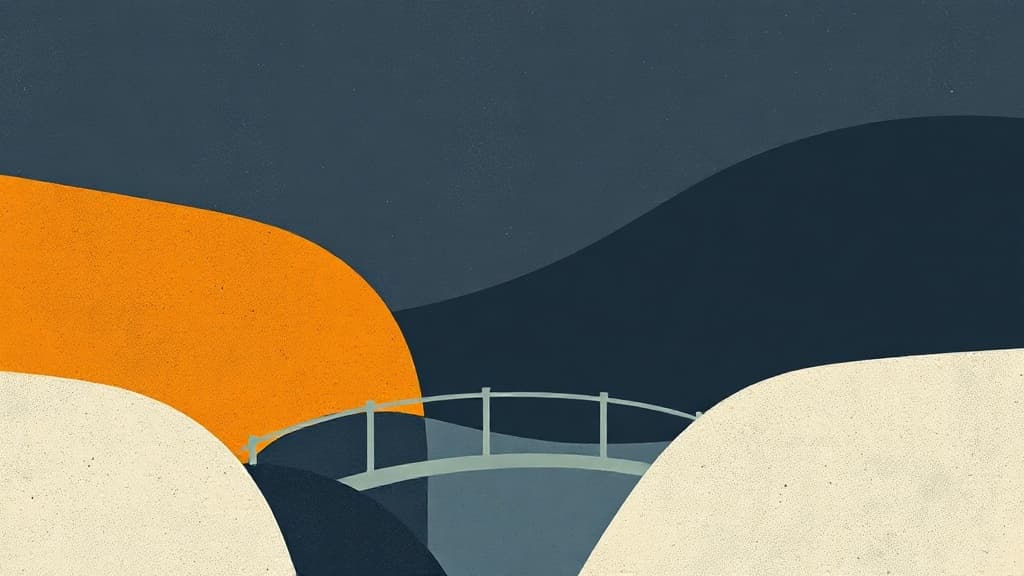
I’m supposed to write something now about Book Week, but I want to write something about Connection Week. Because that is what happens between the person who writes and the person who reads them, and vice versa. There is, between us column dwellers, a system of give and take, take and give, בדיוק like in any other human relationship. Between us there is a diffusion of agreements and pleasures, angers, frustrations, nods of tears and “How does she know that?”, criticism and “Why is she writing like that, I think differently.” Especially when it comes to readers and writers who have already built such a relationship between them across long distances, of time and depth. I meet you everywhere, we talk. Sometimes without words, only through looks, sometimes you tell me, “I am your friend, I know you, maybe you do not know me.” But I do know you, because in order to write states of mind I draw nourishment from you, dear women, from you, men, life stories, quarrels, reconciliations, conclusions, weaknesses, heroic journeys, failures, moments of insight, successes and strengths, no less than I draw nourishment from my own inner world. You are the ones who feed me. How do you begin to write feelings? How is a column born? How do you identify what is happening inside you? How do you translate what rises in the throat like a lump going up and down in the gullet into written words? How do you know that what intrigues me will intrigue others too? How do you avoid being afraid of making a mistake? How do you deal with one nagging person who will not like it? One who will say, “Oh, come on,” what is the nicest response to receive to words you put down and then walked away from? What is hardest to digest? How do you choose what to touch on? When do you tell yourself, “That’s it, it is ready,” and send it to the reviewer, the editor, the system? When do you cry while you write? When do you smile? Laugh? What was in you? What changed in you? Efrati, tell me. Do you regret old columns? Is something about your writing different over the years? Is it connected to other changes in life? Do you share with others beforehand? Ask permission? Because you write about real people and not fictional or legendary ones. You write, under real names, sensitive states of mind. Do you update them first? Has someone in the family ever been angry with you? Do you sometimes get tired and say, “Enough, I do not want to,” where do you need to stand on the side in order to hear in yourself conversations that are not spoken aloud, and then write them down? What does an embarrassed reader feel when you write about deep feelings they themselves have not dared to touch for years? What do you do if a deadline is pressing and you have nothing to write? How are you not afraid of what people will say about you? What subject will you never write about? What do you love most to express from the soul? What do you ask God in the prayer before, after? When did you begin to understand that words heal and create renewal in thought? When they say you write the way you speak, is that flattering or hurtful? How do you feel when someone copies you? When did you start to love flowers? Who decides on the title? And on the “petals”? Where do you get so many flowers? What are you most afraid of? What do you love most? Do you even connect with the word “most”? I would be happy to answer all of those questions, that is why I wrote them in the first place. Today, in today’s column, and in the little space left to me, I want to shine a magnifying glass on a tiny but important place. I want to highlight the existence of a “small wooden bridge,” and I suddenly understood that without it, no writing would take place. A bridge of passage that connects the moment when an idea, an interest, a desire, a need is born inside a person, to write, to express, with the page, or the document, the sheet, on which it is written. A bridge of connection, a bridge of passage, which, for people who write, serves as a path to walk on, a bridge that cannot be written without, one that creates routine that produces pleasant moments inside. I hope you feel this too.



