
Three Indian Seamen Killed in U.S. Strike in the Gulf
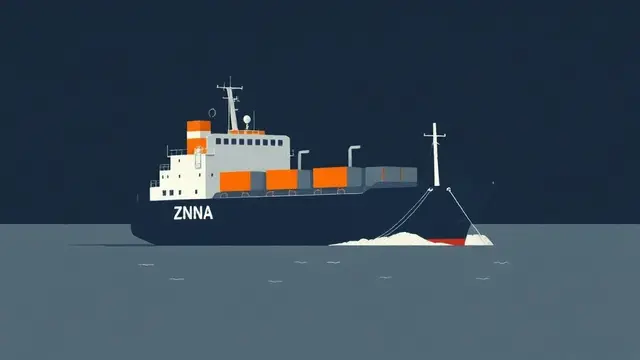
India announced this morning (Thursday) that three Indian seamen were killed aboard a tanker attacked yesterday by the United States on the grounds that it had violated the American naval blockade on Iran. Until now, the three had been listed as missing, but New Delhi is now reporting that the bodies of two of them have been recovered. The third has not yet been found. The killing of the seamen could heighten tensions between the U.S. and India, two longtime friends, and the U.S. deputy ambassador in New Delhi has already been summoned for a clarification meeting, where a “strong protest” was conveyed to him. India’s shipping minister called the incident “very unfortunate.”
The three sailors who were killed were part of the 24 Indian crew members aboard the oil tanker MT Settebello. The tanker, which flies the flag of Palau, was attacked yesterday in the Gulf of Oman, according to the U.S. military, because it did not comply with American forces’ instructions and tried to transport oil from Iran in violation of the blockade declared by Washington. In a post published by U.S. Central Command on X, it was said that an American aircraft fired “precision munitions” into the tanker’s engine room after the crew “repeatedly refused” to comply with instructions. The MT Settebello is the second tanker with an Indian crew attacked this week by the U.S. On Monday, American forces struck The Marivex, also an oil tanker sailing under the flag of Palau in the Gulf of Oman, after it failed to comply with orders to stop. All 24 Indian crew members on board were safely rescued by the Omani military.
The incident between the U.S. and India comes against the backdrop of Washington’s difficulty extricating itself from what appears to be a deepening entanglement in the Middle East. After weeks of a naval blockade on Iran, which Washington says is already exacting growing economic costs from the Islamic Republic, the U.S. launched a second bombing operation in two days in Iran overnight, while President Donald Trump threatened to bomb again the following night. The strikes were carried out as punishment for the lack of progress in negotiations with Tehran, and for what the White House sees as Iranian stalling. The American naval blockade is intended in part to force Iran to back away from its declaration that it will now control shipping in the Strait of Hormuz and charge large fees from ships passing through this route, through which one fifth of the world’s oil supply passes. Since the blockade was imposed on April 13, the U.S. has halted eight ships and caused 134 others to turn around and take alternate routes. The Indian government has opposed such moves, saying that “there must be an end to the harming of commercial ships and civilian infrastructure in the region.”
Trump claimed in recent days that, in order to ease pressure on the global oil market, which is suffering from the blocking of the Strait of Hormuz, the U.S. military has carried out a “secret mission” since last month to smuggle oil shipments through the strait without being stopped by Iranian forces. He said ships are slipping through the strait at night, also thanks to the destruction of Iranian radar systems. According to him, more than 100 million barrels of oil have evaded Iran’s notice in the strait as a result, a figure equal to five days of oil shipments through the strait before the war.
The same event, reported separately by each outlet. Open a few to compare what different newsrooms emphasize — and what they leave out.


Not the same event — other stories that share this one’s people, places, or theme: background, reactions, and follow-ups.


