
Defense Minister and Government Secretary Push to Freeze Yeshiva Students' Arrests Amid Coalition Deal
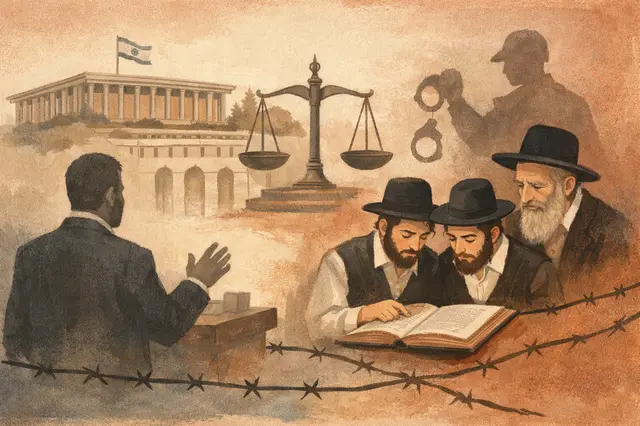
Israeli Defense Minister Israel Katz has urged Boaz Bismuth, chairman of the Knesset Foreign Affairs and Defense Committee, to advance legislation that would prevent the arrest of yeshiva students. Since many individuals who work or have dropped out are still registered as yeshiva students, the law would effectively halt nearly all arrests in practice. The proposal is intended as a derivative of the draft law on draft evasion, allowing it to bypass the first reading in the Knesset.
Yesterday, Government Secretary Yossi Fox also contacted Bismuth on the same issue. This move is part of Prime Minister Benjamin Netanyahu's coalition deal with ultra-Orthodox parties, which includes promoting a Basic Law on Torah Study and the arrest freeze law in exchange for ultra-Orthodox support on coalition legislation such as the law splitting the Attorney General's role.
Katz emphasized the need to include in the temporary order clear definitions of who qualifies as a yeshiva student, the conditions for freezing criminal enforcement, and effective supervision to ensure enforcement continues against draft evaders not studying in yeshivas. Fox argued in his letter that the current arrest policy has deepened the rift with the ultra-Orthodox community without significantly improving IDF enlistment rates, despite a notable rise in recruitment since sanctions began.
Fox justified his appeal by citing concerns expressed by heads of the ultra-Orthodox Hesder yeshivas, warning of a potential severe societal split that could escalate to civil conflict. He noted that the draft evasion law discussions also cover arrest suspensions, suggesting relevant provisions there could be used rather than initiating new legislation.
The same event, reported separately by each outlet. Open a few to compare what different newsrooms emphasize — and what they leave out.





Not the same event — other stories that share this one’s people, places, or theme: background, reactions, and follow-ups.

Ask About This Article
Duki reads it, and every newsroom on the same story, then answers with sources.