
Netanyahu asked to attend Sunday hearing, but judges moved it to Monday
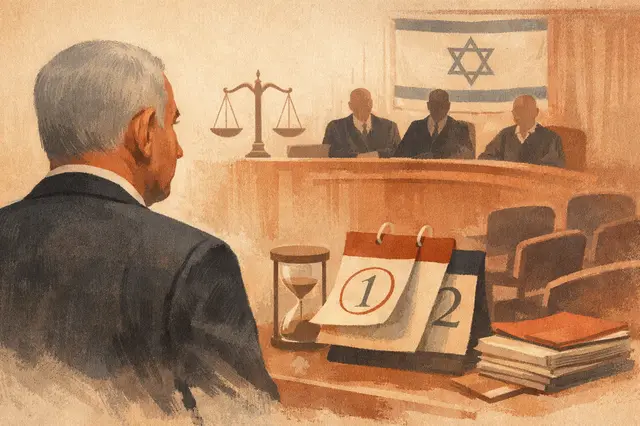
Prime Minister Benjamin Netanyahu said on Friday that he intended to appear on Sunday at a hearing on speeding up his trial. The judges replied that no hearing would be held that day, and that the matter would instead be heard on Monday so both sides could present their arguments.
Earlier this week, the panel announced that after the holidays, Netanyahu’s so-called case 1000s trial will move to five hearings a week. The decision comes against the background of Judge Rivka Friedman-Feldman’s expected retirement, which leaves the court two years to write its verdict. Until now, the trial has generally been held four times a week, with three of those sessions devoted to Netanyahu’s testimony, which ended on Wednesday. Many hearings were shortened or canceled.
At Wednesday’s session, Friedman-Feldman read the case details as is customary. Netanyahu’s lawyer, Amit Hadad, said it was likely the last day of testimony and that the hearing would be much shorter. “Probably for the last time. It will be a much shorter hearing. I have adopted what the court said, I cut 97% of the things,” he said.
Hadad argued that the judicial record was being built in a way that made it seem as if each witness contradicted Netanyahu, saying, “Every time they present a witness until he says A, the prime minister says the opposite, and here the prime minister contradicts, all the witnesses are lying and only you are telling the truth.” Friedman-Feldman replied that the defense’s objections were already recorded throughout the transcript, and Judge Moshe Bar-Am added that “the assumption is wrong, no impression was created.” Hadad then moved on to case 4000, in which Netanyahu is charged with bribery, fraud, and breach of trust, and referred to the Bezeq-Walla affair involving Shaul and Iris Elovitch, arguing that the allegedly unusual positive coverage was limited compared with negative coverage.
The same event, reported separately by each outlet. Open a few to compare what different newsrooms emphasize — and what they leave out.



Not the same event — other stories that share this one’s people, places, or theme: background, reactions, and follow-ups.



Ask About This Article
Duki reads it, and every newsroom on the same story, then answers with sources.