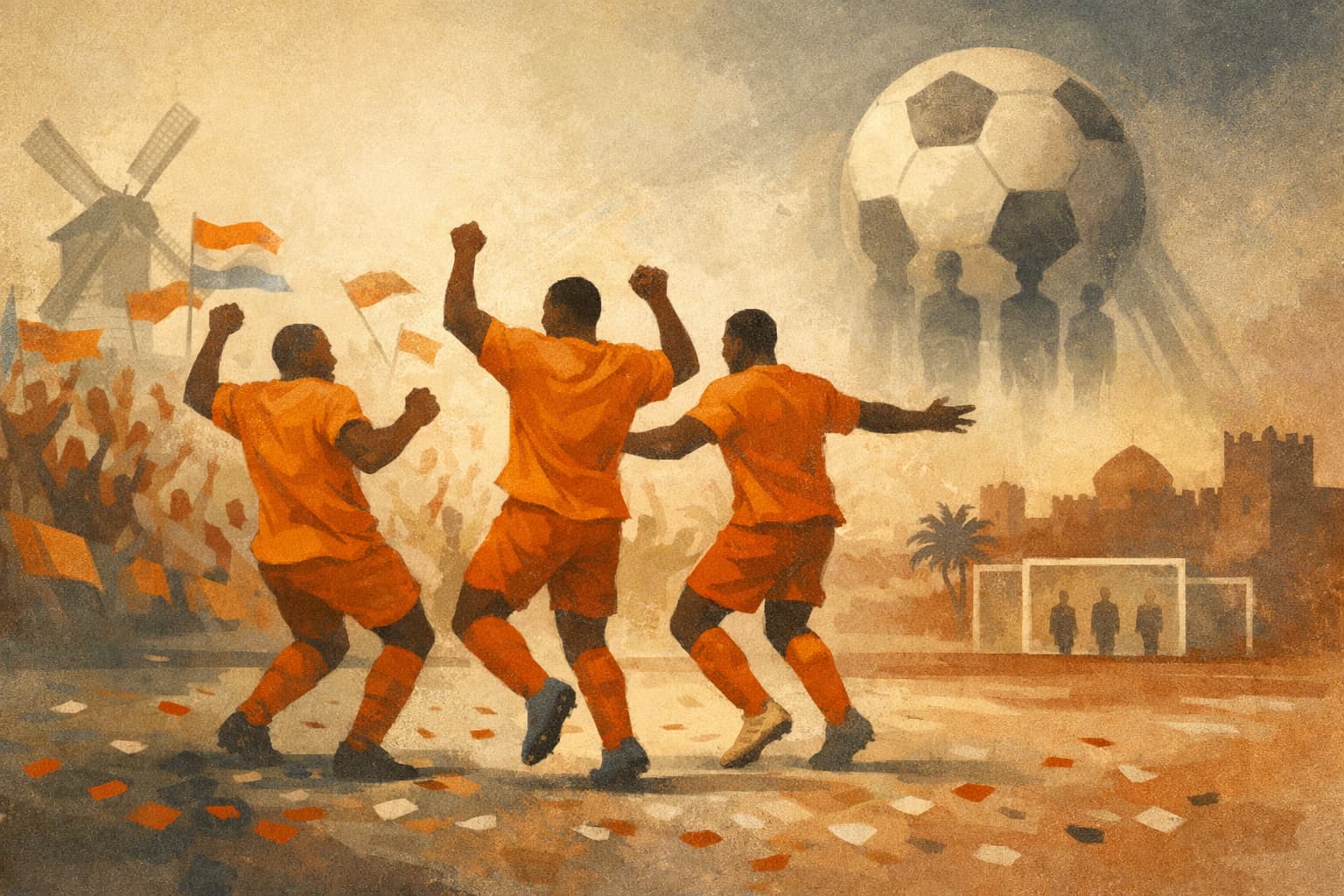
Netherlands Dancing Into the Knockout Stage, But Penalties Loom as Morocco Awaits

The Netherlands beat Tunisia 3-1 and advanced to the World Cup knockout stage on a wave of fan energy and improved attacking play. About 15,000 Dutch supporters traveled to the tournament, but many more fans in the United States have joined the orange celebrations, dancing to the viral “Right! Left! Right! Left!” anthem by Snollebollekes.
On the field, the Dutch had entered the tournament under pressure after poor warmup results, including a home loss to Algeria and a narrow win over Uzbekistan. There were concerns about several stars coming in after weak seasons or long injury layoffs, and about a lack of attacking depth. The defense, by contrast, was considered deep and filled with Premier League-level talent, although the injury to Jurrien Timber was a significant blow.
The big breakthrough has been striker Brian Brobbey, who had been a major prospect at Ajax and was sharpened by his season at Sunderland. He has used his strength and positioning to become a serious attacking option, while Cody Gakpo scored twice against Sweden and Jeremie Frimpong has emerged on the right. Coach Ronald Koeman has spent much of his tenure trying to solve the right-wing role in his 4-3-3, the position meant to complement Denzel Dumfries, who has 11 goals and 24 assists in 75 caps.
In midfield, Ryan Gravenberch and Frenkie de Jong have been excellent, while Tijjani Reijnders has disappointed and may be replaced by Justin Kluivert. The main defensive concern is set pieces, after goals conceded from corners against Japan and Tunisia. Next up is Morocco in Mexico, in what many will see as a derby because more than 400,000 Moroccans live in the Netherlands and several Moroccan internationals were born or developed there. The teams have met three times before, all 2-1 games, and the Dutch are hoping above all to avoid penalties, since Morocco goalkeeper Bono has already proven his shootout quality.
The same event, reported separately by each outlet. Open a few to compare what different newsrooms emphasize — and what they leave out.


Not the same event — other stories that share this one’s people, places, or theme: background, reactions, and follow-ups.
