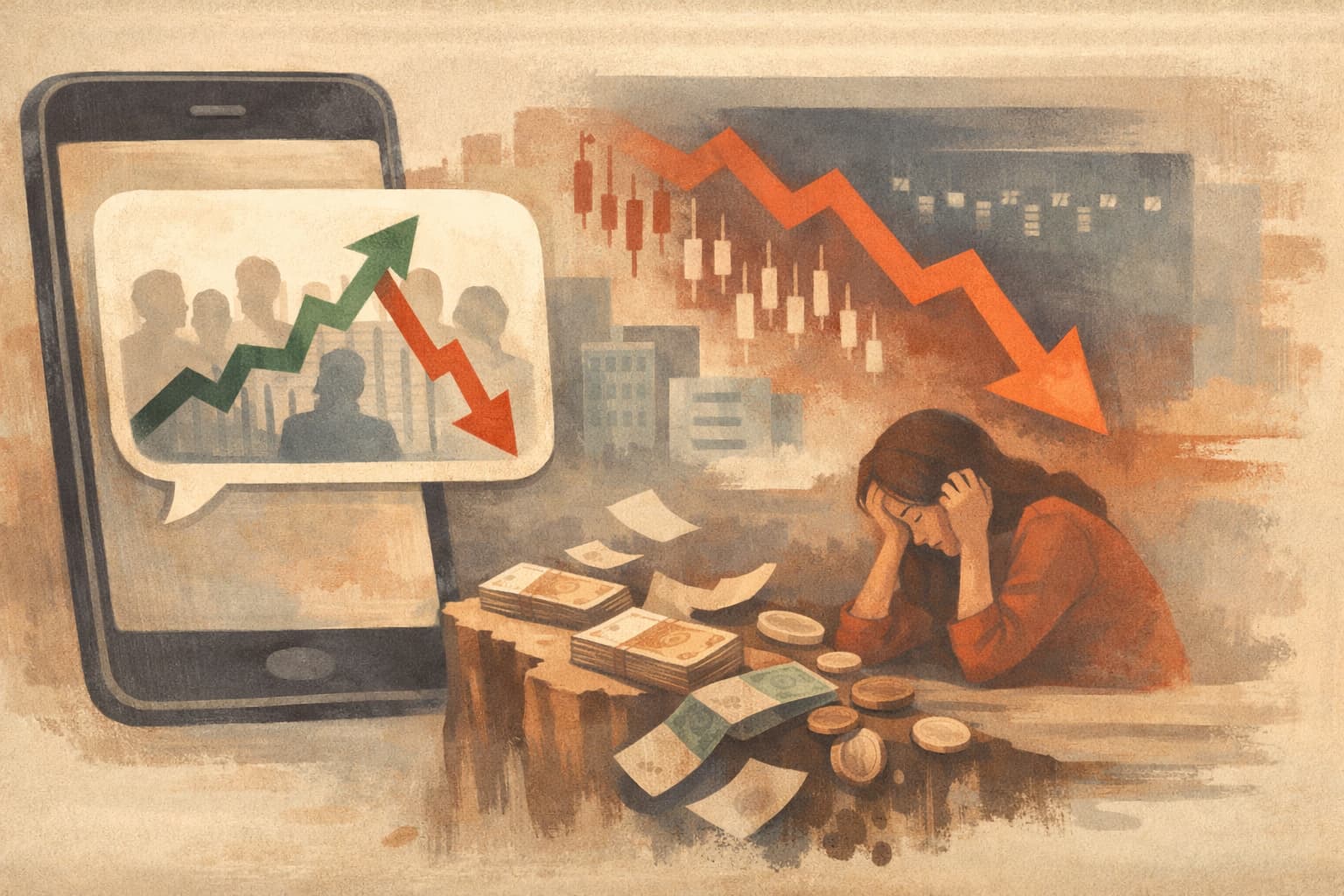
WhatsApp Investment Group Allegedly Drove a Stock Pump-and-Dump That Wiped Out NIS 800,000 in Minutes

A 24-year-old woman from central Israel, identified as S., says she lost NIS 800,000 in four minutes after joining what appears to have been a stock-manipulation scheme run through a WhatsApp group focused on U.S. equities. She said she did not even know such a scam existed, and only later realized she had fallen into what is known as a pump-and-dump operation.
The group, called "U.S. Stocks Community in Tel Aviv," was created in September 2024 and had hundreds of members. It presented itself as an educational forum offering market analysis, analyst recommendations and macro updates, with text that appeared to have been translated by AI. S. said she first encountered the promotions on Facebook and was then moved into WhatsApp groups, where repeated apparently successful trades built her confidence before she invested a larger sum and watched the stock collapse.
The stock at the center of the group was NetClass Technology, or NTCL, a Singapore-based company listed on Nasdaq that sells software and digital education tools. In a message on June 5, the group’s manager, who called himself David, said the following week would begin a “super 500% investment program” and urged members to commit fully if they wanted to succeed. Soon before the crash, members were told to increase positions and that the stock, then around 30 cents, could rise to $9.
Trading data showed a sharp spike in May, with volume reaching as much as $160 million a day, 32 times the yearly average. NTCL jumped to $2.90 on June 10, after soaring about 900% in 10 days, then plunged nearly 90% the next day to about 34 cents. The group also urged members to sell other holdings, including gold, stocks and investment funds, and channel cash into the scheme. S. said she was not the only victim, and the Israel Securities Authority is trying, with foreign enforcement partners, to curb such activity, though it continues through social media and messaging apps.
The same event, reported separately by each outlet. Open a few to compare what different newsrooms emphasize — and what they leave out.

Not the same event — other stories that share this one’s people, places, or theme: background, reactions, and follow-ups.



