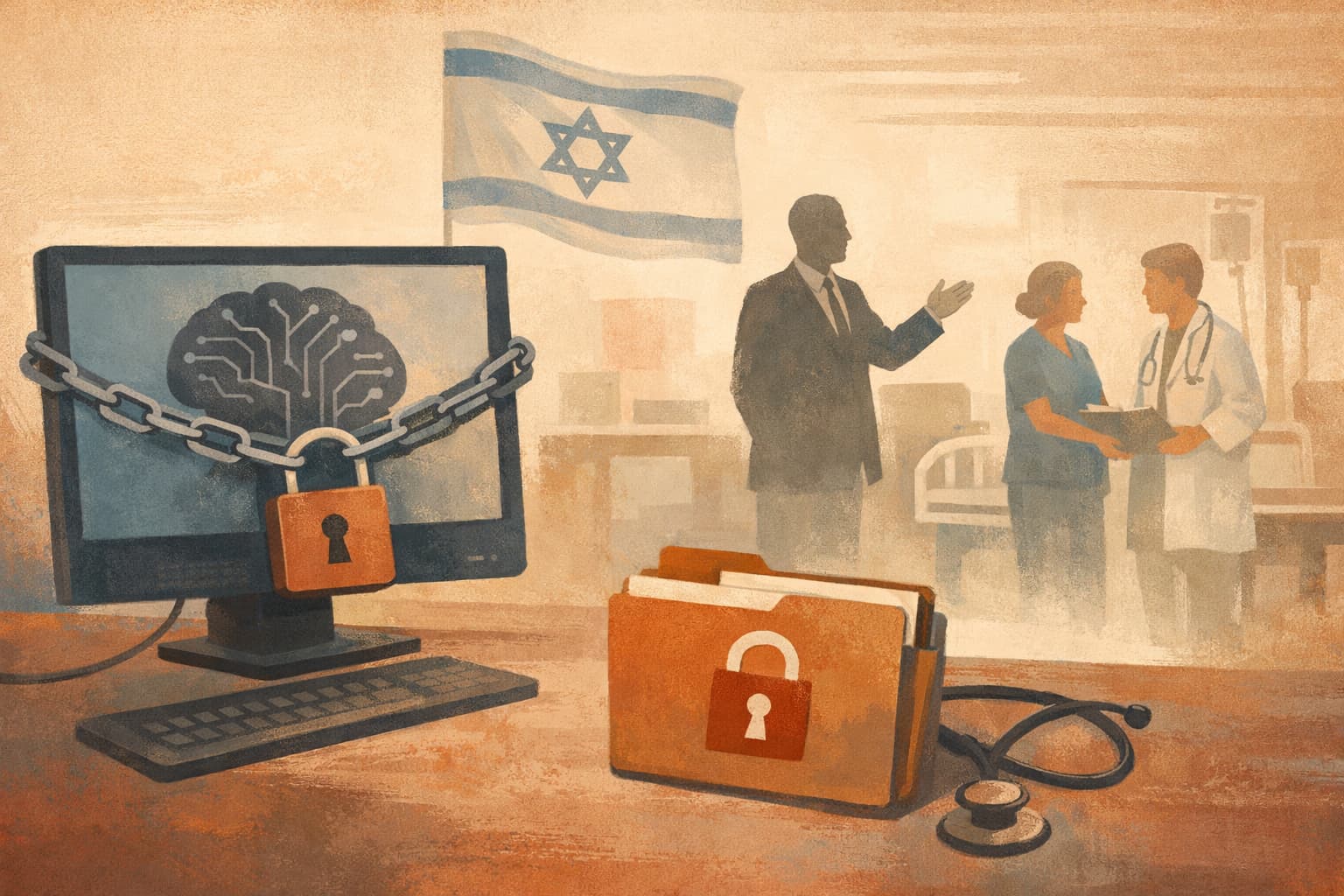
Health Ministry Blocks AI Tools on Government Hospital Computers Over Data Security Fears

Israel’s Health Ministry has tightened restrictions on artificial intelligence tools in hospitals and proactively blocked access to them on computers in government hospitals, citing fears of exposure of sensitive information. The move follows an earlier warning issued about four months ago, when the ministry first limited AI use because of rising cyber threats to the health system during Operation Roaring Lion.
In the March letter to health organization managers, signed by Reuven Eliyahu, the ministry’s information security and cyber official, it said AI tools had become a major attack vector used by hostile actors for complex cyberattacks, social engineering, and leaks of sensitive health data. The letter urged extreme caution and reducing organizations’ exposure to these risks.
About a year ago, the Knesset Health Committee also debated the dangers of uncontrolled AI use, and doctors warned of mistakes occurring in the field every day. Yozi Arbelich, head of the Lemaanchem organization, said he had initiated that discussion and welcomed the ministry’s latest move, saying AI is a major breakthrough for medicine but chat use at this stage can create errors.
The ministry said protecting patient privacy, medical confidentiality, and information security is a top priority. It said public, free, external AI tools carry cyber risks and the possibility of exposing sensitive medical information. According to the ministry, in March 2026 it issued guidance requiring all health organizations to stop using those tools on organizational networks and switch only to secure tools, subject to proper risk management, while it also promotes dedicated defenses that would allow broader AI use under strict privacy and cyber standards.
The same event, reported separately by each outlet. Open a few to compare what different newsrooms emphasize — and what they leave out.



Not the same event — other stories that share this one’s people, places, or theme: background, reactions, and follow-ups.

