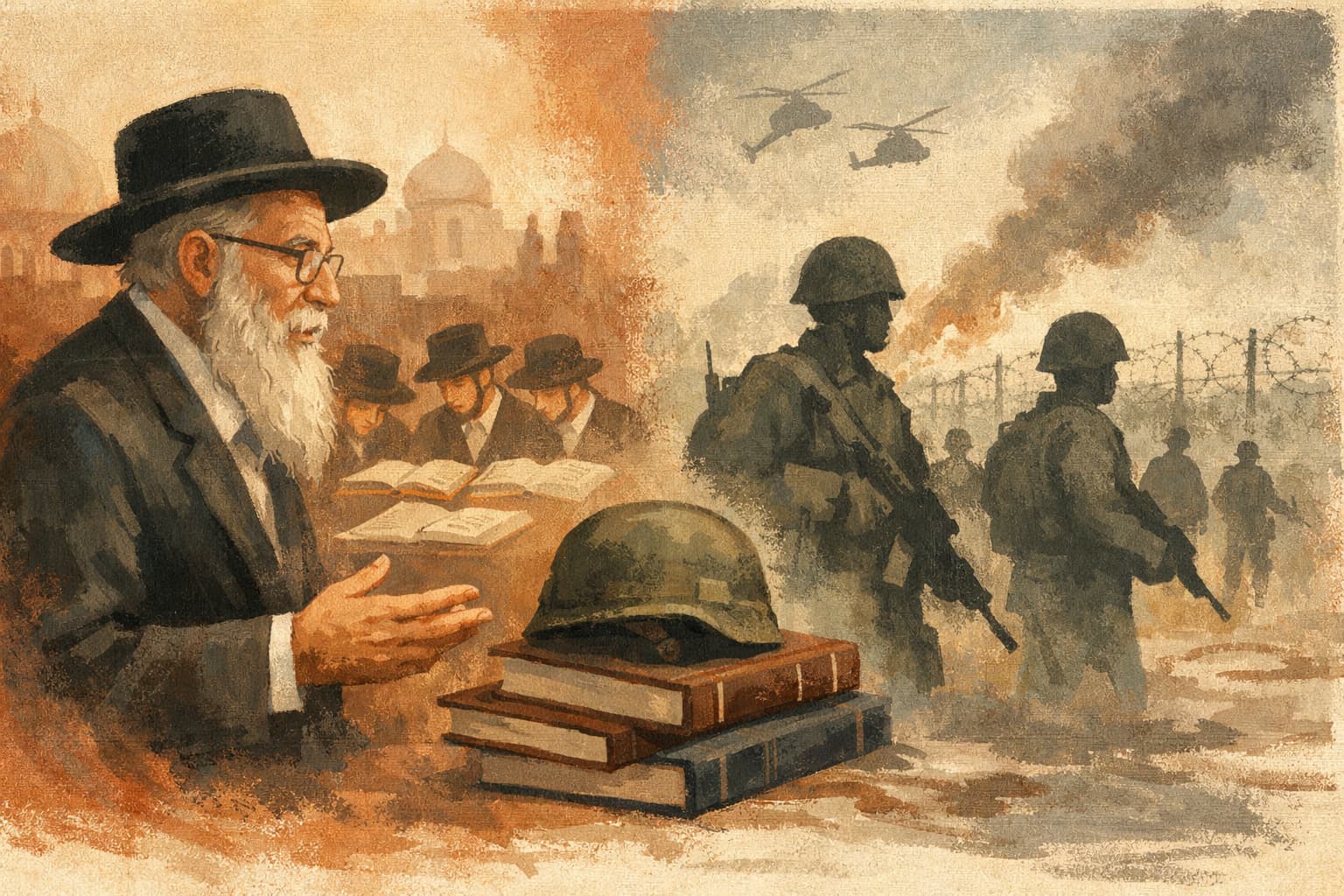
Rabbi Yitzhak Shilat Rejects Blanket Draft Exemption for Yeshiva Students

Rabbi Yitzhak Shilat published a sharp critique of the broad exemption from military service for yeshiva students, arguing that even Torah scholars must share the burden while Israel is at war. He says the country is approaching a social fault line as the Jewish calendar period of the Three Weeks nears, and warns that one community, identifiable by its dress and appearance, is being pushed toward the extremism once associated only with Neturei Karta, alienating itself and its Torah from most Israelis.
Shilat says arrests are a foolish response and will not solve the problem. He argues that changing attitudes in the haredi public can only happen gradually and patiently, not through imprisonment. Citing a letter from Rabbi Shach to yeshiva heads dated Rosh Hodesh Cheshvan 5740, he recalls that deferment was conditioned on Torah study being the student’s only occupation, and says leaders should understand that state action could instead mean loss of benefits and subsidies for those who do not serve.
He criticizes the proposed Basic Law on Torah Study, which passed a preliminary Knesset reading and is set to advance this week. While he praises its opening language about Torah as a core value of Jewish heritage and Israel’s responsibility to encourage Torah learning, he says its later clause wrongly treats Torah study as equivalent to military service and would in practice exempt yeshiva students from all military or national service.
Shilat writes that Torah study is not service, but a way of life that does not cancel obligations. On the contrary, he says it increases the mitzvot incumbent on every Jew, especially Torah scholars. Citing the principle that “all go out” to defend Israel from attack, he adds that even if some scholars disagree, the Talmud contains a whole tractate, Horayot, about legal and halakhic error. He says discussion can be had about postponing service or replacing it with meaningful national service, but public representatives must not speak of a blanket exemption. “The Torah is not political merchandise,” he concludes.



