
Why Solitude Can Become a Gift
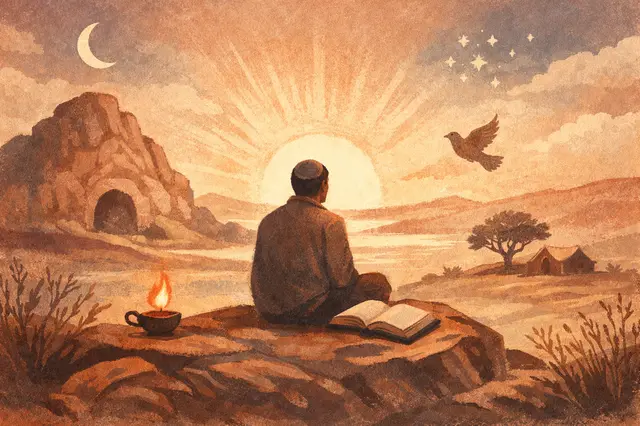
Prof. Yitzhak David Goldberg argues that solitude, far from being only painful, can be the ground from which faith, creativity, and renewal grow. He moves from modern life, where silence arrives after calls, meetings, and obligations fade, to the Bible, Jewish thought, and psychology to show that moments of being alone often expose deeper questions about identity, purpose, and the self.
Goldberg says this pattern appears repeatedly in the Hebrew Bible. Abraham is sent away from home before becoming a nation’s founder. Jacob is left alone before wrestling through the night and emerging with a wound, a blessing, and a new name, Israel. Moses encounters God in the wilderness, and Elijah hears not in wind, earthquake, or fire, but in the “still small voice.” The search for God, he writes, begins “from there,” from uncertainty and existential solitude.
He then cites modern thinkers. Clark Moustakas described existential loneliness as unavoidable and potentially creative. Donald Winnicott saw the ability to be alone as a sign of maturity, not weakness. Martin Buber taught that genuine encounter begins only after a person can stand alone. Rabbi Nachman of Breslov urged followers to seek quiet in fields or forests, and Rabbi Joseph B. Soloveitchik wrote in *The Lonely Man of Faith* that the believer carries a message that cannot be fully shared with another person. Goldberg quotes Soloveitchik as saying, “I am lonely because ... I am committed to God and His covenant.”
He extends that idea to Jewish history. After the destruction of the Second Temple, the rabbis created the Mishnah and Talmud. After the 1492 expulsion from Spain, Safed became a major center of Jewish creativity, producing the teachings of Isaac Luria, the *Shulchan Aruch* of Joseph Karo, and flourishing kabbalah, law, and poetry. After the Holocaust, he says, came the State of Israel, revived Hebrew, new centers of Torah learning, and major achievements in science, medicine, technology, and culture.
Goldberg closes with a reading of Balaam’s words about Israel as a people that dwells alone. Drawing on the Kotzker Rebbe, he says Israel’s secret is not only strength while standing, but the power to rise again after exile, persecution, and ruin. Solitude becomes faith, faith becomes creativity, and creativity becomes renewal.



Ask About This Article
Duki reads it, and every newsroom on the same story, then answers with sources.