
A column compares Israel’s religious establishment fight to Balaam and Volozhin
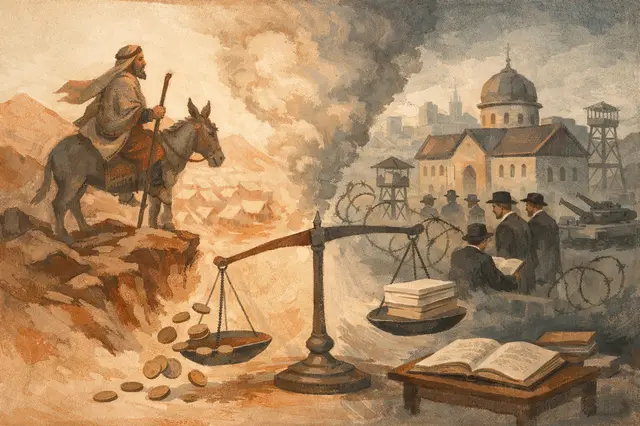
In this opinion piece tied to Parashat Balak, the writer argues that Israel’s professional, legal and budgetary authorities believe they can reshape the yeshiva world through decrees, sanctions and cuts, but will ultimately hit an invisible limit. The column says this pattern is not new, and compares it to the Russian Empire’s effort nearly 200 years ago to force changes on the Volozhin Yeshiva, long seen as the “mother of yeshivas.”
According to the article, the tsarist authorities demanded state oversight, changes to study, and tighter control. Rabbi Naftali Zvi Yehuda Berlin, known as the Netziv of Volozhin, refused any compromise and shut the yeshiva rather than alter its way of life. Although the institution closed physically, the piece says its spirit spread and helped create hundreds of Torah centers around the world.
The column then reads the Balaam story through the same lens. Balaam is presented as a master of words, branding and curses, hired by Balak because military force would not work against Israel. His collapse before the donkey, the author says, exposes the limits of “fake power” that relies on empty language and bureaucratic framing rather than real spiritual force. The article quotes Balaam’s outburst, “If only I had a sword in my hand, I would have killed you now,” and cites Rabbi Samson Raphael Hirsch as showing that such power is only a bluff until it turns to physical coercion.
In the writer’s analogy, the ultra-Orthodox public is the donkey, carrying the nation’s Torah life while the secular establishment rides on its back, benefiting from that spiritual protection but remaining blind to it. When the state pushes on military draft issues, the article says, it wrongly sees rebellion or evasion, while the Haredi side sees a red line that threatens the survival of Torah study. The column also invokes the COVID period, when artists and cultural figures protested closures by saying culture is “air to breathe,” to argue that the state understands spiritual dependence when it comes to secular culture, but forgets it with yeshivas. It closes by quoting Napoleon, who was said to have concluded that in the long run, the sword is defeated by the spirit.


Ask About This Article
Duki reads it, and every newsroom on the same story, then answers with sources.