
The battle over conscription is really a battle for the study hall
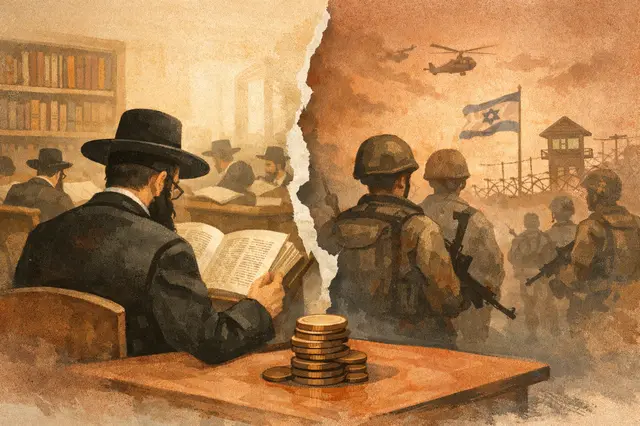
Amid the divisive debate over military conscription, the writer argues that the deeper struggle is not a specifically ultra-Orthodox one, but a fight over the future of Torah study itself. He says the proper response to what he describes as persecution of Torah learners by the High Court and the attorney general should be more study, more prayer, and more support for students, while political and legal actors handle legislation and petitions.
He also cautions that street protests can backfire in a society where many Israelis do not understand the centrality of Torah study and may see the issue as just another sectoral clash. At the same time, he insists that ultra-Orthodox demonstrators have the same democratic right to protest as anyone else, noting that the recent rally was quiet, with no violence, destruction, or hatred, even though tens of yeshiva students and married scholars are in prison for following their rabbis and continuing to study.
The article’s broader point comes from the financing efforts of the World Torah Fund. The writer says leading rabbis and yeshiva heads, some nearly 100 years old, spent three exhausting weeks in the United States visiting hundreds of Jewish donors to raise about $150 million to close budget gaps created, in his view, by High Court decisions and the absence of a conscription law. He says this annual effort has been repeated for the past three years.
He adds that the aid is not limited to ultra-Orthodox institutions. According to the article, the fund’s list includes any Torah institution that lost state support because there is no conscription law, including major Religious Zionist yeshivas such as Mercaz HaRav and Har HaMor, which receive generous monthly funding. The writer says the rabbis did not ask whether students wore black or knitted kippot, only whether the study hall was in financial crisis, and that the dispute is therefore about the entire Torah world, not one sector alone.

Ask About This Article
Duki reads it, and every newsroom on the same story, then answers with sources.