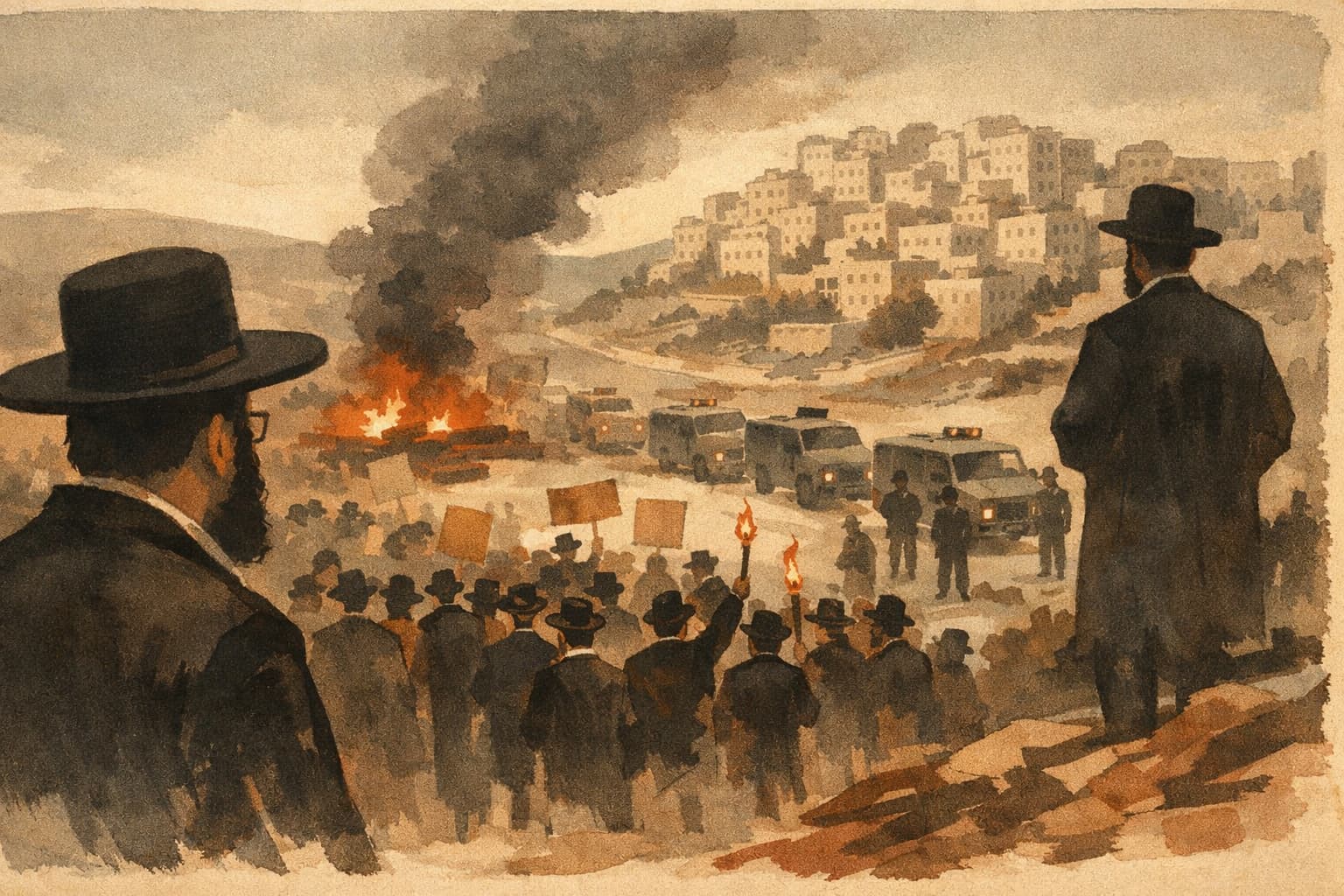
Beitar Illit Mayor Warns of Wider Ultra-Orthodox Protests Over Draft Arrests

Meir Rubinstein, head of the forum of ultra-Orthodox local authorities and mayor of Beitar Illit, said a convoy protest held this week against the arrests of yeshiva students who avoid the draft is only the beginning of a much larger campaign. In an interview with Kol Chai radio, he urged the ultra-Orthodox public to take to the streets in large numbers to stop what he called arrests of draft evaders.
Rubinstein said the community has not yet used all the tools available to it. “The ultra-Orthodox public is still not putting all its energy and momentum into expressing its distress outwardly,” he said, arguing that only sustained, mass street pressure can change Israel Defense Forces and police policy toward ultra-Orthodox draft dodgers.
He compared the current struggle to the 2023 protests against the judicial overhaul, saying the state’s plans were halted because “hundreds of thousands” went out to demonstrate. “The general public still has not understood that forced enlistment will not pass,” he said. “My forecast is simple, if the arrests continue, we will eventually reach a situation where the ultra-Orthodox public behaves exactly like the Kaplan protesters did. We are moving there at giant steps.”
Rubinstein sharply criticized the justice system and the attorney general’s legal advisers, accusing them of taking a harsh, one-sided line against the ultra-Orthodox. He told his camp not to rely on Knesset representatives or petitions to the High Court of Justice, but on direct public pressure, saying, “Our real power is in our unity and in the streets.” He stressed that the community does not seek violence, saying it does not want “a civil war” or confrontations with security forces, only a return to the status quo that existed for decades, and warning that it is unacceptable for “thousands of yeshiva students” to be turned overnight into criminal offenders.
The same event, reported separately by each outlet. Open a few to compare what different newsrooms emphasize — and what they leave out.


Not the same event — other stories that share this one’s people, places, or theme: background, reactions, and follow-ups.


