
How a Warm Line to Idi Amin Helped Israel Gather Crucial Entebbe Intelligence
Translated & summarized from Walla by baba
The story in 5 lines · by baba
- Israel saw Bar-Lev’s calls with Amin as a crucial intelligence channel during Entebbe.
- The hijacking held 105 hostages at Uganda’s Entebbe airport in late June 1976.
- Rabin and Peres used the transcripts to extract hostage and explosives details.
- Bar-Lev’s personal ties to Amin dated back to his service in Uganda in the 1960s.
- Amin later praised the raid, requested spare parts, and concealed Dora Bloch’s fate.
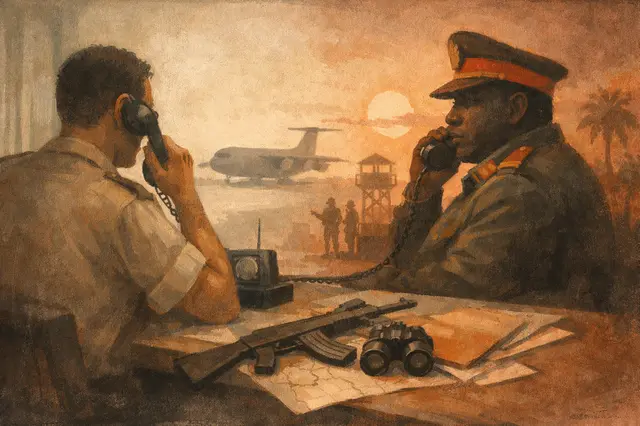
Newly released State Archives materials show that a personal phone channel between retired Col. Baruch, “Burka,” Bar-Lev and Ugandan ruler Idi Amin was treated in Jerusalem as a vital intelligence and diplomatic tool during the Entebbe hijacking crisis in late June and early July 1976. The archive has now opened government and security cabinet discussions, plus the full transcripts of five calls between the two men, revealing how Prime Minister Yitzhak Rabin and Defense Minister Shimon Peres mined the conversations for operational details while trying to buy time for the hostages.
At the time, 105 hostages, Jews, Israelis, and Air France crew, were being held by terrorists at Entebbe airport in Uganda. The transcripts show Amin repeatedly speaking warmly to Bar-Lev, asking after his wife and family, while Bar-Lev addressed him deferentially and urged him to protect the captives. Israeli officials believed the relationship let Bar-Lev reach Amin’s “world of imagination,” making him unusually receptive and more likely to reveal information.
Bar-Lev, born in Lithuania in 1924 and later a senior Israeli officer, had served in Uganda in the late 1960s as a military attaché and Defense Ministry envoy, where Amin regarded him as a trusted confidant. The article says Amin had once been aided by Israel and later became violently anti-Israeli after a dispute over fighter jets, expelling the Israeli mission in 1972 and aligning with Muammar Gaddafi and Palestinian terror groups. In the newly published files, Amin is quoted making extreme anti-Jewish and anti-Israeli statements, including praise for Hitler and claims about Zionist control of the U.S.
During the crisis, Bar-Lev’s calls yielded concrete intelligence, including the exact hostage count, the location inside the old Entebbe airport, and the fact that terrorists had placed two lines of explosives around and inside the building. On July 1, 1976, Peres told ministers the conversations had become so valuable that Bar-Lev was even considered for a personal trip to Uganda. After the Israeli raid succeeded, the calls continued: at 1:15 a.m. Bar-Lev phoned Amin, who seemed unaware of the assault, and later at 4:00 a.m. Amin called back angry but still affectionate. In the last recorded call on July 9, Amin praised the operation as a military action, asked Israel for spare parts for damaged weapons, sent regards to Rabin and Peres, and refused to answer directly about Dora Bloch, the 74-year-old hostage he had already ordered killed in retaliation.
Read the original at WallaMentioned
The same event, reported separately by each outlet. Open a few to compare what different newsrooms emphasize — and what they leave out.
