Israeli Navy Eyes Turkey as a Growing Maritime Rival Amid Eastern Mediterranean Tensions

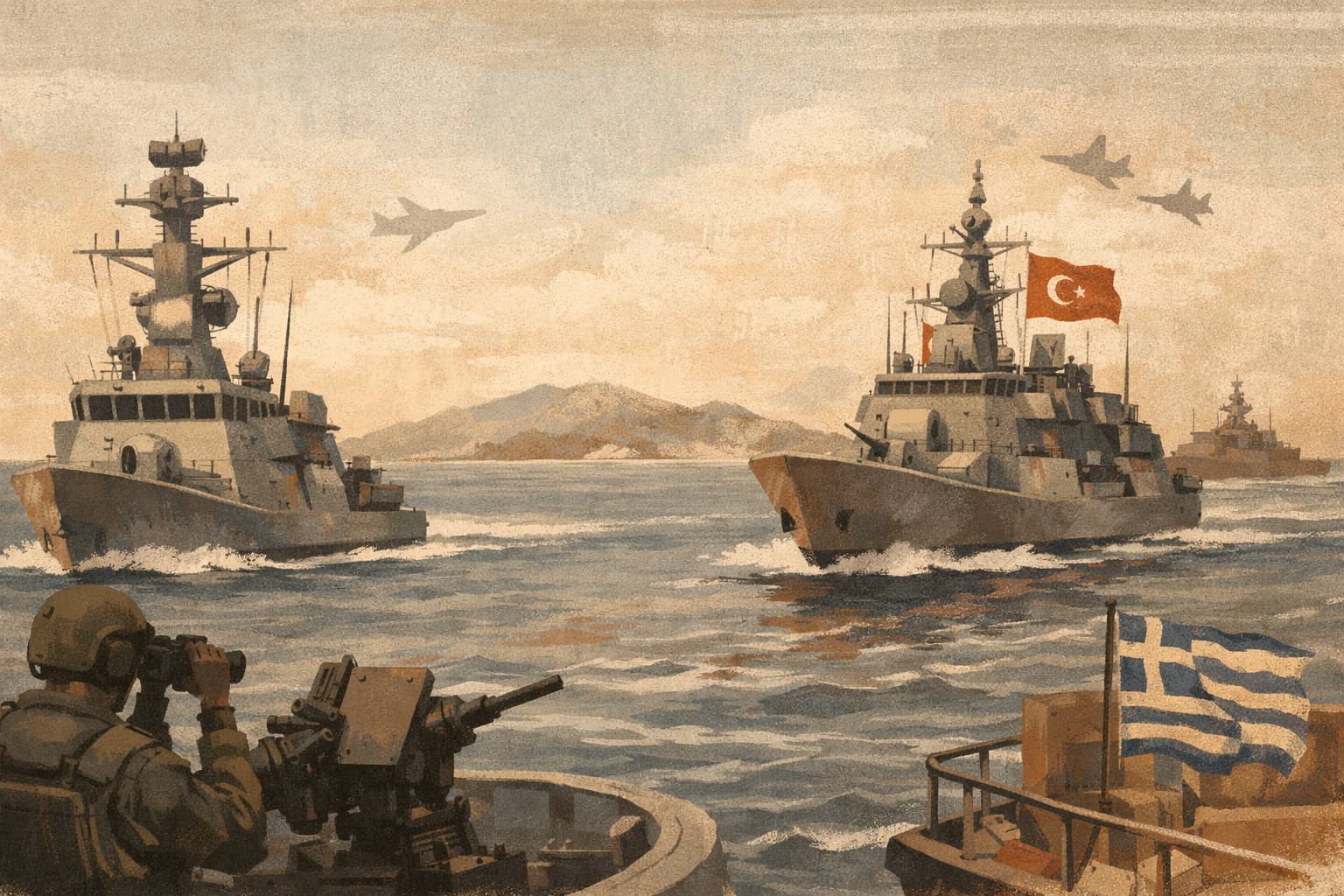
A recent near-encounter between an Israeli missile boat and Turkish warships off Cyprus has sharpened Israeli concern that Turkey could evolve from a hostile state into a direct naval rival. The incident, which took place several weeks ago during an Israeli naval exercise in the waters west of Cyprus, saw four Turkish destroyers close to within a few hundred meters of the Israeli vessel before eventually breaking off and departing. It was one in a series of maritime episodes that have pushed Israel to reassess Ankara's intentions.
The report says Turkey's naval buildup is tied to President Recep Tayyip Erdogan's "Blue Homeland" doctrine, which seeks to expand Turkish influence across the Black Sea, Aegean, and Mediterranean. The concept challenges existing maritime boundaries, rejects Greek and Cypriot claims in contested waters, and supports Turkish oil and gas exploration in disputed areas. Ankara's 2019 deal with Libya created a sea corridor that cuts across waters claimed by Greece, triggering anger in Greece, Cyprus, Egypt, and the European Union.
Israel's response is to strengthen a layered strategy built on military, energy, and technological partnerships. The core is the Israel-Greece-Cyprus security axis, with annual joint work plans, regular drills, intelligence sharing, and coordinated air and sea cooperation. The three are also advancing a rapid-response force of brigade size, about 2,500 fighters with F-35 aircraft. On the energy side, the Eastern Mediterranean Gas Forum and projects such as the Great Sea Interconnector are meant to link Israel, Cyprus, Greece, and others while bypassing Turkey. The United States has joined as the fourth partner through the "3+1" format and the Mediterranean Energy Center.
The article says the balance at sea is uneven: Turkey has about 50,000 naval personnel, 12 submarines, 9 corvettes, 17 frigates, 30 landing craft, 26 patrol ships, 30 naval helicopters, 30 maritime drones and 10 patrol aircraft, while Israel has 15 missile boats, 6 submarines and 37 small patrol and security vessels. Israel is building new "Reshef" missile boats at Israel Shipyards to replace older "Nirit" boats, and most of the old vessels will be upgraded and kept in service. Navy Commander Vice Adm. Eyal Harel warned that Israel may face confrontation not only in Syria but also against Turkey, and the modernization plan is estimated at about $20 billion over the next decade.
The same event, reported separately by each outlet. Open a few to compare what different newsrooms emphasize — and what they leave out.

Not the same event — other stories that share this one’s people, places, or theme: background, reactions, and follow-ups.

