Chasidic Man Says a Hasty Match Left Him in Years of Quiet Misery

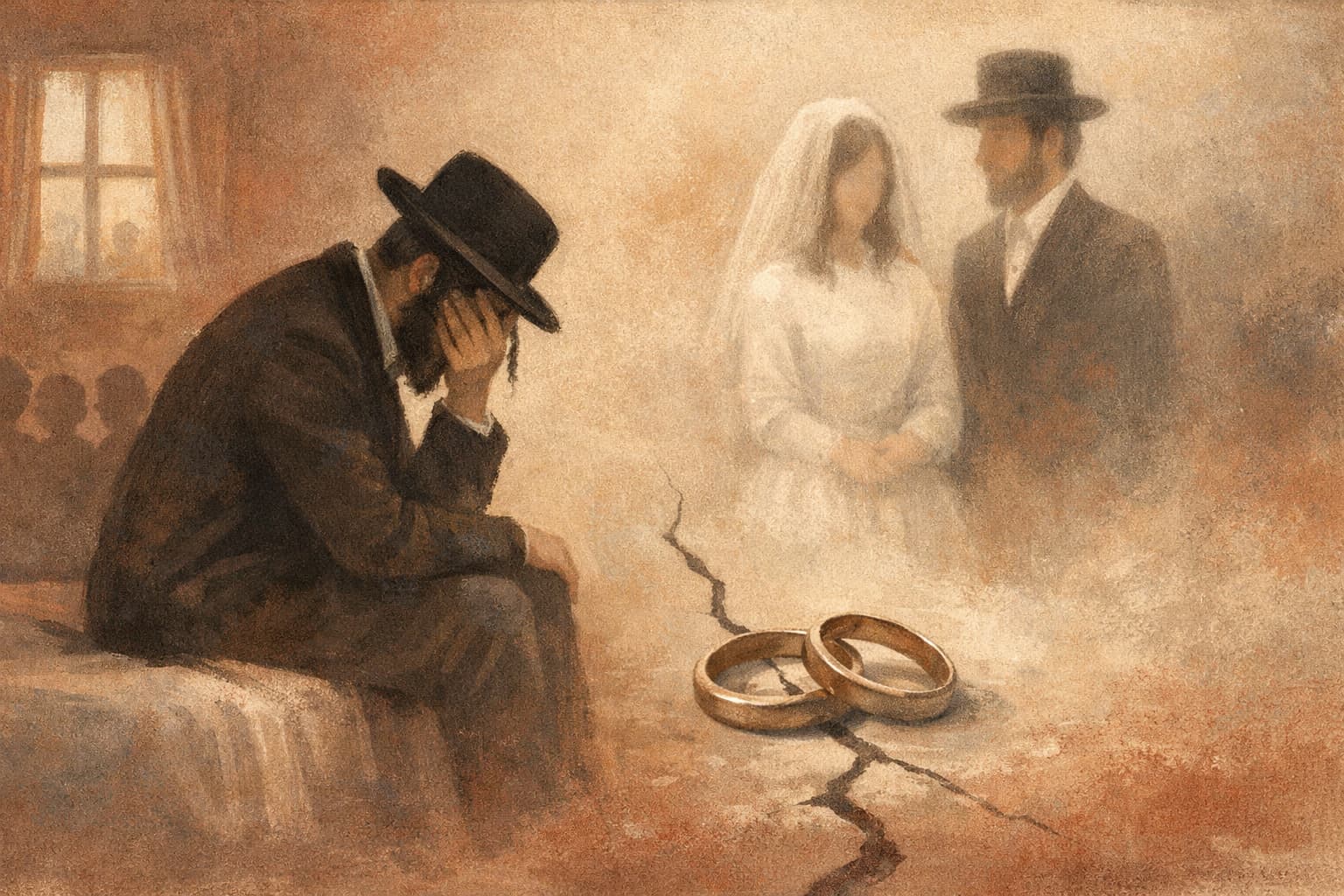
A 35-year-old Chasidic avreich, married for 17 years and father to six children, describes a life that looked stable and blessed from the outside but felt like a “transparent prison” inside. In a monologue published by therapist Mordechai Rot, he says his marriage was arranged when he was 19, after a brief courtship in which he ignored major doubts because of family pressure and the expectation to marry quickly.
He recalls that his parents presented the match as ideal, stressing her good background and virtues, while also telling him that if things looked fine, the families could move toward a broken plate and an engagement announcement. After the first meeting, he felt no attraction and was troubled by her forceful, sharp way of speaking. His parents urged a second meeting, saying appearance can be changed with makeup and clothing and that a strong woman would make a good householder. Still unsure, he yielded and the match was finalized that same evening.
He says the problems became clear after the wedding, once the “illusion” collapsed. He describes his wife as critical, humiliating, and constantly confrontational, and says every attempt to speak gently only brought harsher shouting. Over the years, as six children were born, the tension grew into repeated fights and daily frustration. He says he will not divorce because he cannot destroy his children’s lives or hurt the parents who celebrated the match, but concludes, “I am a walking dead man.”
Rot uses the testimony to argue that in the Chasidic marriage system, young people are often pushed to ignore their own instincts. He warns parents not to rush a shidduch because of family status, money, or institutional prestige, and says they must listen to a child’s doubts instead of dismissing red flags. His central warning is that marriage is not a quick purchase, and that a mismatched union can create long-term suffering and transmit pain to the next generation.