
Parents Urged to Set Clear Boundaries Using the 'Traffic Light' Method
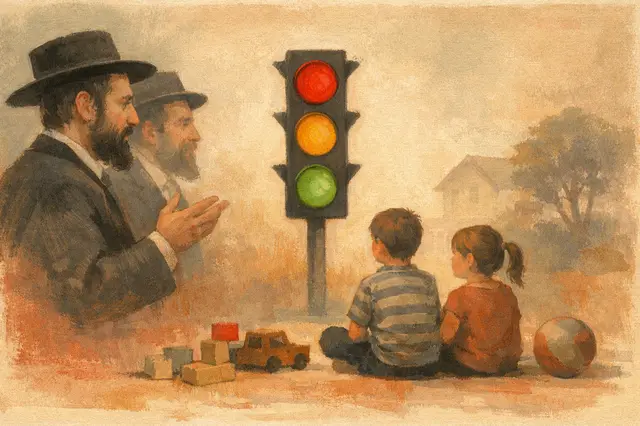
In the third episode of the podcast series “Talking About Education,” Rabbi Asaf Ratzon and Rabbi Moshe Rabi argue that parents should not fear setting limits out of concern they will “suffocate” their children. Instead, they say, complete freedom often leads to failure, while clear boundaries provide children with emotional security and stability.
The episode introduces the “traffic light” method as a practical framework for daily parenting. Green means normal, positive behavior, such as doing homework and meeting responsibilities, and parents are encouraged to praise and reinforce the child at this stage rather than relax completely. Yellow marks a warning zone, for example disputes between children over a toy or teen behavior that does not fit the home’s values, such as certain music styles. In these cases, parents should guide firmly but avoid turning the issue into a major conflict.
Red is described as the absolute limit, for situations involving loss of control, violence, or clear boundary crossing. Then the parent must stop the behavior immediately, firmly and clearly, but without rage or losing self-control. The episode also stresses that homes should have as few hard red lines as possible, so children do not feel constrained by too many prohibitions.
The speakers say parenting must adapt to age and context. A small child arriving at the Shabbat table in pajama-like clothes should not be treated the same way as a 15-year-old, and teenagers may need private conversations to avoid embarrassment. The central message is that children seek boundaries, and these limits, combined with love and authority, give them strength, even in difficult cases involving struggling youth.
