
US Eases Iran Oil Sanctions After First Day of Talks
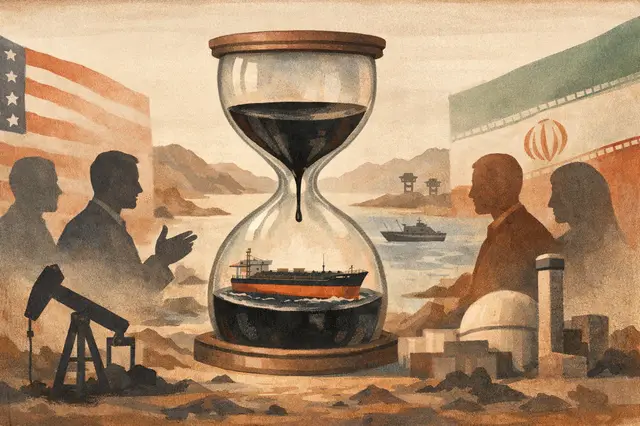
After one day of talks in Switzerland, the United States granted Iran an official sanctions waiver on oil. About an hour after Vice President JD Vance said at the Lake Lucerne summit that the Iranians had agreed to admit IAEA nuclear inspectors, Treasury Secretary Scott Bessent announced on X that Washington had issued a temporary 60-day general license allowing the production, shipment and sale of Iranian oil, as part of a memorandum of understanding with Tehran.
Bessent also said Iran had pledged in the Swiss talks to allow free and open passage through the Strait of Hormuz and to let inspectors from the International Atomic Energy Agency, the IAEA, enter the country. Vance called the talks significant, saying, “There was significant progress in the negotiations.” Oil prices fell sharply after the announcement, with Brent down 3.4% to $77.8 a barrel and WTI down 2.6% to $74.6 a barrel.
The Strait of Hormuz is one of the world’s main energy arteries, carrying a large share of Middle Eastern oil exports, so any threat to navigation there can quickly affect global prices. The US move to allow Iranian oil sales again was seen as a positive signal for markets and as a short-term step to advance dialogue between the sides.
Meanwhile, hours after Qatar and Pakistan, the mediators in the US-Iran contacts, announced a “deconfliction cell” to ensure compliance with ending military operations in Lebanon, Prime Minister Benjamin Netanyahu reiterated that Israeli forces have no restrictions across the border. He said Israeli troops in southern Lebanon have “full freedom of action” to prevent any direct or emerging threat and that Israel will remain in the security buffer zone there as long as needed. Israel and Hezbollah were not named in the talks, even though the fighting in Lebanon is between the IDF and the terror group. The Iranian and American delegations effectively ended the first round of talks today, with mediators saying they had made “encouraging progress” and would continue this week on technical details.
The same event, reported separately by each outlet. Open a few to compare what different newsrooms emphasize — and what they leave out.








Not the same event — other stories that share this one’s people, places, or theme: background, reactions, and follow-ups.
