Dudi Amsalem’s Mild Heart Event Highlights When Stents Are Enough and When Bypass Is Needed

Regional Cooperation Minister and Justice Ministry Minister Dudi Amsalem suffered a mild cardiac event in recent days, was hospitalized at Shaare Zedek Medical Center, and underwent a catheterization. On Tuesday morning, two days after feeling unwell and being taken for treatment, he was discharged home in excellent condition. The hospital said Amsalem arrived at its integrated heart center with a mild heart event, the catheterization was successful, and it wished him a full recovery.
The article uses Amsalem’s case to explain a broader medical question: when a blocked coronary artery can be treated with catheterization, and when coronary bypass surgery is the better option. Prof. Saar Menachem, head of interventional cardiology at Shamir Medical Center, said a heart attack usually means one of the coronary arteries is partially or completely blocked, reducing blood and oxygen to the heart muscle. If blood flow is not restored quickly, heart cells can be damaged, leading to long-term impairment. In the short term, he said, a heart attack can also cause life-threatening arrhythmias or cardiac arrest.
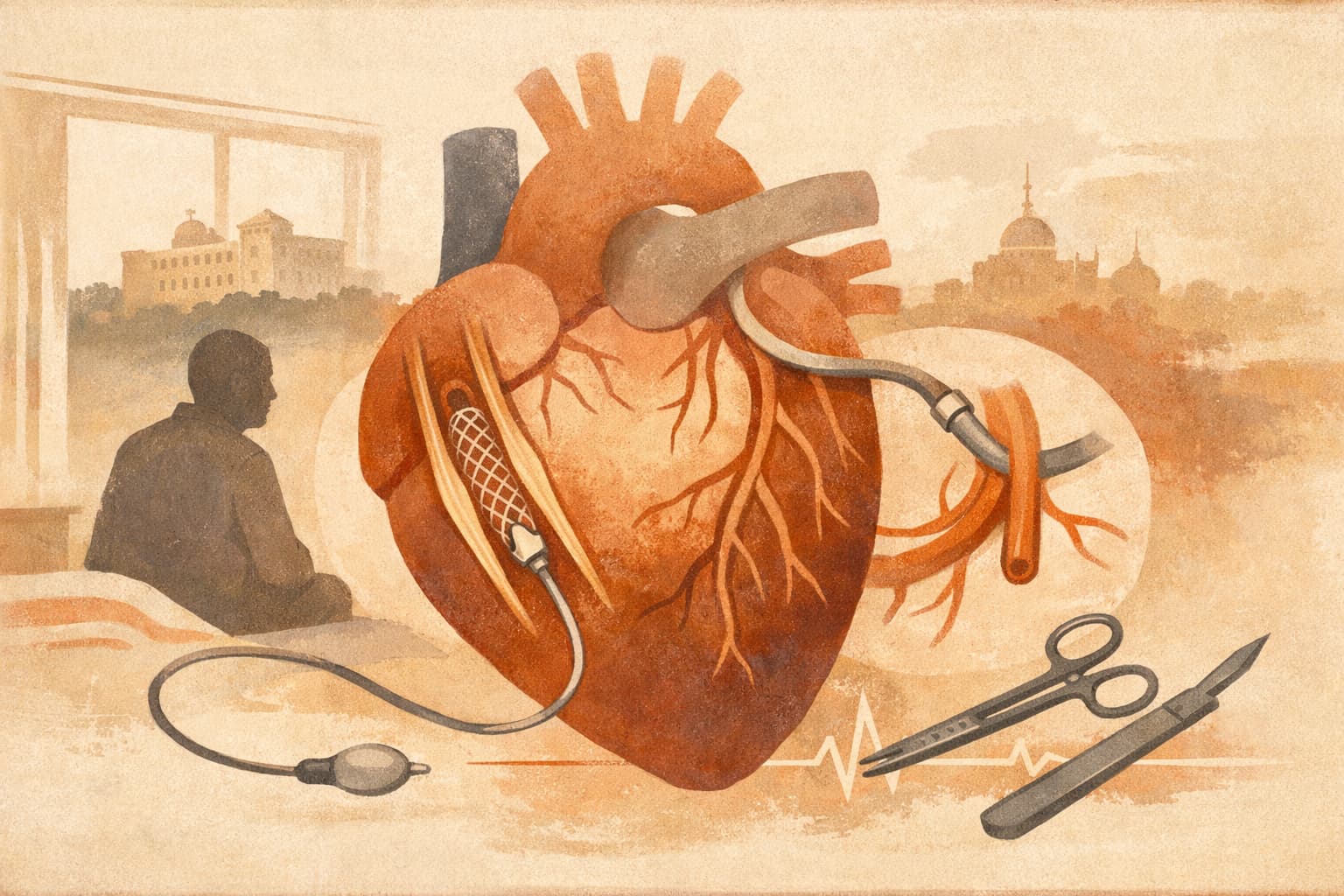
Menachem said catheterization has two stages, diagnosis and treatment. The doctor usually enters through an artery in the wrist, injects contrast dye, and uses X-ray imaging to find the blockage. If needed, a thin wire is passed through the narrowed section, a balloon is inflated to open it, and in most cases a stent is left in place to keep the artery open. Most patients feel little during the procedure, and some feel relief while it is still underway. He stressed that anyone with new chest pain should seek urgent medical care, ideally by ambulance, and noted that almost all public hospitals in Israel now provide 24/7 emergency catheterization services.
A catheterization does not solve the underlying disease, which is usually atherosclerosis and cholesterol buildup in the arteries, so future events remain possible. Still, Menachem said outcomes have improved because arteries are opened sooner, devices and medications are better, LDL targets are lower, diabetes and obesity are treated more effectively, and Israel has a strong national cardiac rehabilitation program. He added that catheterization is generally very safe and the danger of the heart attack itself is much greater than the risk of the procedure. Radiation exposure is also much lower than in the past.
Bypass surgery is usually considered when coronary disease is extensive and complex, especially with significant multi-vessel disease or involvement of all three main coronary arteries. In those cases, surgery can offer a better long-term solution by creating alternate blood routes using vessels taken from other parts of the body. Catheterization is less invasive and allows faster recovery, but bypass can provide superior long-term results for some groups, especially patients with diabetes and severe multi-vessel disease. Menachem said the decision depends on age, underlying illnesses, the severity and anatomy of the blockages, and the patient’s own preferences. After a heart attack, he said, life is not over, but patients need treatment, follow-up, lifestyle changes, and careful control of risk factors, especially cholesterol, smoking, blood pressure, weight, and physical activity.
The same event, reported separately by each outlet. Open a few to compare what different newsrooms emphasize — and what they leave out.








Not the same event — other stories that share this one’s people, places, or theme: background, reactions, and follow-ups.
