Shmuelik Yanai: “When You See Your Older Brother Become a Billionaire, It Whets Your Appetite”

Several months have passed since the solar-panel cleaning company Blade Ranger completed the sale of its core business, its subsidiary Solar Drone, to Nasdaq-listed VisionWave at a valuation of $140 million. At the time, the deal reflected a $22 million valuation for Solar Drone, four times the value of its parent company in Tel Aviv at the time, and it was carried out as a stock transaction. The man behind the deal is Shmuelik Yanai, who about a year earlier had injected Solar Drone’s business, as noted, solar-panel cleaning using drones, into Blade Ranger at a valuation of NIS 30 million. Even if his name does not mean much to you, you probably know his two older brothers, the family has eight children in all, attorney Penina Yanai, who appears frequently in the media and was recently appointed by the government to serve as Israel’s ambassador to Greece, and especially Ofer Yanai, the owner of the renewable energy company Nofar Energy and the Hapoel Tel Aviv basketball team.
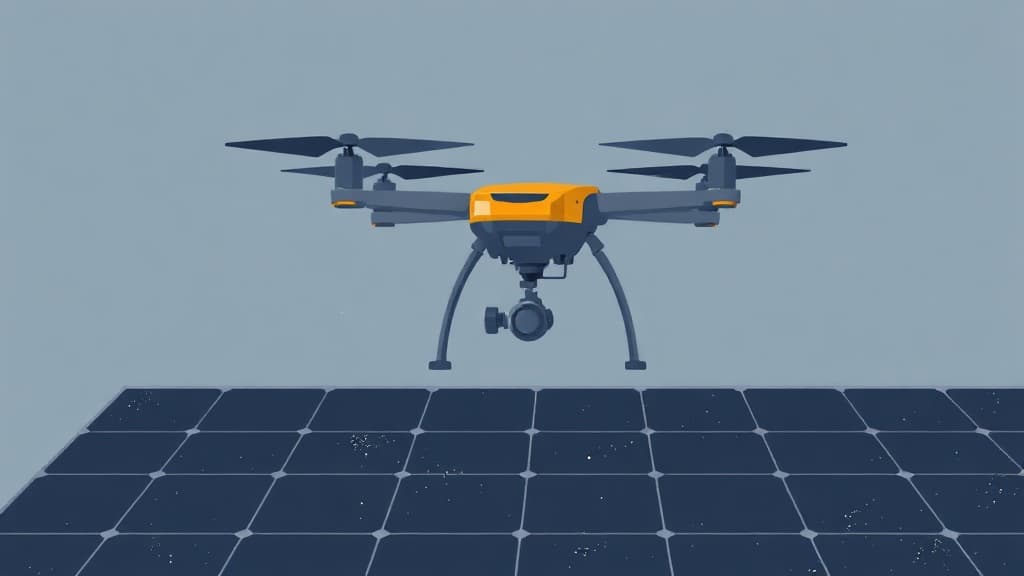
For Yanai, the sale of Solar Drone represented a significant value creation event, and another stop on a business path that began in entirely different worlds. In an interview with Globes, he says the company was born out of a conversation with his brother: “Solar Drone is the fourth company I founded. It was when Nofar Energy went public, in 2020. I spoke with Ofer, and he shared with me that what kept him up at night was an employee falling off a roof while cleaning panels. We understood that there needed to be a solution for cleaning floating reservoirs, roofs and special topographies. A big door opened for me into this world. Today there are walls that have been covered with panels. How do you clean a 90-degree wall? No robot can do that, but a drone can, and that is why I founded the company.”
By the way, Ofer Yanai invested NIS 2 million in Blade Ranger through Solar Drone, and so did singer Omer Adam. Despite the apparent potential, like the other Israeli players in the panel-cleaning sector, Ecoppia and Airtouch, Blade Ranger and Solar Drone’s operations never took off in Tel Aviv, and Yanai chose to sell early. In his view, “the fundamental failure was that I merged it into a company on the Israeli stock exchange,” he admits. “Even though Omer Adam came in as an investor and there was positive hype at first, this is not a place where you can easily raise money for small companies. There is extreme illiquidity here and a lack of valuation. And I am someone who knows how to raise money.”
Yanai also reveals the difference between himself and his brother: “If you know how to play basketball, that does not mean you know how to play soccer. As a businessman, you need to know what you are good at and what you are less good at. There is a saying, ‘Do what you do best, and outsource the rest.’ It is hard to find someone who is both a good entrepreneur and a good CEO, both a creative person with vision, and also someone who can sit on the brakes and on the financial statements.” He adds that “Ofer did not build a technology company, he did not develop a product, rather he is an entrepreneur who took existing off-the-shelf products and succeeded in implementing them much more quickly across many kibbutzim. My strength is investment banking, connecting money with entrepreneurship. I am a very good and creative investment banker, one of the best in Israel when it comes to small companies on Nasdaq. I know how to structure deals there, broker and merge companies valued at $500 million and below.”
So your business model is to launch companies and then sell them? “Yes. Take an idea, raise initial money, develop it to a certain stage of maturity, and then pass it on to a larger player or a major distributor in its field.”
Beyond his stake in Blade Ranger, which holds 28.1% and trades at a small market cap of about NIS 20 million, Yanai today owns three more startup companies: Meataphora, which operates in the cultivated meat field and previously raised capital at a valuation of $20 million; Saffron Tech, which grows the expensive spice saffron in an “innovative” way; and N2off, which works to reduce toxic greenhouse gas from crops such as wheat and corn. “When you look at a wheat field and a little girl walks through it, it looks like a symbol of sustainability, but in practice a wheat field emits nitrous oxide, which is 300 times more toxic than carbon dioxide,” Yanai explains.
His path was not a conventional one. Yanai is a lawyer and economist who took his first steps in the capital market from the other side of the barricade, as a journalist. “I was a married student with a baby and I had to support myself. I worked as a news editor on night shifts at TheMarker. One day a senior reporter at the paper saw me in the newsroom and suggested I write. I told her I did not understand anything about the capital market, but she replied that what mattered more was that I knew how to tell a story. Eli Daniel, who was a reporter at the paper and is now a senior official at the Israel Securities Authority, taught me about all the companies on the stock exchange. And I should note that back then there was no Google or artificial intelligence, everything was based on personal knowledge.”
Later, Yanai served as legal adviser and investment manager at Willi Food Group. Following an investment by Yorkville in Willi Food, the Americans brought him in, and since then he has served as a partner and representative of the fund in Israel. This is an investment fund that provides fast financing solutions to companies, through credit lines and debt-to-equity conversions. “Over the past 15 years we have invested more than half a billion dollars in dozens of Israeli public companies, most of them listed on Nasdaq, such as Tower and Elbit Imaging in the past.” The fund also made headlines recently after providing a huge $2.5 billion financing line to Donald Trump’s media company.
“The name Ofer opens doors”
Alongside his work as an investment banker, Yanai also began founding companies himself. “This transition was born out of a certain sense of saturation, in the end, selling money to companies is work that becomes technical. The second reason is Ofer’s success in the business world. When you see your older brother become a billionaire from a company he built with his own hands, Nofar is currently traded at a valuation of NIS 9 billion, it tickles you and whets your appetite.”
How does your relationship with Ofer play out in day-to-day business? Does he help you? “We talk almost every day, he is the oracle of the green energy field, and also my crystal ball. It is very hard to catch him out. When I evaluate an investment in a new startup, for example in the data center field, I use his understanding of the market. He helps me a lot.”
When you tell people you are Ofer’s brother, does that help? “It opens doors, absolutely. And it also gives a lot of comfort and confidence to the person opposite me. The whole business world is based on trust.”
Ofer Yanai’s influence is also evident in the sports arena. Shmuelik, who in the past was a die-hard Maccabi Tel Aviv basketball fan, changed colors after his brother took control of Hapoel Tel Aviv: “I had a four-seat season ticket at Maccabi. But since Ofer bought Hapoel, I am with them. Last year I traveled with them to European Cup games in Bulgaria, on long snowy bus rides, in remote places. When it is my brother’s business, of course I support Hapoel, let them win the championship.”


