
Teen vaping surges as e-cigarette reform stalls in committee
Translated & summarized from Calcalist by baba
Israel’s Health Ministry reported a sharp rise in teen e-cigarette use in 2025, while a reform bill to regulate and tax the market remains stalled in the Knesset Finance Committee. Officials are split over whether to advance a tax order before the full law is approved.
The story in 5 lines · by baba
- Teen vaping jumped sharply in 2025 among Arab 8th-grade boys and Jewish 10th-grade boys.
- High taxes and weak enforcement pushed Israel’s e-cigarette market into the black market.
- A reform bill would register importers, limit product sizes, and add enforcement staff.
- The tax plan would cut refill taxes and add a 10-shekel tax on devices.
- Ministries disagree on signing the tax order before the full law passes.
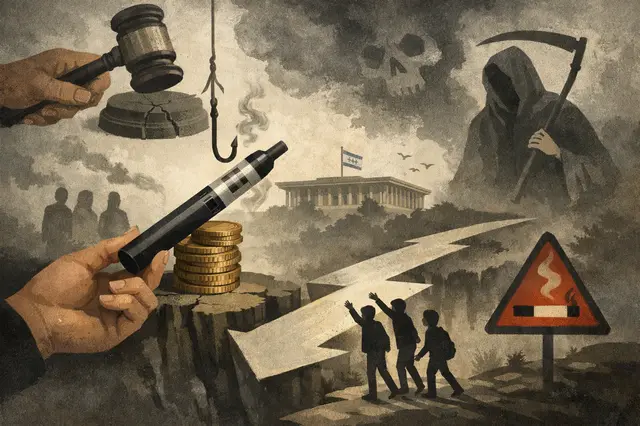
New Health Ministry data show a sharp rise in e-cigarette experimentation among Israeli teenagers in 2025. Among Arab boys in 8th grade, 25% tried vaping, and among Jewish boys in 10th grade the figure topped 31%, up from about 14% and 22% in 2023. The numbers were published last week in the ministry’s annual smoking report.
The article says the surge is not surprising in a market where taxation is extreme and enforcement is weak. A liter of refill liquid is taxed at 19,000 shekels, about 23 times the OECD average, while 2023 tax revenues from the sector were only 60,000 shekels, suggesting most sales moved to the black market. The result, it argues, is an unregulated trade with no oversight of ingredients, and in some cases loose refill liquids sold for users to assemble themselves.
A joint reform drafted by the Tax Authority, the Finance Ministry and the Health Ministry has been stuck in the Knesset Finance Committee for months. The plan has two parts, a new registration and supply system that would require importers to register and retailers to buy only from registered importers, plus stricter product limits, including uniform coloring, devices capped at 2 ml and refill bottles capped at 10 ml. It also would add about 20 Tax Authority enforcement posts.
The second part is a major tax overhaul. The refill tax would drop from 19 shekels per milliliter to 1 shekel, or possibly 1.5 to 2 shekels, in line with some OECD countries, and devices would be taxed at 10 shekels each, after an earlier proposal of 30 shekels was abandoned. Officials say the idea is that lower taxes plus stronger enforcement would shrink the illicit market and reduce vaping.
The government is split over whether Finance Minister Bezalel Smotrich should sign the tax order before the broader bill advances. Tax officials say the order could still bring noncriminal actors into the sector, but the Finance and Health ministries increasingly agree it should not move without the full law. Health Ministry officials say they were influenced by civil health groups, which warned Smotrich not to sign alone. Committee chairman MK Hanoch Milwidsky says the tax order is expected to come up Wednesday, while the law itself has only begun discussion.
Mentioned
The same event, reported separately by each outlet. Open a few to compare what different newsrooms emphasize — and what they leave out.
Centre 1Other 1
