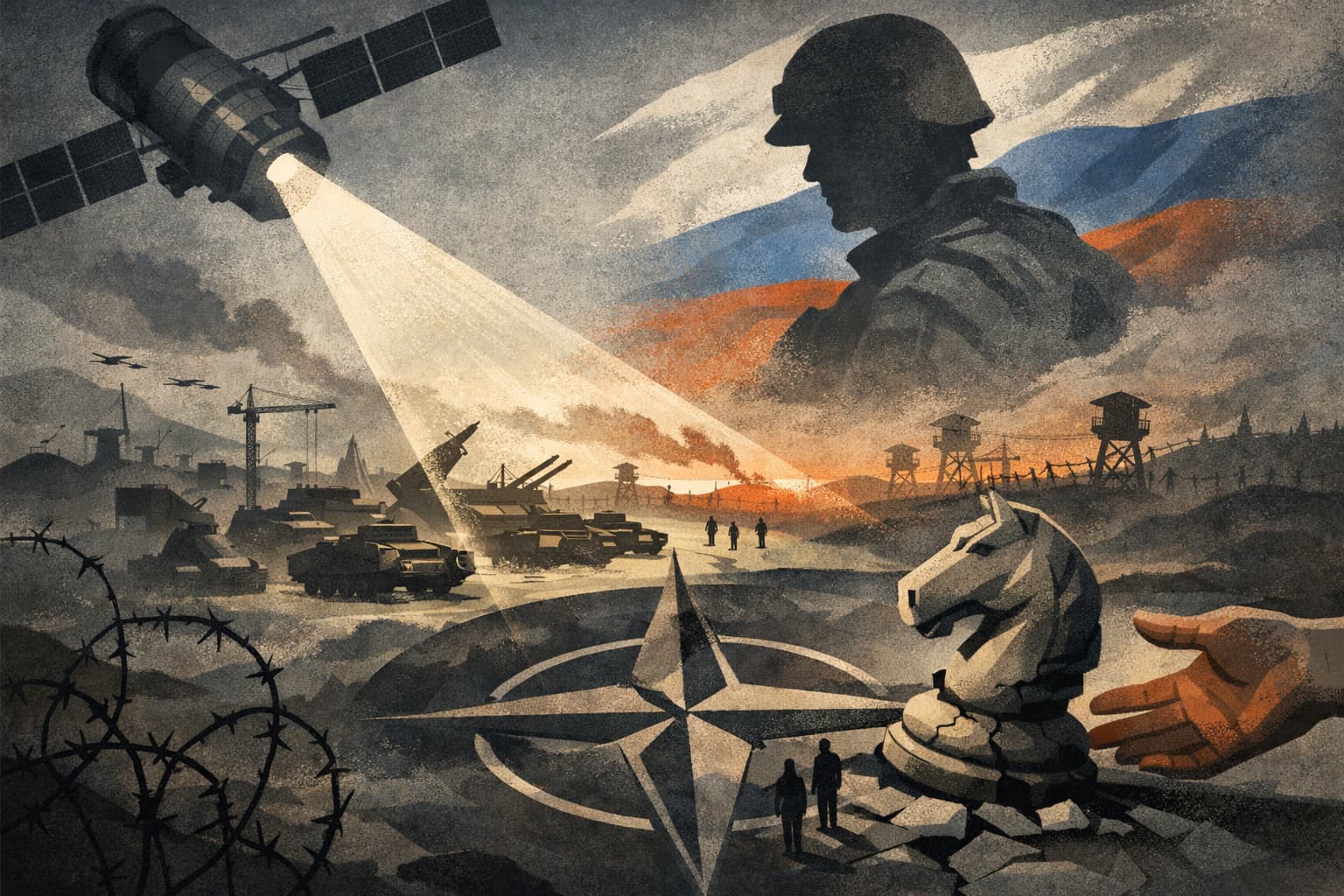
Satellite Images Show Russia Expanding Military Sites Near NATO Borders
Concerns are mounting in Europe that Vladimir Putin is preparing for a broader war with the continent, after satellite images showed dozens of Russian military bases expanding along the country’s borders with NATO states. The images, published by Denmark’s national broadcaster with intelligence cooperation, show construction work at the sites, including new barracks, warehouses and military vehicles added over the past two years.
According to the report, one of the Russian compounds is in Pechenga in the Arctic region, only five kilometers from the Norwegian border. Intelligence assessments indicate that Russia’s Murmansk region, which borders Finland and Norway, could now house up to 17,000 additional troops within striking distance of neighboring countries. Another military site near the Estonian border has also accumulated a significant number of vehicles, the satellite photos showed.
The expansion comes amid growing concern over Russia’s increasingly hostile posture toward NATO. The Daily Mail reported that the U.S. Defense Department has warned Britain that Russian aggression against NATO is now at record levels. The newspaper also said Russian aircraft and drones violated NATO airspace last month more often than at any other point this year.
The buildup is adding pressure on British Prime Minister Keir Starmer, who is facing months of bitter internal disputes over military funding. Those tensions led to the dramatic resignation of Defense Secretary John Healy last Thursday, according to the report. Healy accused Starmer and Foreign Secretary Rachel Reeves of failing to protect national security. The Daily Mail said the total number of incidents in 2026 has already surpassed the full-year total for 2025.
The same event, reported separately by each outlet. Open a few to compare what different newsrooms emphasize — and what they leave out.

Not the same event — other stories that share this one’s people, places, or theme: background, reactions, and follow-ups.


