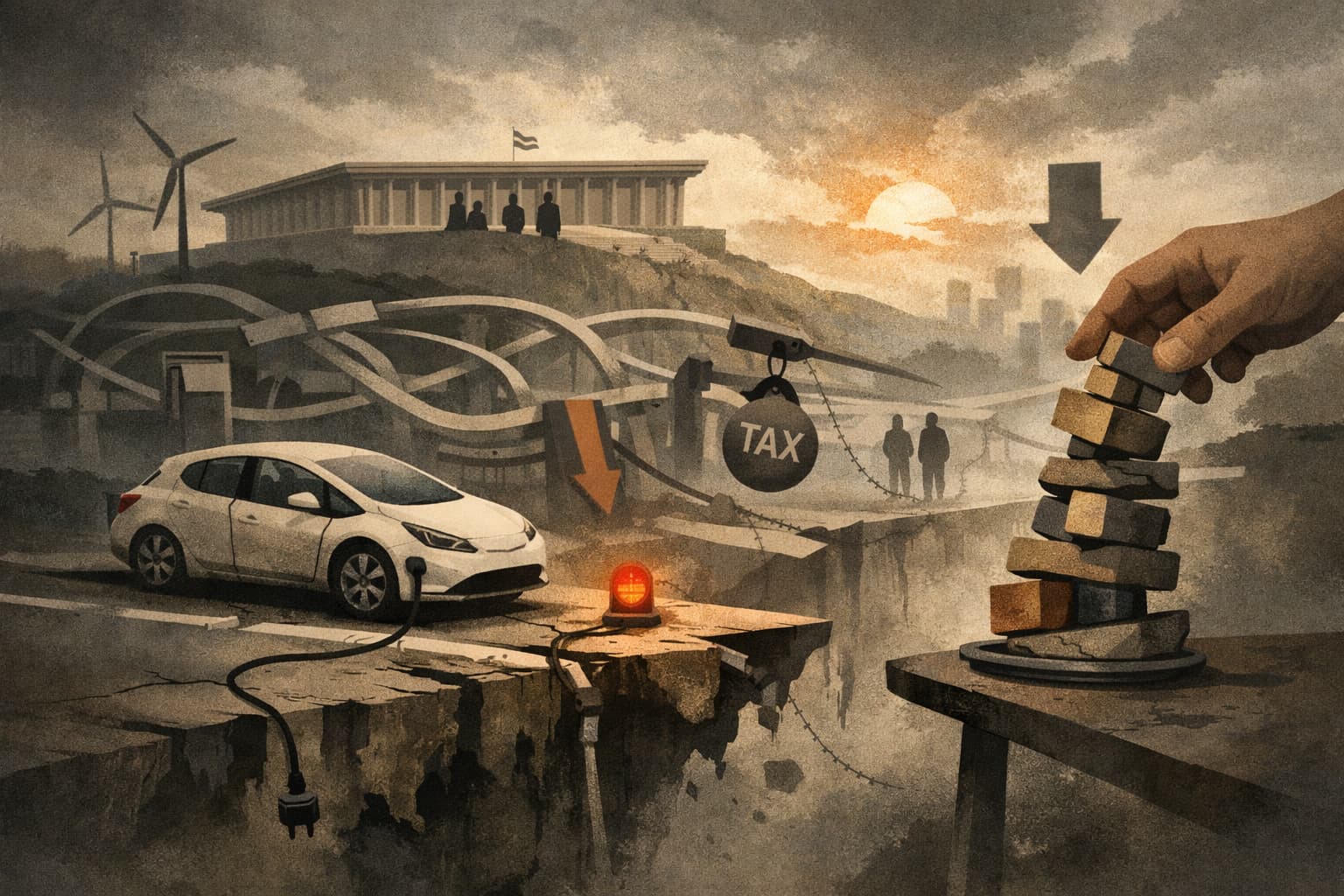
Knesset to Debut Debate on Electric Car Sales Slump, and What Israel Must Fix

At the end of last month, the Knesset secretariat received a request for a fast-track debate on the sharp drop in electric vehicle sales, a problem importers have been reporting for months. The session, titled "The crisis in Israel's electric vehicle sector, regulatory uncertainty and harm to the public seeking affordable electric cars," is expected in the coming weeks. According to the Israeli Vehicle Importers Association, 16,216 electric cars were delivered in the first five months of this year, out of 95,971 total cars, about 16 percent. In the same period of 2025, 23,303 electric cars were delivered out of 73,750 total, or 31 percent.
The article says delivery figures can be misleading because some are "fake deliveries," when importers register cars to themselves. That often happens before a planned tax hike, when importers rush large volumes into Israel in December to clear customs before the excise rises and then release them gradually in the following months. That did not happen this year because of uncertainty over the purchase tax. Even so, the writer argues the deeper issue is that Israel says it wants cleaner cars, but electric car adoption has stalled. In 2024, electric vehicles reached nearly 25 percent of private-car sales, up from about 10 percent in 2022, yet this year deliveries are expected to fall back to roughly 2022 levels.
The article lists several reasons: unstable purchase tax, frequent policy shifts, lack of transparency for buyers, weak secondhand-market support, and poor treatment by the state of fleets, charging, and maintenance. It says the market is flooded by cyclical imports, prices are still distorted, and buyers fear resale losses more than fuel costs. It also criticizes the absence of a clear plan for training mechanics, the possible future mileage tax, and the removal in 2025 of the reduced registration fee for EV owners, which raised the annual test from hundreds of shekels to thousands.
The piece argues that Israel needs a stable policy through 2030, with clear taxes, transparent pricing, and incentives tied to market conditions. It proposes mileage-tax certainty, purchase-tax disclosure, flexible VAT or licensing benefits when EV sales fall, larger company-car incentives, mandatory EV quotas in state procurement, and a clearer rulebook for military bases, where many EV owners cannot park. The basic conclusion is that without regulatory certainty and better policy design, demand will keep weakening despite lower prices and more models.

