
Trump Halts Secret Ground Operation Against Iran Nuclear Sites
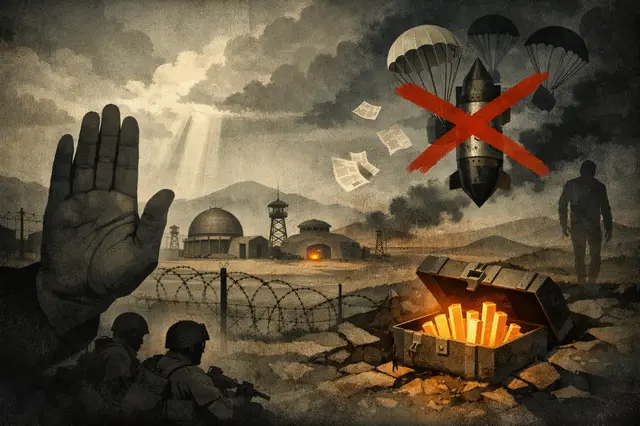
The U.S. military had drawn up an urgent, secret plan to send commando and infantry forces into Iran to physically seize the country’s enriched uranium, but President Donald Trump canceled it only hours before launch because of major security risks and a separate quiet diplomatic breakthrough with regional leaders.
According to CNN, the Pentagon prepared a detailed operation targeting strategic sites in Natanz, Fordow and Isfahan, where about 440 kilograms of enriched uranium are believed to be stored deep underground. The mission was meant to be a fast raid to remove the nuclear material from Iranian control, but military officials warned it could quickly escalate into a broader invasion.
The urgency was such that Joint Chiefs Chairman Gen. Dan Caine left NATO meetings in Europe to hold an emergency briefing at CENTCOM headquarters in Florida. Caine, appointed after Trump dismissed Gen. Charles Brown, led operational planning with the White House. Intelligence assessments said the Isfahan facility holds most of the stockpile, enough for at least five nuclear explosive devices.
Senior military officials described the plan as involving “extreme risk,” warning of heavy American casualties and possible regional war that could disrupt global shipping and trigger a deep economic shock. Fears that Iran and its proxies in Lebanon, Iraq, Yemen and Syria could join the fighting were central to the decision. The operation was ultimately shelved after leaders from Qatar, the United Arab Emirates and Pakistan conveyed willingness to reach a political deal to remove the uranium without force.
After canceling the mission, Trump said, “We reached a great agreement,” and declared, “The war with Iran ended today.” He has long said Iran must not obtain nuclear weapons, and last week he demanded that Iran’s enriched uranium be handed to the United States or destroyed. The move comes amid rising unrest inside Iran, where protests erupted in Tehran against the emerging agreement with Washington.
The same event, reported separately by each outlet. Open a few to compare what different newsrooms emphasize — and what they leave out.





Not the same event — other stories that share this one’s people, places, or theme: background, reactions, and follow-ups.


