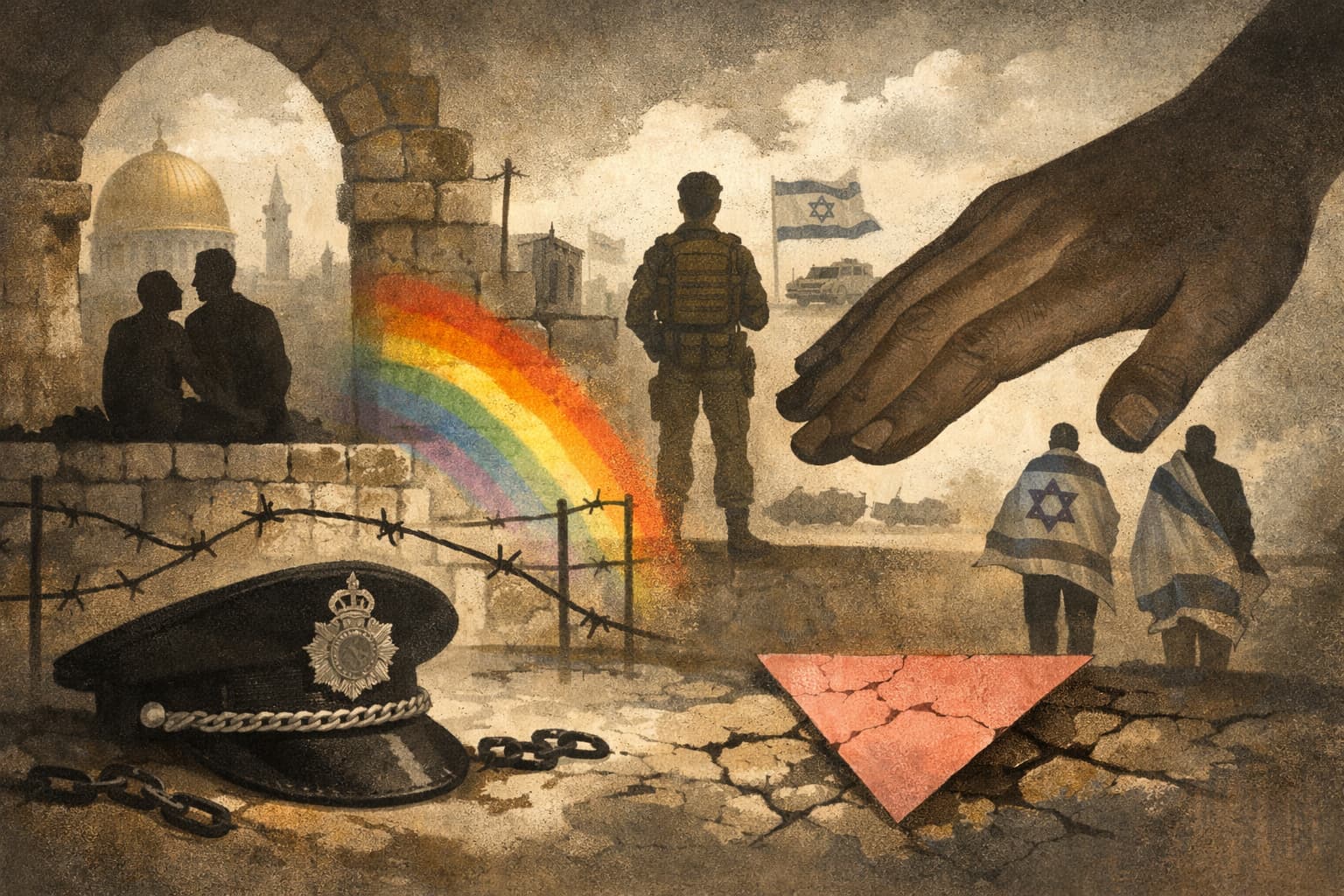
New book traces a hidden gay history in Mandate-era Palestine

Historian and journalist Dr. Ofri Ilani says his new book, "Return to Sodom: Homosexuality and the New Jew," uncovers a long, little-known homosexual past in the Land of Israel, including what he describes as a gay renaissance under the British Mandate. He says the turning point came when he searched historic Jewish newspaper archives for terms related to male homosexuality and found articles from the 1920s and 1930s, mostly hostile but still revealing.
Ilani says he then moved on to archives and interviews with elderly gay men, some now dead, and concluded that the Mandate years were a period of gay flourishing, followed by a near-fallow period after Israel’s founding. He says a 95-year-old interviewee told him he had kissed British soldiers during the Mandate and confirmed that the Jewish community then knew Sir Arthur Wauchope was gay. Ilani argues that the British introduced the criminal ban on sex between men, a law that Israel later inherited and only repealed in the late 1980s, even though homosexual activity also existed in British official circles.
According to Ilani, rumors and testimony point to gay activity around Wauchope, the fourth High Commissioner, and Ronald Storrs, Jerusalem’s first governor. He says cruising took place in London Garden in Tel Aviv and the Mamilla Pool in Jerusalem, while more exclusive venues included the Armon Hotel in Tel Aviv, the Kalia Hotel at the Dead Sea, and Jerusalem’s King David Hotel, where Sudanese doormen allegedly also provided sexual services. He also writes about Jewish figures in early German homosexual movements, especially Magnus Hirschfeld, who visited Palestine in the early 1930s with his lover and gave popular lectures in Tel Aviv, Jerusalem, and kibbutzim.
The book also examines Zionist organizations, including the German-Jewish youth movement Blau-Weiss, where leader Walter Moses was allegedly removed after sex with a youth member and later founded Dubek in Palestine. Ilani says early Hashomer Hatzair also contained ideas of erotic male brotherhood, and he devotes a full chapter to Yedidia Hacohen, whom he portrays as an openly gay man whose diaries record fantasies about men in Jerusalem, British soldiers, and the turmoil of the 1929 riots and the Arab Revolt. He says Israel after independence became a mobilized, ideological, militaristic society, and that today’s LGBT community has become more mainstream, nationalist, and militarized, which he sees as a loss. A public discussion of the book is scheduled for Sunday at 18:00 at the Van Leer Institute in Jerusalem, and a launch event will follow on Wednesday, 17.6.36, at 20:00 at Radical House in Tel Aviv.
Not the same event — other stories that share this one’s people, places, or theme: background, reactions, and follow-ups.


