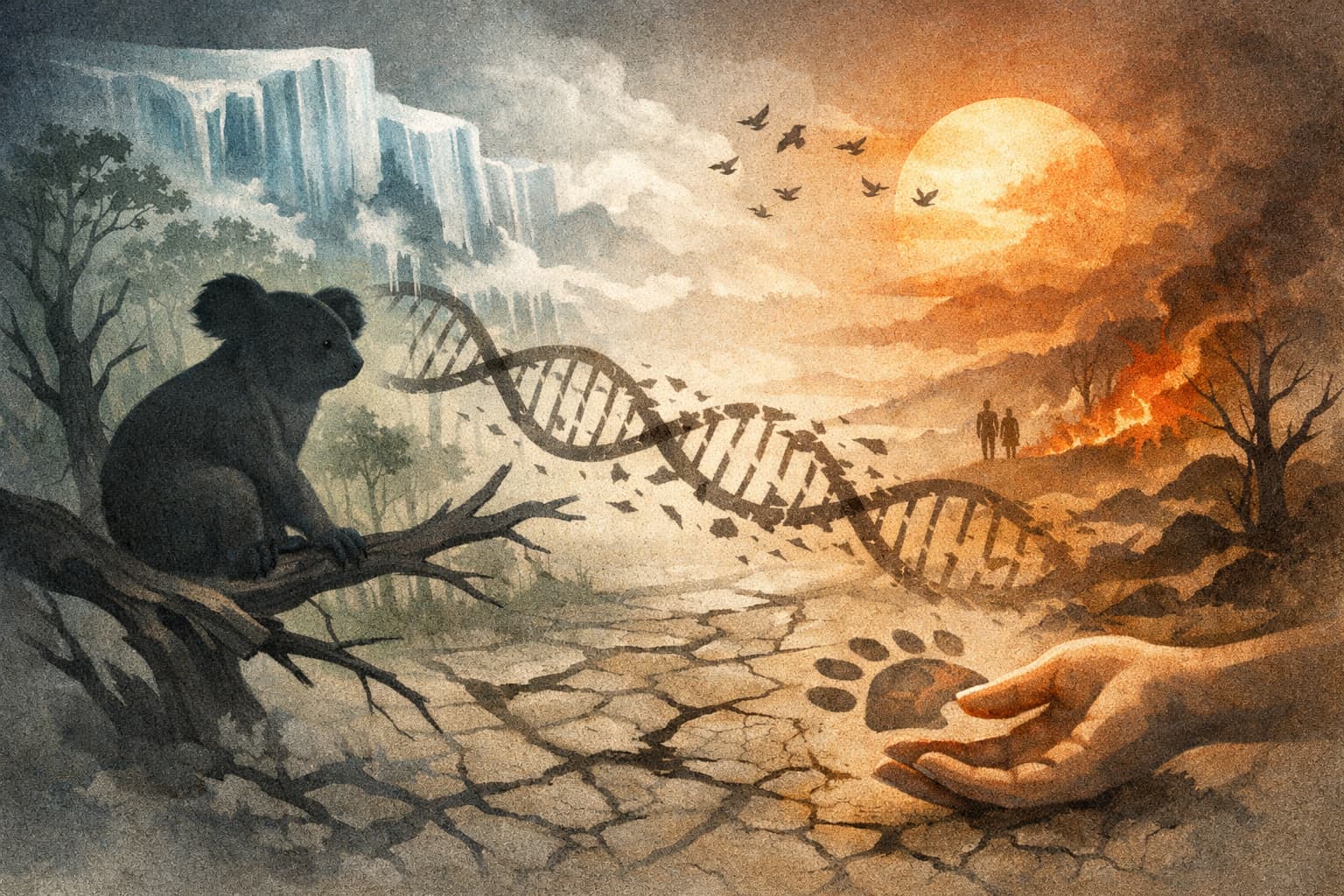
Koala DNA Study Rewrites the Species' Pre-Human Population History

A new study says koalas suffered a sharp population decline about 100,000 years ago, long before humans arrived in Australia. The findings, published in Molecular Biology and Evolution, overturn earlier research that placed the major decline only after human settlement about 65,000 years ago.
The work was led by Toby Kovács, a doctoral researcher in the University of Sydney’s Laboratory of Molecular Ecology, Evolution and Phylogenomics. He said, “The study rewrites the timeline of the genetic history of koalas in Australia.” Kovács explained that because koala fossils are extremely rare, genomes provide the best record of ancient population history, preserving genetic information from ancestral populations.
The researchers analyzed 457 koala genomes and, for the first time, directly estimated koala mutation rates, finding they are about half the human rate. That allowed the team to trace population changes back 100,000 years. The study links the decline to severe climate change during the late Pleistocene, including the last ice age, when Australia became colder, drier, and more fire-prone. Around 70,000 years ago, expansion of the Nullarbor Plain cut suitable koala habitat and split eastern and western populations, with the western group eventually dying out.
As conditions improved in the current interglacial period, surviving eastern koalas expanded and split into five genetic populations between 16,500 and 6,000 years ago, forming today’s groups along Australia’s east coast. Kovács said the same mutation-rate method could help test whether other Australian species also declined before humans. The study may also aid conservation, as modern koala populations in Queensland and New South Wales have kept falling, while those in Victoria are recovering. Koalas remain vulnerable, and in some places endangered.

