Former IDF General Warns Israel’s Yellow Line Could Become a Strategic Trap

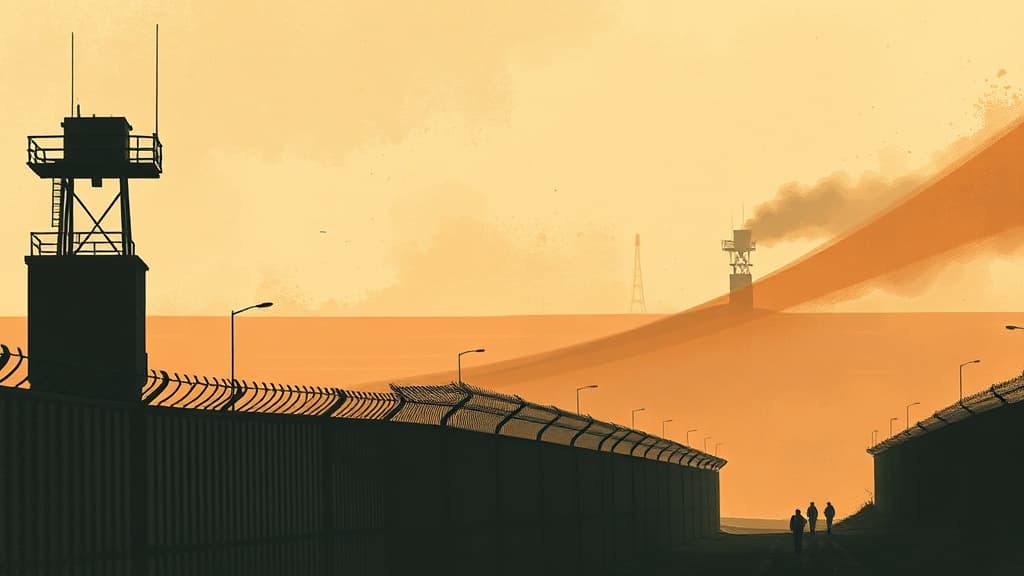
Retired Brigadier General Erez Wiener, chairman of the Security Movement, has cautioned that the so-called "Yellow Line" established along Gaza and southern Lebanon risks becoming a new version of the Bar-Lev Line, a defensive failure from Israel’s past. The Yellow Line, created following the September 2025 ceasefire agreement with Gaza, marks the boundary between Israeli-controlled areas and Hamas-held territory. Initially a series of yellow-painted concrete blocks, it has evolved into a substantial barrier with trenches, embankments, and military posts covering about 70% of Gaza’s territory. A similar Yellow Line has also emerged in southern Lebanon after a shaky ceasefire agreement there.
Wiener draws historical parallels to the Bar-Lev Line along the Suez Canal and the fortified positions in southern Lebanon, both of which ultimately failed to prevent enemy breakthroughs due to flawed defensive doctrines. He emphasizes that static fortifications and fixed positions can become vulnerabilities rather than strengths if they replace mobile defense tactics. According to Wiener, effective defense requires dividing the area into three zones: a front security zone with mobile forces creating uncertainty for the enemy, a holding zone with continuous or partial obstacles and protected posts, and a rear zone for logistics and reserves.
He criticizes the current approach of fixed posts along the Yellow Line, warning it invites enemy attacks and drains resources for self-defense rather than offensive pressure. Wiener advocates for a revised defense concept that includes a "buffer zone" free of civilian presence to deny the enemy safe operating areas, and a holding zone set back from the border to protect nearby Israeli communities. He stresses the importance of integrating settlement policies into security planning, arguing that Israeli presence on the land is a key element of victory and deterrence.
Wiener calls for a comprehensive reassessment of defense strategies along Israel’s northern and southern borders, urging coordination among all relevant parties before establishing new posts. He concludes that Israel must learn from past wars by prioritizing mobility and unpredictability over static fortifications, and by linking territorial control with security to effectively counter hostile forces.


