
Israel and US Face Challenge of Iran’s Deep Underground Nuclear Facility at Mount Pickaxe
Translated & summarized from Now 14 by baba
Israel and the US are deeply concerned about Iran’s heavily fortified underground nuclear site at Mount Pickaxe, which cannot be destroyed by conventional bombs and may require a complex ground assault. Iran’s ongoing construction there violates agreements, escalating tensions and prompting Israeli diplomatic pressure in Washington. The site is now a critical focus in efforts to stop Iran’s nuclear program.
The story in 6 lines · by baba
- Iran’s Mount Pickaxe nuclear site is too deep for conventional bunker-busting bombs to penetrate.
- The facility is currently empty but under active construction, violating US-Iran agreements.
- Advanced bunker-busters like the B61 are unlikely to be used due to nuclear weapon taboo concerns.
- A complex ground invasion is the main viable option to neutralize the site.
- Israel has pressed the US with red lines on Iran’s nuclear program, focusing on Mount Pickaxe.
- Ongoing construction and diplomatic tensions make the site a critical flashpoint in US-Iran relations.
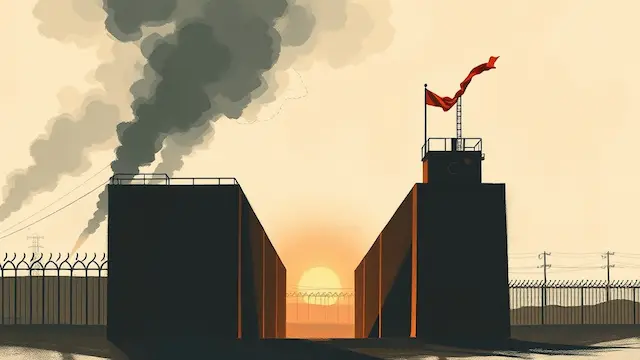
The underground nuclear facility at Mount Pickaxe near Natanz, Iran, has raised significant concern among Israeli and US officials due to its extreme depth and construction. The site, believed to be designed for uranium enrichment centrifuges, remains empty of equipment but continues to undergo construction, violating agreements with the US, particularly a clause mandating the preservation of the nuclear program’s status quo.
Conventional bunker-busting bombs, including those used against the Fordow facility, cannot penetrate the facility’s depth. Even advanced bunker-buster bombs like the B61 are considered unlikely options due to fears of breaking the taboo against tactical nuclear weapon use, especially given the geopolitical risks involving Russia. Consequently, the primary military option to neutralize the site appears to be a complex ground invasion or alternatively collapsing tunnel entrances, though past experience shows Iran can clear debris and restore functionality.
Recent satellite images confirm ongoing construction, intensifying tensions between Washington and Tehran. The facility’s existence and development have become a critical point in Israeli-US security discussions. An Israeli delegation reportedly visited Washington to present Israel’s red lines on Iran’s nuclear program, with the Mount Pickaxe site a central concern. These diplomatic efforts may have influenced recent statements by former US President Donald Trump, who declared intentions to target the site.
The combination of Iran’s continued work at Mount Pickaxe, its breach of international commitments, and close Israeli-US coordination positions this facility as a pivotal factor in efforts to halt Iran’s nuclear advancement.
Mentioned



