
BYD Atto 3 Returns With a Sharply Lower Price
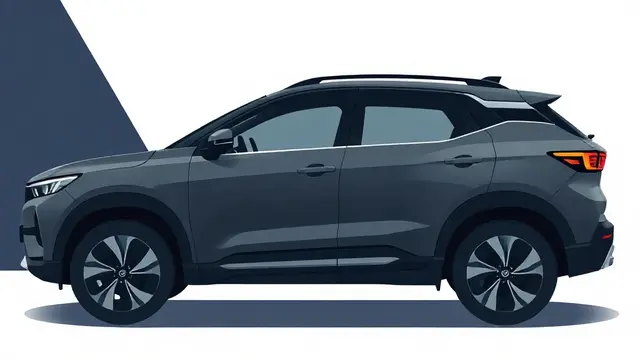
BYD Atto 3 Evo / Audi Atzion Price: NIS 155,000 Competitors: Deepal S05, Leapmotor B10, Jaecoo 5, Aion V Liked: performance, space, equipment, around 400 km of real-world range, price Didn’t like: road behavior and ergonomics that still need refinement, and why does it look like the previous model? Rating: 8.5/10
The BYD Atto 3 made history in the Israeli car market when it became the first electric car to become the country’s best-selling car, and also the first Chinese model to hold the title. That happened in 2023, and it repeated the feat in 2024. The Chinese crossover was not the first in the market, but it offered a good combination of size, equipment, space and range at a time when an electric car seemed like a hard-to-resist deal, with low taxation, a symbolic licensing fee and the promise of huge savings in energy costs, electricity versus gasoline.
34,000 Atto 3 cars are currently on Israel’s roads, and it is still the most common electric car, but the market has changed. It is packed with competitors, almost all of them from China, and the state has significantly cut into the promised benefits. The discount on the licensing fee was canceled, purchase tax on electric cars was raised, and more electric-vehicle owners, or people considering becoming such, are dealing with a shortage of public charging stations, which is critical for anyone without a fixed parking space where they can charge. Now the Atto 3 arrives after a facelift and a significant price cut.
Although the exterior design has changed only slightly, the new model unveiled at the Beijing auto show is based on an updated platform, switched to rear-wheel drive, uses an 800-volt battery that shortens charging times, and is offered for the first time also in a dual-motor version, the cheapest in the market. Price: from NIS 155,000 for the rear-wheel-drive version, and from NIS 165,000 for the dual-motor version. That is a reduction of almost NIS 20,000 from the Atto 3’s previous list price, and almost the same price at which the car was launched four years ago, at NIS 156,000. Can you remember anything else that costs today what it did in 2022? The drop in the dollar exchange rate and the price war among Chinese EV makers contributed to the reduction.
Design: The unwritten rule of the automotive industry, formulated by General Motors legend designer Harley Earl nearly 100 years ago, says that it is important to update a car’s shape, preferably every year, so the buyer knows a new and improved product is in front of them. Although the Atto 3 underwent a much bigger change than usual for a facelift, in many respects it is a new car, yet it looks almost the same. Even the front end, the part easiest for the manufacturer to change, stayed the same. There are only subtle changes in the front and rear bumpers, and a more noticeable change in the rear spoiler. The dimensions have not changed: length is now 4.45 meters, width 1.875 meters, height 1.615 meters. Wheelbase: 2.72 meters.
Interior: Here too, little has changed. The materials are higher quality, and the light color of the test car, at no extra charge unlike some other cars, adds to the atmosphere and sense of space, but even the guitar-string-like storage pockets in the doors remain, only now they are black rather than red and less prominent. The central multimedia screen is now 15.6 inches as standard, and no longer rotates on its axis as before. There is also an 8.8-inch instrument display. The gear selector has moved behind the steering wheel, freeing up space for storage compartments. Overall, this is a cockpit very similar to the Atto 2, or to other models from the brand.
The operation is better than the Chinese average, with physical buttons for turning the car on and off, audio volume, selecting drive mode, regenerative braking strength and mirror adjustment, all things that in some other Chinese EVs are done by navigating through the screen. But the air-conditioning is still operated through a row of touch controls at the bottom of the screen, and the icons on the screens are too small. There is no change in the rear either, but the absence of the panoramic roof in the base version is more noticeable.
The front seats are comfortable and the space is good, and it is easy to get into the high, commanding driving position that many crossover buyers prefer. There is also plenty of room in the back, with an air-conditioning vent, but the seat is a little low. There is reasonable space for three small children in child seats. The rear trunk volume has grown by 10% to a practical 490 liters.
The trunk is one of the beneficiaries of the move to the new platform. It grew by 50 liters to 490 liters, and comes with a power tailgate, but you still will not find a spare wheel underneath it. There is also a relatively large front trunk with a volume of 101 liters, enough for the charging cable and other items you always want in the car, leaving the large rear cargo area free for shopping or travel gear.
The Design trim level, which we drove and starts at NIS 155,000, is now the entry-level model. Equipment includes 18-inch alloy wheels, electrically adjustable driver and front passenger seats, a 15.6-inch multimedia screen with Google operating system and wireless Android Auto and Apple CarPlay, an 8.8-inch digital instrument cluster, wireless phone charging, a standard dashcam, a power tailgate and a 360-degree camera. The Excellence trim level, from NIS 165,000, adds, besides all-wheel drive and extra performance, a head-up display, heated front seats and a panoramic roof with an electric blind.
Safety: The outgoing model received 5 out of 5 stars in the European crash test. Active systems include autonomous emergency braking in forward and reverse, adaptive cruise control, lane keeping and lane departure correction, blind-spot monitoring and collision prevention, driver attention monitoring and an alert for forgotten children.
Motor and performance: BYD gave the refreshed Atto 3 the EVO nickname, short for evolution in English and also the name of some past performance versions from other manufacturers, the best known being the Mitsubishi Lancer high-performance variants that starred in the dreams of car enthusiasts two decades ago. It was even weaker than the basic Atto 3, which shows what EVs have done to performance.
The rear-wheel-drive version was upgraded from 204 hp to 313 hp and now accelerates from 0 to 100 km/h in 5.5 seconds, with a top speed of 180 km/h. The dual-motor version adds a front motor, and combined output reaches 449 hp with 56 kgm of torque, allowing it to cut another 1.6 seconds to 3.9 seconds overall, on the way to 200 km/h. Performance is indeed very good even in the base version. The launch acceleration is not too strong, overtakes are quick, and there is plenty of power even on mountainous climbs. It is an ordinary car, but because it is so quiet, you need to be very aware of your speed before the police in blue provide documentation of it.
Range and charging: The battery now has a capacity of 74.8 kWh instead of 60.5 kWh, and fast-charging speed has increased from 110 kW to 220 kW. The result is that the official range has grown from 420 km to 510 km, a significant improvement to one of the outgoing model’s few weaknesses, with about 25 minutes to charge from 10% to 80% at a suitable station. The dual-motor model has a shorter official range of 470 km, and both support vehicle-to-load, or V2L. Slow charging remains at 11 kW, and external devices can be powered at 3.3 kW. In calm driving, with about 10% of it in the city, we achieved a range of 440 km. A bit of acceleration reduced the range to 400 km. That is a fairly large gap from the manufacturer’s figure, but still a meaningful real-world gain of about 100 km in the Atto 3’s range. The air-conditioning, a weak point in the past, is not outstanding now either and needs a little patience before it cools the car on a hot day, but it does the job.
Comfort and handling: As part of the platform change, the Atto 3 received an improved rear suspension. Ride comfort in the city is surprisingly good and among the best we have encountered in electric cars, especially at these prices. On a rolling intercity road, however, the car bounces a bit. Road behavior is safe, despite the rear-wheel drive. A hard press on the accelerator will bring a slight tail slide and quick intervention from the stability control. The steering has good, slightly heavy weight, but lacks feel. This is a fast car, but not a sporty one in behavior.
Bottom line: In the EV market, which has fallen to a 10% share of car sales in Israel compared with 25% at its peak, models offering exceptional prices are now standing out. The Chinese Deepal S05 is this year’s best-seller, thanks to a base price of NIS 150,000. There is no doubt that this helped the Atto 3 Evo’s aggressive pricing. The Atto 3 is now about NIS 15,000 to 20,000 cheaper than in-demand hybrid crossovers such as the Hyundai Kona, Toyota Corolla Cross and even the Chery Tiggo 7, and also cheaper than other successful electric crossovers such as the Geely EX5 and Aion V. It costs as much as the new electric Suzuki e-Vitara, which is smaller and has a shorter range.
Beyond value for money, the Atto 3 also offers good space and equipment, competitive range and excellent performance. The ergonomics are better than most of its rivals, but there is still work to do, as there is with road behavior. In a market where price is one of the most important factors for customers, it restores competitiveness and interest to electric cars. Two years ago, Israel led Europe in the share of electric car sales, and since then the Europeans have overtaken us to more than 20% this year. The Atto 3 could help close that gap and continue our, and the world’s, weaning off oil.
BYD Atto 3 Evo Design, identity card Engine: 313 hp, 39 kgm Transmission: automatic, single-speed, rear-wheel drive Electric system: battery capacity 74.8 kWh Slow charging: 11 kW Fast charging: 220 kW Performance (manufacturer): 0 to 100 km/h, 5.5 seconds Top speed: 180 km/h Combined range (manufacturer, km): 510 Combined range (test, km): 400 to 440 Dimensions: length 4.55 meters, width 1.875 meters, height 1.615 meters, wheelbase 2.72 meters Rear trunk: 490 liters Front trunk: 101 liters Curb weight: 1,880 kg Safety: European crash test score, 5 out of 5 stars Active safety: autonomous emergency braking in forward and reverse, adaptive cruise control, lane keeping and lane departure correction, blind-spot monitoring and collision prevention, driver attention monitoring and child-left-behind warning Warranty: 6 years or 150,000 km for the car, 8 years or 250,000 km for the battery




Ask About This Article
Duki reads it, and every newsroom on the same story, then answers with sources.