Parashat Shelach and the Sin of the Spies: One of the Most Fascinating Psychological Dramas in Jewish History

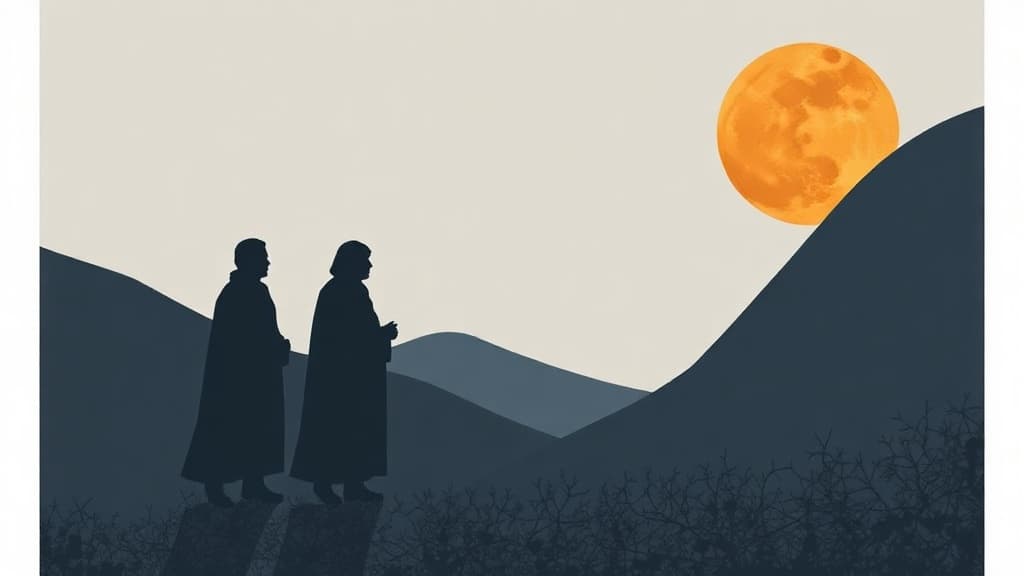
The problem was not how the giants in the land of Canaan saw them, but how they saw themselves / ShutterStock Parashat Shelach presents one of the most fascinating human and psychological dramas in the history of the Jewish people, the sin of the spies. Moses sends twelve men, respected leaders, to scout the Land of Canaan before entering it. The official purpose was tactical, to see the land, the people living there, and its cities. But when they returned, the mission turned from a military survey into a deep national crisis. Ten of the twelve spies came back with a frightened report. They did not deny that the land was good, “a land flowing with milk and honey,” they admitted, but immediately added, “However, the people that dwell in the land are strong, and the cities are very large and fortified.” The climax of their report was, “We were in our own eyes like grasshoppers, and so we were in their eyes.”
In contrast, only two, Joshua son of Nun and Caleb son of Jephunneh, tried to raise a different voice, “We shall surely go up and inherit it, for we can surely overcome it.” The great question is, how did great leaders see the exact same reality, yet reach completely opposite conclusions? The answer does not lie in the height of Jericho’s walls, but in their inner outlook. The ten spies suffered from a fear of change and challenges. When they said, “We were in our own eyes like grasshoppers,” they revealed the true root of the failure. The problem was not how the giants in Canaan saw them, but how they saw themselves. Their low self-image projected itself onto the environment.
The moral for our lives
The spies’ story is not only a historical event, but a precise psychological mirror for the lives of each and every one of us. The Promised Land represents the goals, aspirations, and peaks we want to conquer, whether in a career, a personal change, or overcoming a crisis. The “giants” and the “fortified cities” are the natural challenges and difficulties that stand in the way. When we face a major task, it is very easy to let laziness, fear, or lack of confidence color reality in dark shades and say, “It is too big for us.” Parashat Shelach teaches us that reality is largely the product of our interpretation. If we view ourselves as grasshoppers, the world will treat us accordingly. Inner resilience and faith, whether faith in the Creator or faith in the powers given to us, are the lenses that allow us to see a challenge as an opportunity for growth, not as an impassable barrier. In the words of Joshua and Caleb, sometimes all that is needed is to silence the voices of fear, look straight ahead, and know that “we can surely overcome it.”
When this psychological fear, which can perhaps be understood on its own, is joined by personal motives such as a change in the status of the tribal princes, who feared that upon entering the land they would lose their positions and others would be appointed in their place, the ground is ripe for the complete failure of their mission. The spies, of course, did not want to tell the people the personal reasons why they did not wish to enter the land, so they used the weapon of intimidation, which did not concern only them personally, but echoed the fear that “we cannot” and the enemy will prevail over us. We must learn a lesson from this difficult event, and whenever a leader declares, seeking to instill fear among the people while ignoring faith in God and His promises, we should try to examine where the inner personal point that drives him is located. Is it pure, or has it been tainted by selfish motives? This is another lesson from the story of the spies.

