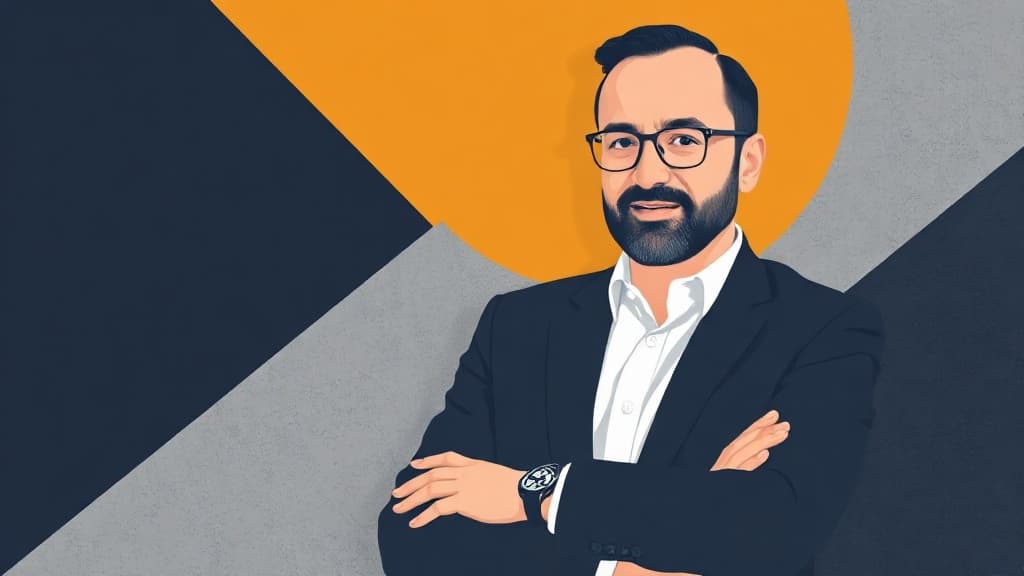
I Dreamed of Being a Rock Star. The Closest I Got Was Wearing a Gong Shirt and Being Stopped on the Street

For his first job in tech, 30 years ago, Amit Ben-Dov, CEO and founder of Gong, arrived by mistake. After finishing his computer science studies at Tel Aviv University, he went to interview at ClickSoftware because he thought it was a music company, which had been his dream. "It turned out the company was not in music but in AI, and that is how I started my first artificial intelligence project back in the 1990s. Later I also moved to the U.S. to set up the company’s operations there, and it was eventually acquired by Salesforce for $1.3 billion," he says.
At that first job interview in the industry, with Prof. Moshe Ben-Bassat, while still convinced he was meeting a company involved in music, Ben-Dov arrived excited. "I had never met a President before, certainly not a professor. I thought it was something in the media business, but he gave me a difficult AI problem about arranging shapes on a fabric roll at minimum cost. He said, take a stack of papers and a pen, sit down and come back to me. I worked on it for about three hours and came back to him with a solution. Later I learned it was a problem with no ultimate solution, but he liked what I did and we had good chemistry, and I joined."
Ben-Dov had already given up his teenage dream of founding a rock band in favor of programming. "I realized I was talented, but not enough to become hugely successful, so I enrolled in computer science. I got deeply into it and never looked back. Today I still find time here and there to dream about a rock band, but not as my day job," he says.
Today Ben-Dov heads Gong, which he co-founded with Eilon Reshef about a decade ago. The company is based in Ramat Gan, with offices around the world, about 2,000 employees and revenues of hundreds of millions of dollars. During his career in tech he has experienced the upheavals and crises, the dot-com bubble burst, the 2008 crisis, and he also sees what is happening today, the widespread layoffs driven by AI. "Layoffs are, of course, always unpleasant and sad. AI has created change, and the positive side is that companies are responding and changing. These are good companies, and even those laying off people today are mostly real companies that will still succeed in ten or twenty years. They are making the right adjustments, and I think people will find jobs," he says.
"The area where AI has the biggest impact is development. AI writes code on its own, but the number of jobs for developers keeps growing. The number of software developers keeps growing as the technology becomes simpler, so I think that after a little breathing room we’ll see more jobs here. We have hundreds of open positions at Gong and we would be happy to hire, and we have already hired people who were laid off. It does shuffle the deck, but I don’t think it is similar to the 2000s."
The company is hiring for those roles both in Israel and abroad. "Right now there is a localized problem with the shekel against the dollar. It is significant, but it will not make a company like Gong, which is Israeli, move all its development away from here. It is harder for public companies because they are measured on every cent of EPS. International companies are also more numbers-focused, but overall we have good, high-quality talent here and many companies are hiring, so I think something just needs to be done about the shekel exchange rate, but I am optimistic," he says.
Even today, with about 2,000 employees, he still interviews candidates, mainly for senior roles. "When we were a few hundred people, every person eventually came through me, because it is more important than anything else. Today I know my managers have absorbed the DNA and know how to hire their people."
In job interviews he tries to understand the impact the candidate has made on the company. "There was a period when I interviewed people from a certain Israeli company and everyone told me how they closed an $18 million deal with a company in France. Obviously one person did not do that, but you can understand each person’s part if you ask about the details, you can understand how significant they were. The good ones also give credit. Especially with leaders, I want to see whether they managed to bring about change in the organization, whether they simply carried the inertia of what was there or came in, looked at what was wrong in the picture, and changed it."
There are three things that will make him pass on a candidate. The first is drive and ambition, the second is cognitive ability, and the third is experience. "There are things you need to know. I would not choose a dentist or heart surgeon just because they have drive and ambition. There are things that, if you are a finance manager for example, you need to know. But in most cases, the two important things are whether there is drive, meaning the desire to improve, to be the best at what you do and to learn, to receive feedback, and to work with people."
These are Amit Ben-Dov’s answers, the founder and CEO of Gong, to the most common job interview questions:
1. Tell me about yourself "I am the CEO and co-founder of Gong. I have been in tech for thirty years. I started as a software developer, managed a team, managed product, worked at several of Israel’s leading companies, and founded Gong about ten years ago. Today the company is close to 2,000 employees and sells hundreds of millions of dollars. I am married with two sons, and I split my time between Israel and New York, so about a full month each year I am on a plane."
2. Why do you want the job? "I love creating. I realized I have two core values, the first is creation. Unfortunately I am not the best painter or musician, but I know how to create technologies, organizations that people love working in, and products that customers are truly excited about. For the same reason painters love to paint, I love building companies and creating technologies. That is the motivation. The second value is truth in the scientific sense, understanding why and how things happen the way they do. Beyond that, the role of Gong CEO offers a huge opportunity. We founded the company ten years ago and said AI was going to be bigger than SaaS when no one was listening. We saw the opportunity and I enjoy every moment. I love the interaction with our people, the interaction with customers. When I walk down the street wearing a Gong logo, there is a good chance someone will stop me and say, 'Are you from Gong? What do you do?' That is fun and very satisfying."
A bit of rock star fulfillment? "Yes, that is the closest I will ever get."
3. What are your main strengths? "I would say there are three. The first is wild imagination. I spot opportunities from far away that are hard to see. The second is execution ability. Ten years ago we said the company would be big and that AI would be bigger than SaaS, and that is happening today. The third is the ability to build a team, unite people around a goal, infect them with enthusiasm and generate energy so they run toward the goal."
4. What are your main weaknesses? "First of all, I am not the most organized person in the world and can easily forget things, but I really like order, so I always surround myself with organized people who will take care of that. Second, I do not always have attention, I get bored easily. So the people who work with me know they need to get to the point very quickly, otherwise I lose them. Another weakness is that I sometimes live two years ahead, meaning I see things that have not happened yet as if they are already here. I am aware of that, and luckily I have a team that always knows how to bring me back down to earth when my head is in the clouds."
5. Where do you see yourself in five years? "I see myself leading Gong through a very exciting stage in the company’s life. We are now living through the AI revolution we have been waiting for and predicting for quite a few years, and now it is happening. We have an opportunity. The market is worth trillions. In our field alone, Revenue AI has a huge inefficiency, 75 to 80 percent, going to waste. This is a place where we will create a lot of value. Until two years ago we did not have all the components and technologies, but today we are in a position where the technology can do a great deal. I think that in the next two to three years we will have a major breakthrough with a system that will manage the world’s largest organizations."
6. Why should we hire you? "At every place I have worked, I came with initiatives, initiatives that changed the game. I do not just look at what exists or what is possible and where it can go next. And that is what we do here too."
7. If you could work anywhere and at any time, where would you want to work? "In Led Zeppelin in the 1970s. But if we are being realistic, I would be happy to work at companies like Apple and Tesla. Two companies that Gong draws inspiration from. These are companies that build most of their technology themselves in order to create a user experience that really hits hard, and they believe in a product that creates a crowd of die-hard fans."
8. Tell about a difficult situation at work and how you handled it "In 2000, when I was the senior manager of ClickSoftware in the U.S., the dot-com bubble burst and we had to lay people off. It is very difficult because unlike previous layoffs of people who were not good or did not do their jobs, here it was people who were good, who trusted you, and you had to send them home knowing it would be very hard for them to find work. So I promised them that from now on things would be better. But three months later I had to lay off another fifty people. That taught me a very important lesson, never promise things you do not know you can keep, and you have to tell people the truth, even if it is hard. That year I visited our new and huge offices in Silicon Valley, a new office we had invested many millions of dollars in. The chairs were still in plastic wrap and the office was completely empty. It was chilling and taught me that any hype can end. Because of that experience, at Gong we have never made long-term real estate leases, and in most of our offices around the world we are still in WeWork even with about 2,000 employees. Since then I also learned not to spend money on nonsense. Gong has grown very fast, we live well, but we make sure it does not go to our heads and we do not spend on nonsense. We always prefer to invest in the best people, not in external things."
9. What are your salary expectations? "Normal ones. I expect to earn what is customary and standard in the market, no more and no less. What interests me mainly is the equity, the company’s upside potential and where it can grow with it. As long as the salary itself is reasonable, everything is fine."
10. Do you have any questions for us? "Yes, why should I choose you?"


