Morocco’s Western Sahara Wall Spans 2,700 Kilometers and Is Heavily Mined
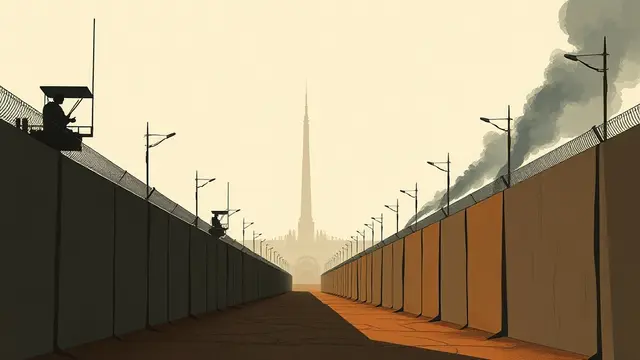
Stretching approximately 2,700 kilometers across the desert, the Western Sahara Wall, also known as the Moroccan Wall or "the berm," is one of the longest and most heavily mined barriers in the world. Unlike famous stone walls, it consists of sand and stone embankments, fences, military posts, radar installations, artillery, and millions of landmines, remnants from the conflict between Morocco and the Polisario Front before the 1991 ceasefire. This massive fortification divides Western Sahara, a disputed territory mostly controlled by Morocco, with the Polisario Front and the Sahrawi Arab Democratic Republic holding parts east of the wall.
Since fighting resumed in 2020, Morocco has enhanced the wall’s defenses with modern technology, including drones and unmanned aerial vehicles, some reportedly supplied through security cooperation with Israel following the Abraham Accords. These aerial assets allow Morocco to monitor and respond to suspicious movements without deploying ground troops into the dangerous mined areas.
The conflict’s origins trace back to 1975 when Spain withdrew from Western Sahara, leading Morocco and Mauritania to divide the territory against Sahrawi independence aspirations. The Polisario Front declared the Sahrawi Arab Democratic Republic in 1976, sparking prolonged warfare. Mauritania withdrew in 1979, but Morocco continued to control most of the region and constructed the wall throughout the 1980s, completing it by 1987. The wall effectively separates the more populated and resource-rich western areas from the sparsely inhabited "Free Zone" controlled by the Polisario.
Despite a UN-monitored ceasefire since 1991, a political resolution remains elusive. The wall is known locally among Sahrawis as the "Wall of Shame" for dividing families and communities, while Morocco views it as a defensive barrier against Polisario incursions. The presence of millions of landmines and unexploded ordnance continues to cause injuries and fatalities years after major hostilities ended. Human rights activists and Sahrawi refugees have protested the wall, highlighting its ongoing humanitarian impact.
Although it is the world’s second-longest wall after the Great Wall of China and the longest continuous minefield, the Western Sahara Wall remains little known internationally, partly due to its remote location and complex political context. It stands as a stark reminder that vast, dangerous borderlines still exist largely outside global attention.