Bill Gates Spent Years Crafting His Image. Now It Is Fraying

For years, Bill Gates's image as a likable billionaire and philanthropist was carefully built and maintained by dozens of employees. They reviewed outfits on a custom-made mannequin, tracked public opinion and even intervened in documentaries made about him. But documents and photos uncovered in the investigation into sex offender Jeffrey Epstein have cast a heavy shadow over him. He still says he did nothing illegal, but he admitted to Foundation employees that he had affairs with women mentioned in communications with Epstein. Those close to him are distancing themselves, and he has been subtly advised not to attend major events he once regularly attended.
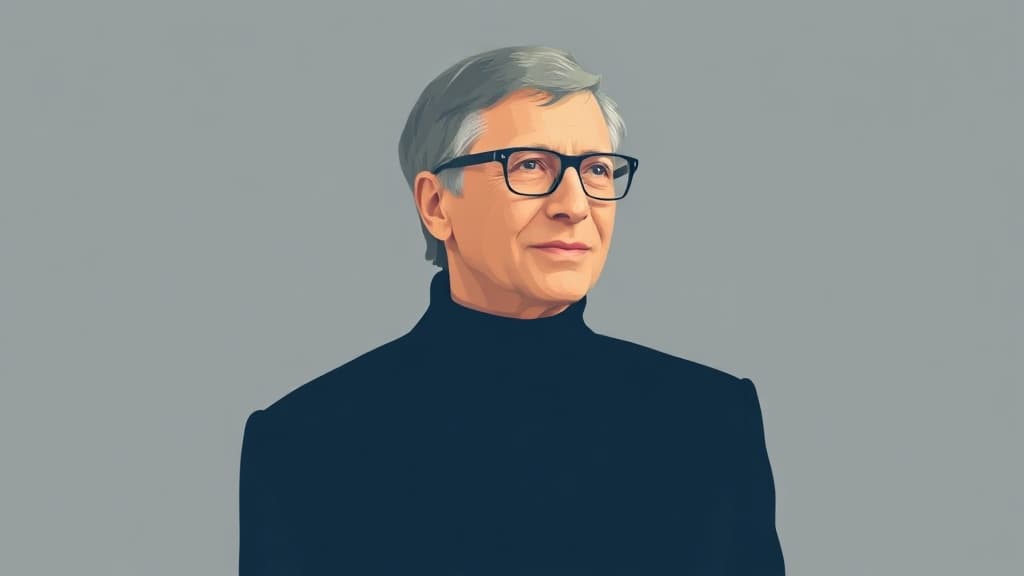
Gates's employees spent years meticulously cultivating his image. So much so that they keep a custom-made mannequin used to pre-screen the clothes he will wear. According to current and former employees, Gates's styling team keeps a separate building stocked with a large supply of neutral-colored sweaters in various collar styles, alongside button-down shirts, dress pants and extra pairs of the glasses he regularly wears. Ahead of public appearances, staff usually send three options for senior approval. The goal is to present a calm, approachable and friendly man, similar to the American children's television host Mister Rogers.
Behind his public image stands the careful attention of dozens of employees responsible for managing Gates's communications and those of his empire. Their work helped shape him into a brilliant billionaire who left behind his past as Microsoft's monopolistic chief and adopted the softer, warmer persona of a global philanthropist. The Gates Foundation, one of the largest in the world, has assets of $89 billion and has led a series of groundbreaking initiatives in health and development around the world, including efforts to combat child mortality and infectious diseases. In a 2019 survey, Gates ranked first on the list of the most admired public figures, ahead of the Dalai Lama and Pope Francis.
His image was shattered when more details emerged about Gates's (70) ties to the late Jeffrey Epstein, undermining his earlier efforts to downplay the relationship with the sex offender. In a February meeting with Foundation employees, Gates admitted that he had had two affairs with Russian women mentioned in Epstein's correspondence. Several people familiar with the matter said they were stunned by the admission, as more than 20 extramarital relationships had come up during his divorce proceedings. U.S. Justice Department documents show that Gates met Epstein many times, despite concerns raised by his then wife. They also show that Epstein knew about some of Gates's extramarital relationships, and that two of Gates's close advisers exchanged hundreds of messages with him over the years until 2019, when Epstein died.
Now, the consequences of the disclosures about Gates's conduct are beginning to affect efforts to protect his reputation. Gates, a Microsoft co-founder, was not invited to the company's annual CEOs summit, nor to Berkshire Hathaway's annual shareholders meeting, which he had attended for years.
For years, two separate survey teams, one at the Gates Foundation and the other at his private office, Gates Ventures, tracked public opinion about Gates. According to internal documents reviewed by The Wall Street Journal, a media analysis prepared for the Gates Foundation showed that the volume of negative coverage of Gates and the foundation had risen by more than 40% since the Epstein documents were published, through February. One chart highlighted broad waves of media coverage around the world after three events, after Melinda French Gates mentioned Epstein in an interview, after Gates canceled his appearance at a technology conference in India, and later after he addressed his ties to Epstein at a meeting with Foundation employees.
For years, Gates and his senior aides maintained that his relationship with Epstein was solely about philanthropy and that no women were present at their meetings. But the documents paint a more complex picture. Epstein traveled with Gates and introduced him to the chairman of the Nobel Peace Prize Committee, was involved in negotiations conducted by Gates's staff with him, and Gates was photographed with Epstein and with the women around him before or after some of their meetings.
A spokesperson for Gates said he was not involved in any illegal activity with Epstein, and acknowledged that meeting him was a mistake. "Gates apologized for that mistake, and is expected to testify voluntarily before the House Oversight Committee to answer questions about his ties to Epstein. Gates supports the release of all Epstein documents, in the hope that the victims will receive the justice they deserve," the spokesperson said. A Gates Foundation spokesperson said in a statement: "The harm Epstein caused to women and girls was horrific, and the foundation regrets that its employees had any contact with him, in any form." A spokesperson for Melinda French Gates declined to comment.
Against the backdrop of tensions at the foundation following the latest disclosures, employees were told that an external review had been opened into the foundation's ties to Epstein. This week Gates appeared before a congressional committee to answer questions about his relationship with the sex offender. Gates's team hired attorney John Moran, a Republican and former senior official at the U.S. Justice Department, to represent him. The team managed to delay the voluntary interview by several weeks and also reached an agreement that his appearance would not be videotaped.
According to people briefed by congressional staff, the committee intends to ask Gates about email messages Epstein sent to himself and that are included in Justice Department documents. The messages claim that Gates contracted a sexually transmitted disease and that he asked about antibiotics that could be secretly given to his then wife. A Gates spokesperson previously said the 2013 emails were "completely absurd and completely false."
At the February meeting with Foundation employees, Gates addressed his ties to Epstein with a mix of regret and defensiveness. He acknowledged that meeting Epstein was a mistake and said the affair was "completely contrary to the foundation's values." Gates admitted to two extramarital relationships with Russian women and referred to photographs in which he appears alongside women whose faces were blacked out, whom he said were Epstein's assistants. "I did nothing illegal. I saw nothing illegal," he said. Gates added that the women were not present at the meetings and that he did not speak with them.
In the front row sat his partner Paula Hurd, one of his sisters, and Larry Cohen, a longtime Gates Ventures executive and Gates's right-hand man.
After Epstein's death, and the effort to downplay the connection, according to employees and internal documents, Gates's team spent years polishing his public image to distance him from the combative persona that marked him during the years he fought antitrust charges as Microsoft's chief executive. The team carefully manages and shapes his online presence in an effort to attract followers on social media and subscribers to his Gates Notes blog. One of the highlights came a few years ago, when a YouTube video of Gates and fellow billionaire Warren Buffett working at a Dairy Queen became viral.
The 2019 YouGov survey that ranked Gates as the world's most admired person was greeted with cheers at his private office, Gates Ventures. "This is an extraordinary achievement, reflecting the hard work and creativity of the team," Cohen, the CEO of Gates Ventures, wrote in an email reviewed by The Wall Street Journal. Cohen, along with other Gates employees, did not respond to requests for comment.
Epstein was arrested in the summer of 2019 and later died in jail. His death raised questions about the network of relationships he cultivated among the elite, and some of his ties to influential figures, including Gates, began to emerge. That same year, in September, Netflix released the documentary "Inside Bill's Brain," offering an intimate and flattering look at the second chapter of his life as a philanthropist. That month, Gates was asked in an interview with The Wall Street Journal about his ties to Epstein as part of the film's promotion. Gates replied: "I met him. I had no business relationship or friendship with him... There were people around him who said, 'If you want to raise money for global health and encourage more philanthropy, he knows a lot of rich people.' All the meetings I had with him were with men. I never attended his parties or anything like that."
The following month, Cohen convened a staff meeting at Gates's private office to discuss the media reports. Several participants said Cohen told employees that although the relationship looked problematic, it was limited to philanthropy. After the meeting, some participants said they felt management was prioritizing message control over transparency. Gates later said he met Epstein several times between 2011 and 2014, including at Epstein's home in New York and in meetings in Florida, Seattle and Europe.
Gates's ties to Epstein returned to headlines in 2021, when he and Melinda French Gates were going through divorce proceedings. The Wall Street Journal reported that one source of tension between them was his wife's concerns about his relationship with Epstein, which had troubled her since 2013. In 2023, The Wall Street Journal reported that Epstein discovered Gates had had an extramarital relationship with a Russian bridge player and later appeared to try to use the information to blackmail him. "Epstein tried, unsuccessfully, to use a past relationship to threaten Mr. Gates," a spokesperson said at the time.
Behind the scenes, Gates's team was already preparing for another Netflix series, in which he was presented as "a technology visionary and a global philanthropist in the fields of health and climate." Although the project was presented to employees as an independent documentary series, internal documents reveal that Gates's people were involved in its production. Ian Saunders, a senior executive at Gates Ventures, sent a nine-page document in January 2024 to the production team after Gates and Cohen watched the episodes. In the memo, Saunders wrote that while Gates was "quite positive," he had notes on each of the five episodes. Among them were: "We all again request changing the ending scene, where Bill has a sour expression" and "Some of the people appearing in this episode need to be completely removed." According to another document written by Saunders, Gates and Cohen held a "watch marathon" of the series before its release. Saunders then sent the production teams involved, including Tremolo Productions, six key notes. They suggested filming more material and doing further editing. "We can provide Tremolo with full funding or more than full funding, if necessary," the memo said.
Netflix and Tremolo spokespeople said they had no knowledge that Gates or his staff financed any part of the documentary series. A Netflix spokesperson said Netflix retained the final say on editing and approval of the series's creative content. According to people familiar with the matter, when the project was completed, the name of a Gates Ventures executive appeared in the credits as a producer, to the surprise and disappointment of members of the documentary team. The series was titled "What's Next? The Future With Bill Gates." A Netflix spokesperson declined to comment on the production credit.
The release of the documents reignited the storm
The series tried to look to the future, but the Epstein documents released by the Justice Department quickly brought attention back to the past. They included more than 1,000 email messages connected to Gates, his foundation or people who worked for him. Inside the organization, frustration kept growing. Mark Suzman, a long-time foundation executive who was appointed CEO in 2020, held a meeting with employees in early February, days after the documents were published. Gates was not present. Several employees raised questions about Gates's ties to Epstein, participants in the meeting and people briefed on its contents said. Suzman told employees that any connection between Epstein and the foundation made him feel "somewhat tainted," and that the connection made it harder to advance the foundation's goals. Several people in the room were seen crying.
"The Gates Foundation remains focused on its mission to improve the lives of people in the United States and around the world. To advance that mission, the foundation chair, the CEO and board members remain fully engaged in the work ahead," a foundation spokesperson said in a statement.
Inside the organization, Gates's people understood that the storm around him was not likely to go away soon, even as they continued to invest billions of dollars in the foundation's work in areas such as eradicating malaria and polio and reducing maternal and child mortality. Nonprofits continued to seek foundation funding, especially after federal funding sources dried up, but the foundation's prestige had taken a hit. Global leaders and charity executives were reluctant to appear alongside Gates at public events. Even Microsoft began to distance itself from him.
Gates usually hosts a dinner at his home in Washington State as part of Microsoft's annual CEOs summit. But several weeks before the event held in May, his team received word that it would be better not to hold it this year, according to people familiar with the matter. "Although the event will not take place this year, we have already invited Bill to attend the CEOs summit next year," a Microsoft spokesperson said.
Ahead of a trip to India in mid-February, Gates's ties to Epstein were causing concern among foundation employees. Ankur Vora, a senior executive responsible for the trip, and Archana Vyas, who leads the foundation's India operations, raised questions with colleagues about the trip and whether it was appropriate to go ahead.
Gates initially arrived in Vijayawada, a city in southeast India, where he disembarked from the plane and was greeted by officials who also posed with him. He then continued to Mumbai and finally to New Delhi, where he was scheduled to give a keynote speech at an artificial intelligence conference attended by heads of state and senior figures from the technology industry. Days before the speech, Gates's name did not appear in certain search results for "key participants" on the conference website. Indian government officials told local media that his invitation was being reconsidered following his appearance in the Epstein documents.
At the time, the Gates Foundation's India office posted on X, formerly Twitter: "Bill Gates is attending the AI Impact Summit. He will deliver the keynote as scheduled." Gates stayed at the Oberoi hotel in New Delhi. According to Indian government officials, he waited for an update on whether he should attend a dinner with Indian Prime Minister Narendra Modi, French President Emmanuel Macron and business leaders. In the end, Gates did not attend the dinner.
Later, Vyas received a message from the Indian government saying Gates should not attend the summit, because renewed interest in the Epstein affair might distract from AI issues. Hours before Gates was due to take the stage, the foundation posted on X: "After careful review, and to ensure the focus remains on the central issues of the AI summit, Mr. Gates will not deliver the keynote address."
A few days after returning to Seattle, Gates told Foundation employees that "I think they felt it might distract from the summit." According to him, it was "a mutual agreement." An internal document said Suzman and other senior foundation officials decided to cancel Gates's planned trip to South Africa.
In early March, a House committee investigating the Epstein case sent letters to Gates and other prominent figures close to Epstein, requesting testimony. The following week, Gates's nuclear energy company, TerraPower, also had to deal with the reputational fallout.
On March 9, TerraPower informed employees of a virtual all-hands meeting on three days' notice, without stating the reason, according to an internal document. The company usually gives weeks of advance notice. Chris Levesque, TerraPower's CEO, repeated Gates's key talking points in the meeting. He told employees they should expect more reporting on Gates's ties to Epstein in the coming months, ahead of the expected congressional questioning. Levesque added that he had received inquiries from employees on the issue and described the concerns raised as "worrisome."
Levesque also told employees he had spoken with Gates's private office and that "there is clearly no connection to TerraPower." "There is no connection to TerraPower's activities. The two extramarital relationships that Bill had to disclose to the public, and the regret he expressed about them, are also unrelated to TerraPower," Levesque said, according to a recording of the meeting reviewed by The Wall Street Journal. He urged employees to stay focused on the company's mission. Several current and former employees were confused, and in private conversations among themselves said the statements were not true.
Gates described one of the women with whom he had an extramarital relationship in his meeting with Foundation employees as "a Russian nuclear physicist I met through business activity." But that woman was closely connected to TerraPower. According to her LinkedIn page, she worked at TerraPower from 2010 to 2012, and her name also appeared in the company's internal system. In 2011, she appeared in a magazine feature about her work at TerraPower, which included photos of her with Gates and with the company's vice chairman, Nathan Myhrvold, a longtime Gates associate.
One TerraPower executive later told some employees who raised the issue that the woman had actually been employed by TerraPower's parent company. Some employees thought this was a technical distinction designed to protect Gates's brand. TerraPower and the woman did not respond to requests for comment. A Gates spokesperson said he did not have "an inappropriate relationship with any TerraPower employee." A person familiar with the matter said their brief relationship began after her time at TerraPower had ended.
At the end of March, Gates was notably absent from CERAWeek, one of the energy industry's most important conferences, held in Houston. In previous years, Gates had been one of the key speakers, as founder of TerraPower and Breakthrough Energy, an investment firm focused on climate. In fact, CERAWeek organizers had spoken with Gates's team about his participation as a conference speaker, but ultimately decided that given the allegations tying him to Epstein, this was not the right time for him to take the stage.
Instead, Gates took part in a smaller event of his own, the Breakthrough Energy Ventures investors summit, during which he was interviewed by one of the company's senior executives. Gates hosted meetings at the Four Seasons hotel with partners and investors, just a few blocks from the CERAWeek conference. Breakthrough Energy is trying to raise several hundred million dollars for a new fund, but has run into difficulties raising capital, according to people familiar with the matter. Some investors said they were concerned about Gates's ties to Epstein and the group's distancing from its climate work.
"Our investor community continues to grow, and we have never been more optimistic about the future of the company and the companies in which we invest," a Breakthrough Energy spokesperson said in a statement. "Our investors are excited about the pipeline of companies ahead."
According to people familiar with the matter, Gates was preparing for his appearance before the congressional committee. Among the topics expected to come up, no claims had been made of extramarital relationships between Gates and Foundation employees, and no formal complaints had been filed on the matter. But the story Gates's people are trying to tell is beginning to crack, even among some of those closest to him.
While senior foundation officials were attending a working meeting in Kenya, participants were surprised by comments Warren Buffett, Gates's longtime friend, made about Gates and Epstein that aired on television on March 31. The legendary investor had been one of the foundation's biggest supporters and had pledged to make annual donations to it throughout his life. But in 2021, after the Gateses announced their divorce, he stepped down from the board. In 2024, Buffett told The Wall Street Journal that after his death no further donation from his money would go to the Gates Foundation.
In a CNBC interview in March, Buffett said he had not spoken with Gates since the Epstein documents were released. Buffett (95) added that he intended to wait and learn more details from the documents before making his annual decision on donations at the end of June.
At the beginning of May, Gates did not attend Berkshire Hathaway's annual meeting, the company Buffett led for decades and on whose board Gates served until 2020. Although he was not barred from attending, several people advised him not to go. It was the first time in many years that he had missed the meeting.
A few weeks later, Gates hosted members of The Giving Pledge, the initiative he founded with Buffett and Melinda French Gates, at its annual meeting in Ojai, California. Missing from the gathering were the other two co-founders of the initiative.
A spokesperson for The Giving Pledge said attendance at the meetings varies from year to year and declined to comment on the presence or absence of specific participants.
The article was originally published in The Wall Street Journal before Gates's testimony in Congress and was lightly updated in translation.



