
Israel Officially Recognizes Armenian Genocide After Decades of Diplomatic Hesitation
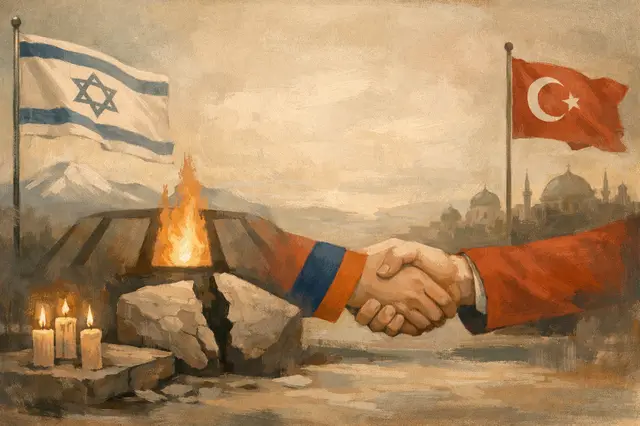
On Sunday, the Israeli government approved a proposal by Foreign Minister Gideon Sa'ar to officially recognize the Armenian Genocide, a historic decision following decades of diplomatic caution. Sa'ar stated during the cabinet meeting, "It is never too late to do the right thing." The recognition has drawn concern from Azerbaijan's Foreign Ministry, which urged Israel to reconsider, warning that such steps could hinder peace and reconciliation efforts in the region.
The Armenian Genocide, which occurred between 1915 and 1923 during the collapse of the Ottoman Empire, resulted in the deaths of an estimated 1 to 1.5 million Armenians. Turkey has consistently denied the genocide and has actively opposed international recognition, including threatening retaliation against the United States when the U.S. Congress considered a memorial day in 1989. At that time, Israel's Foreign Ministry reportedly intervened behind the scenes to support Turkey, asking Jewish organizations in the U.S. to assist in opposing the recognition.
Israel's stance on the Armenian Genocide has long been conflicted, balancing moral imperatives against strategic interests. Maintaining strong ties with Turkey was a key element of Israel's regional diplomacy, known as the "periphery doctrine," which sought alliances with non-Arab Muslim states. This led Israel to avoid official recognition for many years, despite internal debates and public calls from politicians such as Yair Tzaban and Yossi Sarid, who participated in Armenian Genocide memorial ceremonies in the 1990s and 2000s.
The tension between conscience and political interests was evident in various incidents, including the cancellation of an Israeli TV documentary on Armenia in 1990 under Foreign Ministry pressure and Turkey's rejection of Professor Ehud Toledano's ambassadorial appointment due to his pro-Armenian views. Even at Israel's Independence Day torch-lighting ceremony in 2003, references to the Armenian Genocide were suppressed following Turkish objections.
Relations between Israel and Turkey deteriorated significantly after the 2010 Gaza flotilla incident, leading to increased calls within Israel to recognize the genocide. President Reuven Rivlin publicly supported recognition in 2015, but the Foreign Ministry maintained its cautious approach. Legal efforts to disclose Israel's diplomatic stance on the issue were rejected by the courts in 2018.
Throughout, the memory of the Holocaust influenced Israel's position, with some Jewish groups opposing equating the Armenian Genocide with the Holocaust to preserve the uniqueness of the Jewish tragedy. However, others argued that denying the Armenian Genocide distorts the memory of the Holocaust itself. The recent government decision marks a significant shift, officially acknowledging the Armenian Genocide despite longstanding geopolitical sensitivities.
The same event, reported separately by each outlet. Open a few to compare what different newsrooms emphasize — and what they leave out.






Not the same event — other stories that share this one’s people, places, or theme: background, reactions, and follow-ups.
Ask About This Article
Duki reads it, and every newsroom on the same story, then answers with sources.