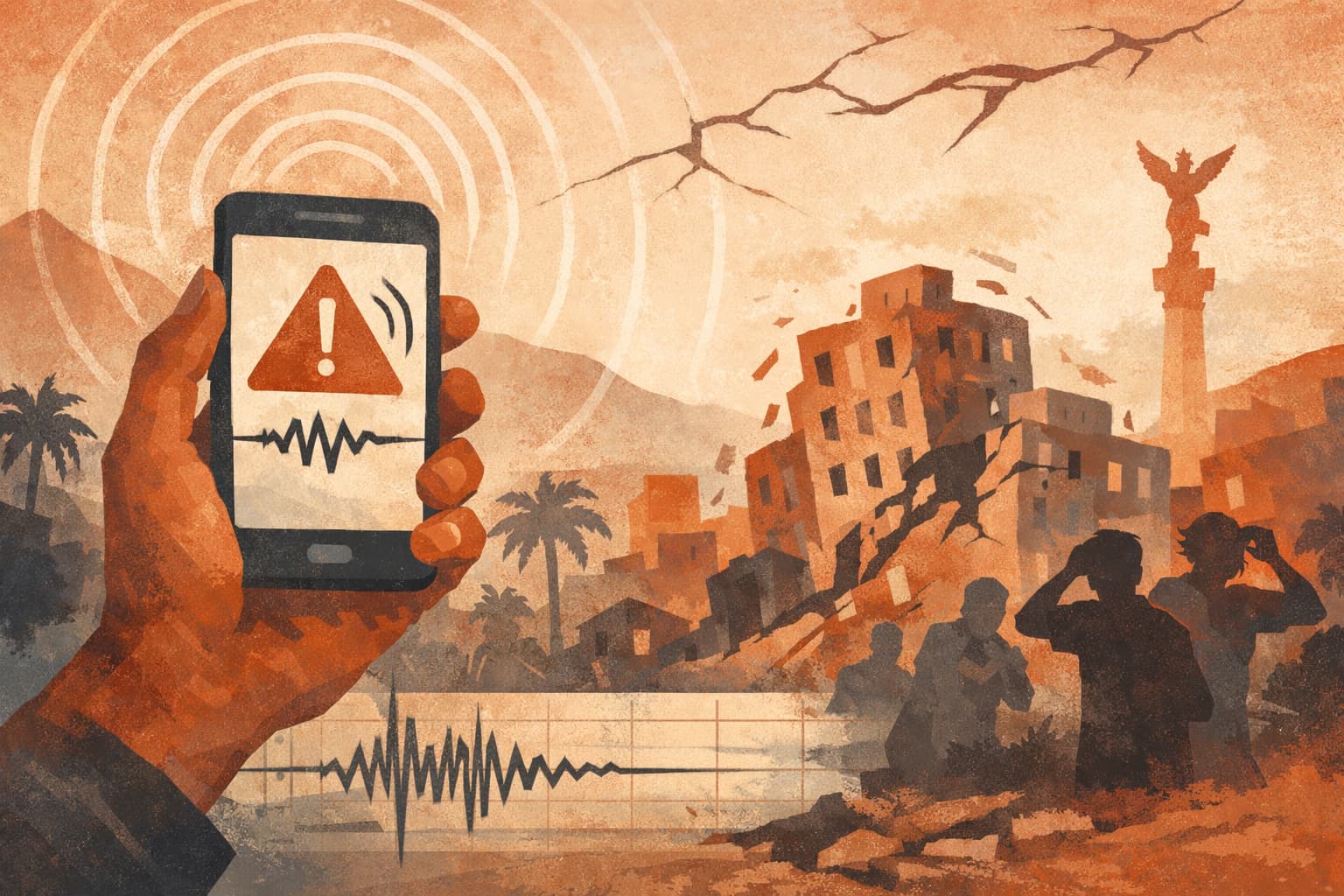
Android Phones Provide Crucial Seconds of Earthquake Warning in Venezuela, iPhones Do Not

On June 24, 2026, northern Venezuela experienced two powerful earthquakes measuring 7.2 and 7.5 in magnitude within 40 seconds of each other. Millions of Android phones in the region sounded earthquake alerts seconds before the tremors were felt, while many iPhone users reportedly received no warnings. This discrepancy stems not from hardware differences but from how Google and Apple have developed their alert systems.
Google's Android Earthquake Alerts system, launched in 2021 and now active in nearly 100 countries, detects seismic activity through accelerometers in smartphones. These sensors identify initial, less damaging P-waves and send location data to Google servers. When thousands of devices report similar vibrations simultaneously, the system confirms an earthquake and issues warnings to users ahead of the more destructive S-waves. This network acted as Venezuela's primary early warning system, as the country lacks an official government alert infrastructure.
In contrast, Apple's Enhanced Safety Alerts rely on official government warning systems. Without a local government alert source in Venezuela, iPhones could not provide earthquake warnings. This highlights a significant gap in early warning capabilities between the two platforms in regions without formal alert networks.
The incident also underscored the importance of public knowledge on how to respond to alerts. Android users are advised to "Take Action" immediately by dropping to the ground, seeking cover, and holding on until shaking stops. The Android alert feature is usually enabled by default and can be checked in the phone's Safety & Emergency settings.
Rescue teams continue to operate in the affected Venezuelan areas, while the Android alert system's performance has sparked widespread discussion on social media, with videos showing hundreds of phones ringing simultaneously just before the quake's impact.
The same event, reported separately by each outlet. Open a few to compare what different newsrooms emphasize — and what they leave out.




Not the same event — other stories that share this one’s people, places, or theme: background, reactions, and follow-ups.

