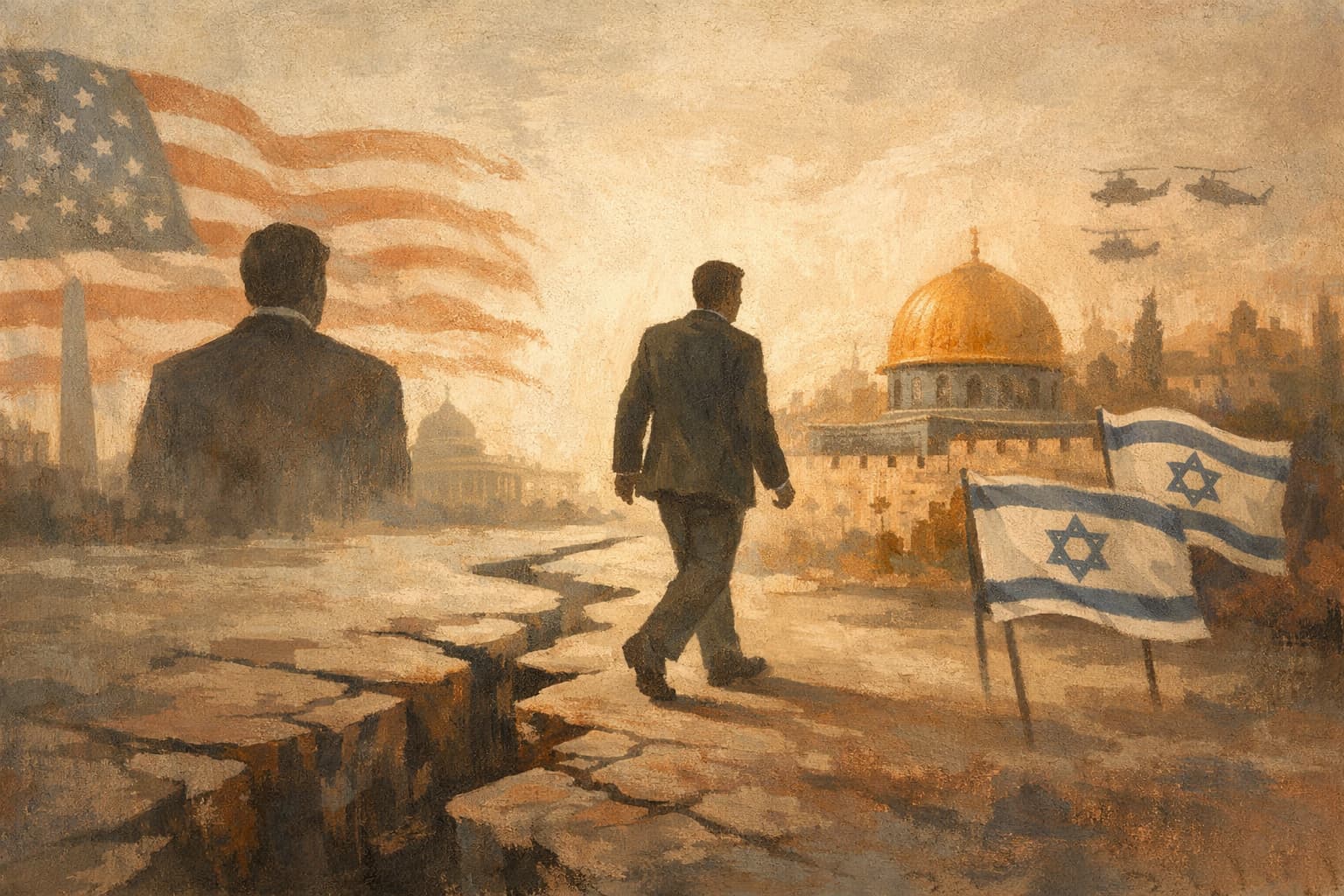
US Vice President J.D. Vance Signals Shift Away From Israel Ahead of 2028 Presidential Bid

J.D. Vance, the US Vice President since early 2025, has recently drawn international attention for his hardline stance that sidelines Israel amid shifting American Middle East policies. His emergence on the global stage came during tense negotiations with Iran in Switzerland, where his blunt approach alarmed Israeli officials who see him as a potential future US president with a markedly different outlook on the US-Israel alliance.
Vance’s background is a dramatic American success story. Raised in poverty in Ohio’s Appalachian region by a drug-addicted mother and a tough grandmother who hid 19 loaded guns at home, his life inspired the bestselling memoir and Netflix adaptation "Hillbilly Elegy." Despite his troubled upbringing, Vance served in the Marines, earned a Yale law degree, and rose to prominence with support from conservative billionaire Peter Thiel.
Initially a Trump critic who once called the former president "America’s Hitler," Vance later aligned with Trump, securing a Senate seat and then the vice presidency. His political mentor is controversial media figure Tucker Carlson, whose son worked in Vance’s office. Vance’s visit to Israel was marked by sharp criticism after the Knesset voted on West Bank annexation, signaling his growing skepticism toward Israeli policies.
Vance is a declared MAGA conservative advocating for a minimalist US foreign policy focused on America’s interests. He opposed the recent US military campaign in the Middle East, reportedly leading efforts to undermine it, and is suspected by Israeli sources of leaking Mossad plans to Turkey’s Erdogan, allegations he denies. His stance frames Israel as a costly complication in US relations with Gulf allies.
The recent Iran deal negotiations in Switzerland, which Vance promoted as an American victory, were viewed in Israel as humiliating. Israeli officials responded with unprecedented harshness, while Vance dismissed Israel’s influence over US policy, emphasizing America’s global power and Israel’s small population. He warned Israelis against blaming Trump for their problems, asserting the US-Israel alliance remains vital but must be reconsidered.
As Vance prepares for a 2028 presidential run, his pragmatic yet distant approach to Israel contrasts with more traditionally pro-Israel Republicans like Marco Rubio. Trump continues to leverage Vance’s appeal to working-class voters while maintaining control over the party’s direction. For Israel, Vance’s rise represents a potential pivot in US policy that could reshape the historic alliance, raising deep concerns about the future of bilateral relations.
The same event, reported separately by each outlet. Open a few to compare what different newsrooms emphasize — and what they leave out.



Not the same event — other stories that share this one’s people, places, or theme: background, reactions, and follow-ups.

