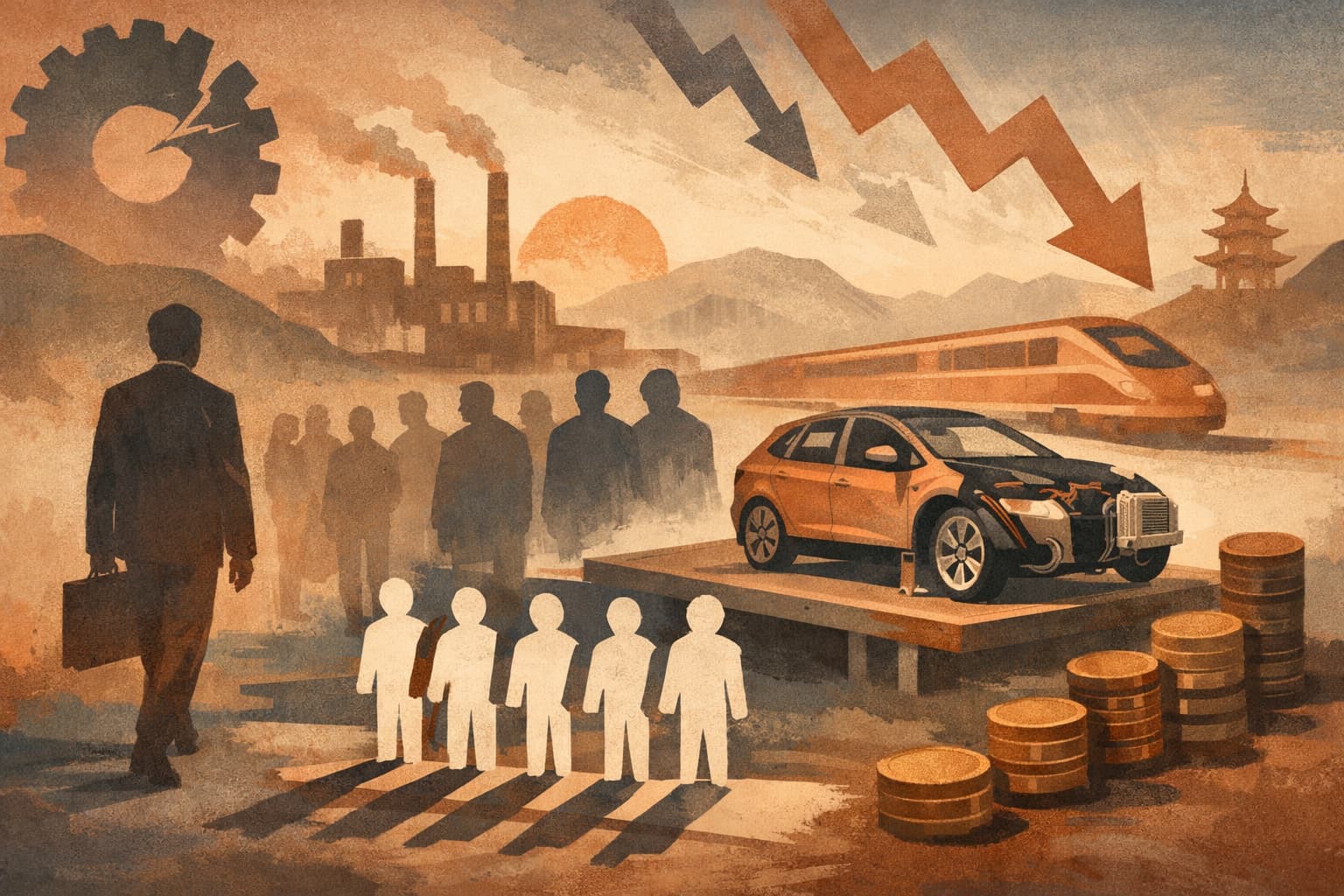
Volkswagen Faces Major Challenges Amid Leadership Changes and Market Shifts

Volkswagen is preparing for massive layoffs, potentially cutting around 100,000 jobs, which is about one in six employees. This move reflects deeper issues beyond official reasons like competition from Chinese automakers and tariffs imposed by the Trump administration. The company’s current crisis stems from management failures and strategic missteps.
Volkswagen’s origins trace back to Adolf Hitler’s vision for an affordable car for the German people, realized by engineer Ferdinand Porsche with the iconic Beetle. Post-World War II, Volkswagen became a symbol of German industrial strength, led by long-serving CEOs who provided stable, long-term leadership. However, the 2015 Dieselgate scandal marked a turning point, leading to rapid CEO turnovers and destabilizing the company’s management.
Volkswagen initially succeeded in China, becoming the top-selling brand there since the 1980s. Yet it failed to anticipate the rise of Chinese electric vehicle manufacturers like BYD and did not develop a competitive electric or hybrid lineup. Its electric ID series, including the ID 3, ID 4, and ID 5, have been costly failures, lacking the innovation and appeal customers seek. The company’s conservative culture and slow innovation pace contrast sharply with faster, more agile competitors.
Financially, Volkswagen is struggling with high labor costs, especially in Germany, where strong unions resist plant closures. In 2025, the company’s wage expenses reached 47 billion euros, while operating profits dropped 53% to 8.9 billion euros, and net profits fell 35% to 7.5 billion euros. Volkswagen’s reliance on traditional compact cars like the Golf is problematic as consumer preferences shift toward SUVs, and compact car sales decline sharply.
Volkswagen’s historical ties with Porsche also complicate its finances, as Porsche faces its own difficulties. Meanwhile, Chinese automakers are rapidly gaining market share in Europe, projected to reach 16% by 2030, producing more efficient, cleaner, and cheaper vehicles. Volkswagen’s decision to close four German plants underscores its inability to compete with lower-cost production abroad.
In summary, Volkswagen’s challenges include leadership instability, failure to innovate in electric and hybrid vehicles, high labor costs, shifting market demands, and intensifying competition from Chinese manufacturers. The company is at a crossroads, needing to adapt quickly or risk further decline.


