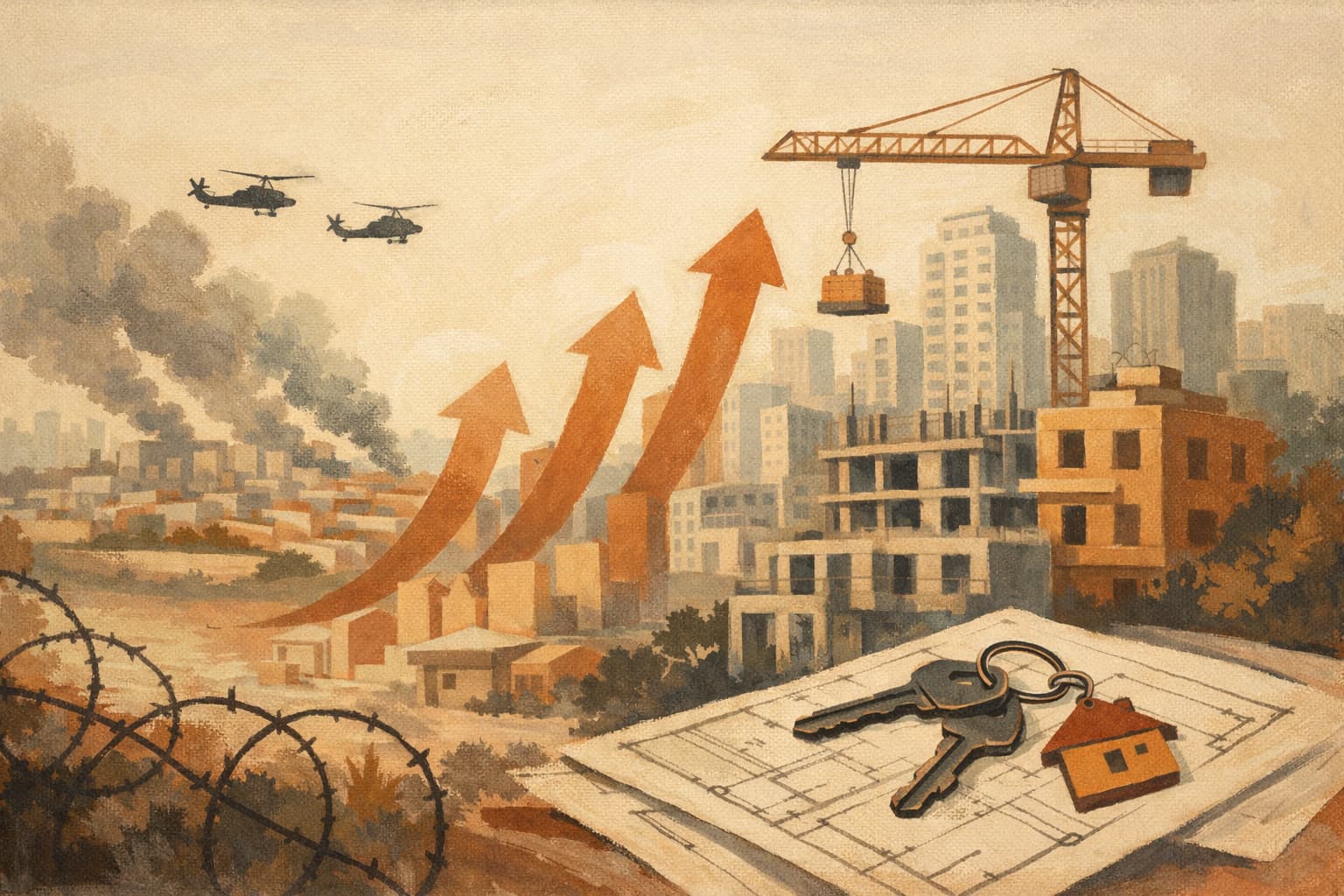
Israeli Real Estate Market Shows Resilience Amid War and Economic Uncertainty

Despite ongoing war, high interest rates, and political instability, Israel's real estate market remains robust. While headlines report a slowdown, this is relative to previous years of ultra-low interest rates and a heated market. Compared to countries like Ukraine, where war has devastated over 1.3 million properties since 2022, Israel's housing sector continues to function with active sales, construction, and new projects.
According to Israel's Central Bureau of Statistics, about 101,000 homes were sold in 2024, marking a 40.8% increase from 2023, including approximately 45,600 new apartments. Construction activity is also strong, with around 80,650 new units started between April 2024 and March 2025 and nearly 188,800 units under active construction by March 2025. Developers, banks, and buyers are more cautious but the market machinery has not stopped.
The article emphasizes that the current demand has not disappeared but is postponed due to the war and economic uncertainty. Young couples, families, and investors remain interested but are waiting for more favorable conditions. The author, Shahar Perry, CEO of GS Group and real estate expert, suggests that once the conflict ends, political stability returns, the shekel strengthens, and interest rates decline, the market will experience a significant surge in demand. This resilience during crisis highlights the market's strength and potential for growth in the post-war period.



