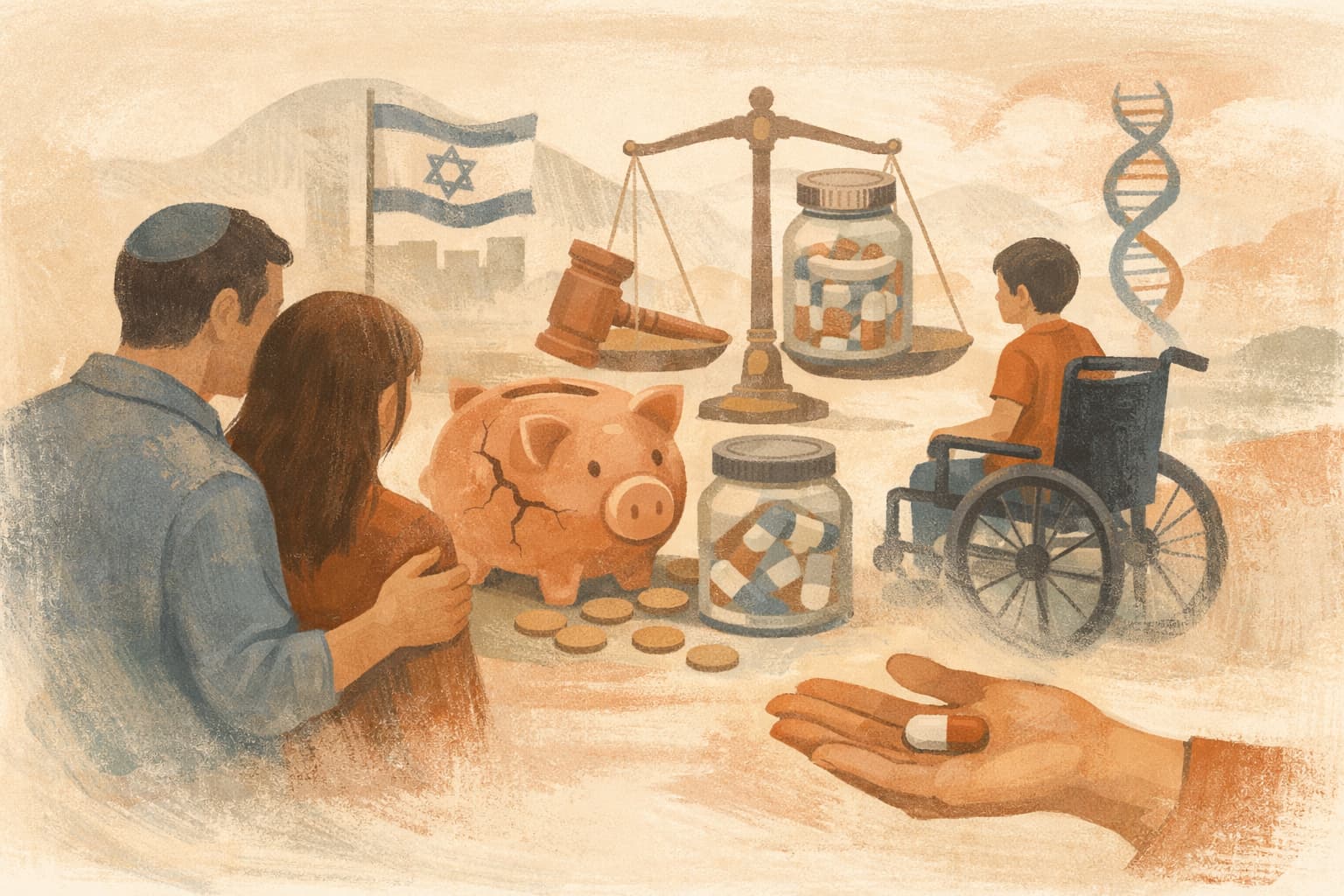
Israeli Family Battles to Secure 14 Million Shekel Drug for Rare Genetic Disease

Duchenne muscular dystrophy is a rare, fatal genetic disease affecting about 300 children in Israel, with only around 20 eligible for the drug Alovadis, which costs 14 million shekels. The disease causes progressive muscle degeneration, leading to death in adolescence, and until recently had no cure. Despite a significant discount offered by the drug developer Sarepta, the Israeli health system has refused to include Alovadis in the national health basket due to its high cost and disputed efficacy.
The family of 8-year-old Meitar Roz, diagnosed with Duchenne, launched a dual campaign to obtain the drug through both legal channels and crowdfunding. While the legal process faced setbacks, including initial rejection by the health services’ exceptions committee and conflicting rulings between regional and national labor courts, the crowdfunding effort succeeded, allowing Meitar to receive the treatment and show improvement.
The Supreme Court recently ruled that the burden of proof for the drug’s effectiveness should lie with the health committees rather than the patients, easing the process for families seeking coverage. However, health funds and the Ministry of Health opposed this shift, fearing increased financial liabilities. The court proposed that exceptions committees make decisions based on comprehensive factual evidence, considering the drug’s official registration as a key factor.
The economic debate remains central, as the health basket committee rejected Sarepta’s offer to supply 20 treatments at 5 million shekels each with a money-back guarantee if the drug fails, citing budget constraints. Although the drug could save the state long-term costs associated with care and disability benefits, health funds are reluctant to bear the upfront expense. Advocates stress the need for equitable access to life-saving treatments for rare diseases, highlighting the ongoing struggle between medical innovation, patient rights, and limited public resources.
Attorney Yael Friedel, representing patient advocacy groups, criticized the judiciary for not taking bolder steps to save lives, emphasizing the human stakes beyond legal technicalities. The case underscores the complex intersection of healthcare, law, and ethics in Israel’s pharmaceutical policy.



