
Israeli Incoming Tourism Plummets Amid Ongoing Regional Instability and Economic Challenges
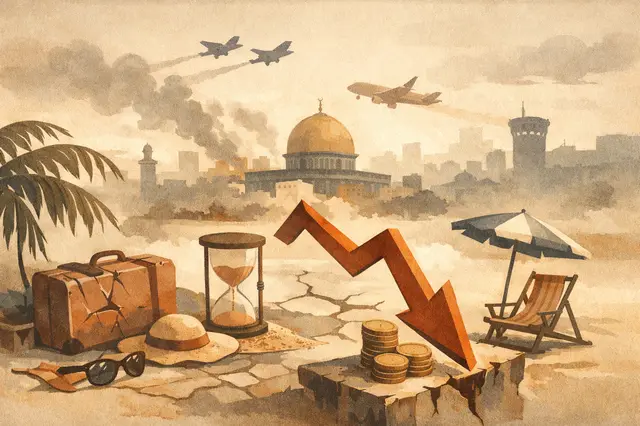
Despite a ceasefire in northern Israel, inbound tourism remains severely depressed, with no recovery in sight for the upcoming summer season. According to the Central Bureau of Statistics, only 64,400 tourists arrived in Israel in May 2026, a sharp decline from 126,800 in May 2025 and 115,000 in May 2024. Compared to May 2023, when 376,400 tourists visited, the drop represents an 83% decrease, severely impacting the tourism sector's economic contribution, which fell from $4.85 billion in 2023 to $2.1 billion in 2025.
Yossi Fatal, CEO of the Incoming Tour Operators Association, emphasized that inbound tourism is a strategic and vital sector for Israel, linking the country's global image directly to tourist numbers. He noted that 83% of tourists in 2025 expressed satisfaction and willingness to recommend Israel, indicating strong potential demand hindered by factors such as unstable flight schedules, a strong shekel against the dollar and euro, and poor international perception of safety.
Jerusalem and its surrounding areas, which attract over half of inbound tourists, mostly Christian pilgrims, have been hit hardest. The "Church of the Messiah" hostel recently closed due to lack of guests. Veteran tour guide Michal Granot described a near disappearance of Christian tours, worsened by the war with Iran and currency fluctuations that made trips prohibitively expensive.
The tourism industry also faces a severe labor shortage, with thousands of foreign workers needed, especially in hotels in Eilat. The government recently approved additional foreign worker permits, but the current quota remains insufficient, affecting service quality and prices.
Fatal is advocating for the creation of an independent tourism authority to coordinate efforts, improve Israel's image abroad, and address insurance companies' refusal to cover tourists visiting Israel. Although the government approved a 43 million shekel aid package in April 2026 to support key workers and marketing, the assistance is considered insufficient and delayed. Consequently, the tourism sector expects another weak summer season with low tourist arrivals.


