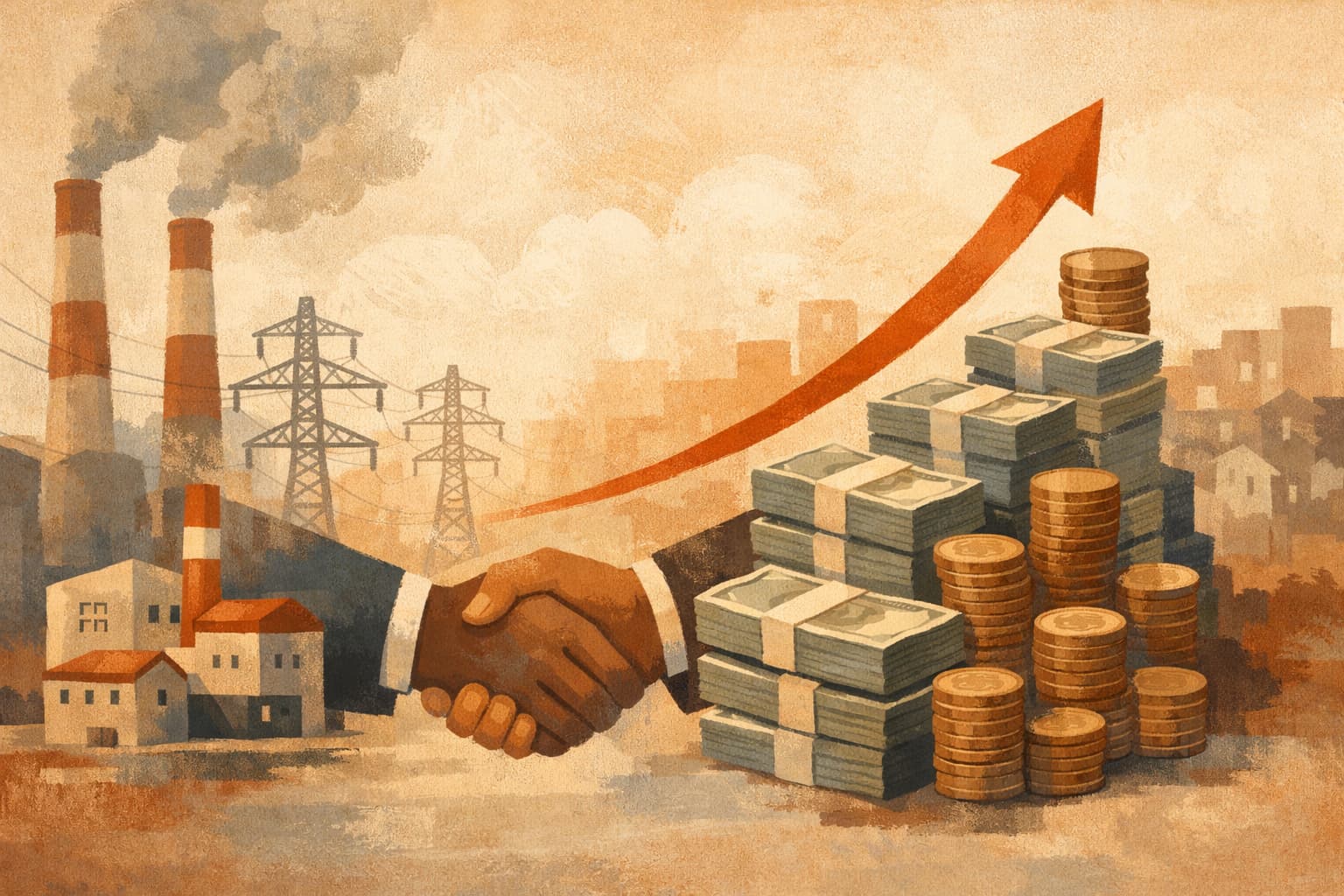
Privatization Boosts Profits of Israeli Private Electricity Producers by 4.6 Billion Shekels

A reform in Israel's electricity sector, initiated in 2018, transferred large parts of the Electric Company’s production segment to private producers. A new study by the Adva Center reveals that while this privatization has not significantly lowered electricity prices for consumers, it has substantially increased the revenues and profits of private electricity producers. The research estimates that between 2022 and 2024, private producers gained excess profits of approximately 4.6 billion shekels compared to a scenario where electricity pricing remained under the previous regulated mechanisms. This estimate is based on a comparative model and is not a regulatory finding.
Max Grobman, the study’s author, explains that the key change was not just the sale of public power plants to private entities but the shift from regulated tariffs to a competitive wholesale market managed by the Israel Electric Corporation’s system operator, Noga. Previously, electricity prices were mainly cost-based, but now private producers and the Electric Company compete in a wholesale market where prices are set by the last production unit needed to meet demand. These wholesale prices are ultimately passed on to consumers.
Contrary to expectations, the transition to competition did not sufficiently pressure prices downward. Instead, it created a concentrated market dominated by a few private players who control a significant portion of production capacity. By 2024, private producers held about 8.4 gigawatts of conventional capacity, up from 1.8 gigawatts a decade earlier. Their revenues from wholesale electricity sales rose from 1.54 billion shekels in 2016 to 7.16 billion shekels in 2024. The study attributes much of this growth to the new market model established around 2020, which involves 48 daily auctions for next-day electricity supply.
The study highlights that private producers often set prices above production costs, especially in the afternoon and evening when solar power declines and gas-fired plants are relied upon. Grobman notes that producers compensate for lost daytime solar market share by charging higher prices later in the day. Although the Electricity Authority has regulatory tools to address market power abuse, these are rarely enforced. The Authority previously estimated that price submission restrictions could save consumers about 400 million shekels annually, but the study suggests actual excess costs are much higher.
The report does not focus on the reform’s potential benefits, such as reducing the Electric Company’s monopoly, attracting private capital for new plants, and expanding production capacity without direct government investment. These issues are increasingly relevant given projected electricity demand growth driven by data centers, AI, electric vehicles, and population increases. Grobman emphasizes that the privatization era has shifted power dynamics in the electricity sector, making even moderate regulatory actions potentially threatening to investors and future development.
The Electricity Authority acknowledges vulnerabilities in the current pricing mechanism and is exploring new auction models and tighter price controls expected within weeks. They believe increasing the number of market players will enhance competition and reduce prices. Meanwhile, Neti Birnbaum, CEO of the Natural Gas Electricity Producers Forum, criticized the Adva Center report as populist and defended private producers’ higher profits as a result of greater efficiency rather than market failure.

