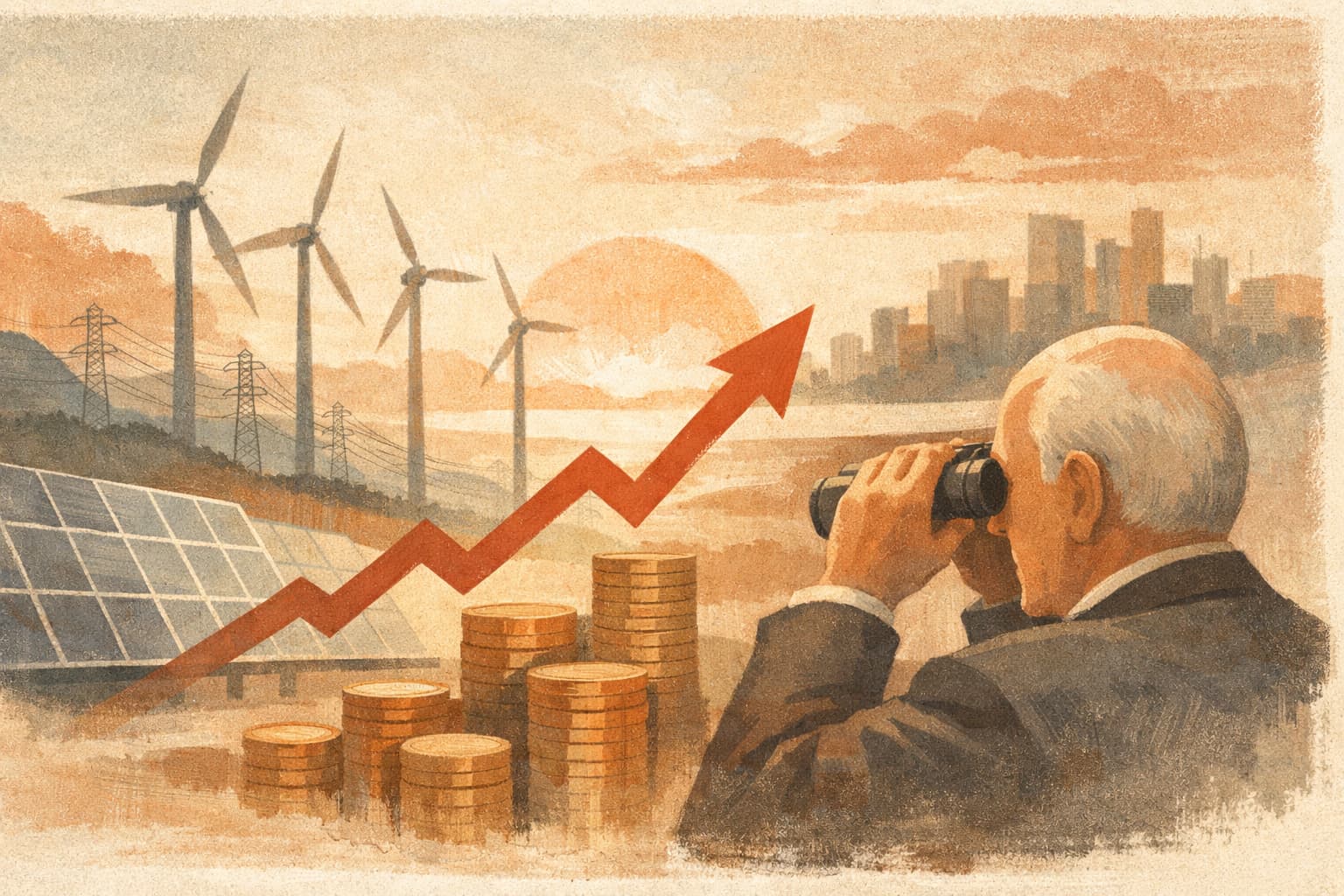
Energean Sets Ambitious Renewable Energy Growth Targets Backed by Aharon Frenkel

About a year and a half after Aharon Frenkel became the largest shareholder in Alony Hetz, the company’s subsidiary Energean has unveiled an ambitious strategic plan to quintuple its grid-connected renewable energy projects within five years and increase revenues and EBITDA by at least tenfold. Frenkel acquired a 16.3% stake in Alony Hetz in October 2024 and has since emphasized accelerating growth in renewable energy through Energean, which Alony Hetz owns 49.4% of. The market recognizes Energean’s significant growth drivers but recalls its past difficulties in meeting targets, making this plan a test of its ability to deliver.
Managed by CEO Asa Levinger, Energean aims to increase its connected capacity from 1.7 gigawatts (GW) in 2025 to 9 GW by 2030, alongside expanding energy storage from 500 megawatt-hours (MWh) to 7 gigawatt-hours (GWh). This would boost revenues from 762 million shekels in 2025 to an estimated 7.5 billion shekels by 2031, with EBITDA rising from 455 million to 6.2 billion shekels. The company operates in Israel, the US, Poland, and Lithuania, and plans to expand further in the US Midwest and Europe, including entering the data center sector using its land and grid connections.
Energean’s growth plan is divided into two phases: by the end of 2027, it targets 4 GW of connected projects and 2 GWh of storage, and by 2030, it aims to reach the final goals. Levinger expressed confidence, noting that the company already has 4.6 GW of ready projects and 3.2 GWh of storage, exceeding the 2027 target, with additional projects in earlier stages totaling 5.7 GW and 11.7 GWh. He highlighted competitive advantages such as purchase agreements with US panel manufacturer First Solar, which facilitate financing and project acquisitions.
However, some market participants remain cautious, citing Energean’s history of missing forecasts and the ambitious nature of the 2030 targets. The company previously postponed its 2026 target to 2027, which negatively affected its stock. Yet, others argue that Energean’s geographic expansion and acquisition strategy, along with Frenkel’s influence, provide a stronger foundation for sustainable growth. The key challenge ahead is convincing investors that this strategic plan is achievable and not merely aspirational.