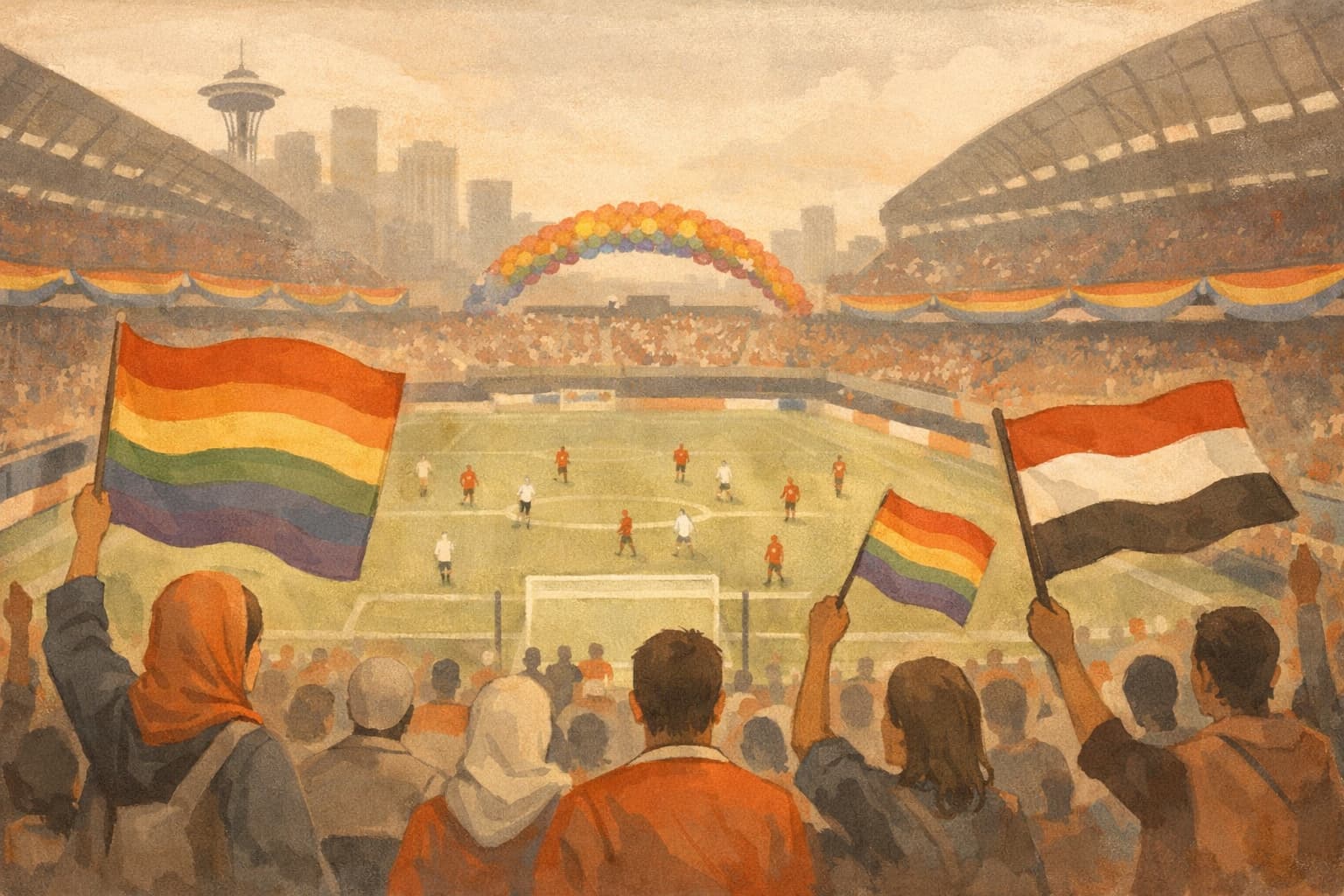
Seattle marks Iran-Egypt World Cup match with Pride flags despite objections

Pride flags were raised Saturday in the stands in Seattle for the decisive Iran-Egypt match in the final round of Group 7 at the 2026 World Cup, turning the game into an event far beyond soccer. Seattle had pre-designated the matchup as a “Pride game” and made it part of the local LGBTQ weekend celebrations, a decision that took on added weight after Iran and Egypt were drawn together, two countries where same-sex relations are restricted or banned by law.
Alongside regular fans, LGBTQ and human-rights supporters were prominent in the crowd. Some wore shirts reading “Love wins” in English, Arabic and Persian, while others carried anti-war messages. For many, the very existence of the Pride game made the night a social statement as much as a sporting event. City-run watch parties were held around Seattle, where Pride flags and scarves were handed out to the public.
Seattle, widely seen as one of the most LGBTQ-friendly cities in the United States, was the only World Cup host city to stage an official Pride event around a tournament match. Fans from around the world came to the stadium, including tourists who said they came specifically for the atmosphere. Nestor Medina from Mexico City said, “In football you can feel everything, love, anger and togetherness. That’s what makes the World Cup special.”
The stadium was filled with flags, scarves and rainbow-colored gear, alongside Iranian and Egyptian supporters. Some fans received Pride flags from local rights groups, and others carried signs promoting inclusion, diversity and respect. The match also highlighted political tensions around Iran’s team, with some Iranian supporters in Seattle saying their issue was not qualification alone but their relationship with Tehran’s government. Maryam, an Iranian-American protesting outside the stadium, said, “We are the voice of the Iranian people, not of the regime,” adding that she believes the team is “trying to promote the regime, even if the players do not say it openly.”
The same event, reported separately by each outlet. Open a few to compare what different newsrooms emphasize — and what they leave out.



Not the same event — other stories that share this one’s people, places, or theme: background, reactions, and follow-ups.