
Gazans Plan 'Day of Rage' Protests as War and Humanitarian Crisis Deepen
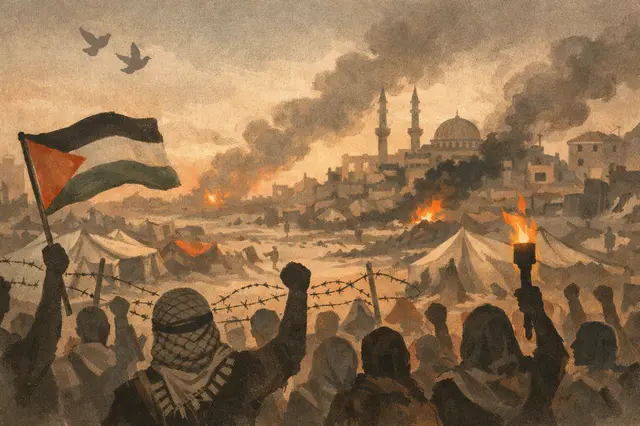
Protests are expected to begin in the Gaza Strip on Friday evening under names including "The 26 June Revolution" and "Day of Rage," driven by anger over the worsening humanitarian crisis, the ongoing fighting, and growing public frustration. Organizers present the demonstrations as a popular, peaceful protest against hunger, displacement, and destruction, saying that "the only weapon is the free voice, and only the Palestinian flag will be raised."
The calls have already triggered an internal political storm. Some of the organizers are activists associated with Fatah, including Hamza al-Masri and Mu'taz Azaiza, both based outside Gaza. Hamas and Palestinian Islamic Jihad view the initiative with deep suspicion, and figures aligned with the "resistance" camp argue it is an attempt to weaken the internal front during wartime and even serve Israeli interests. Commentator Mohammed Lafi urged that the protests not turn into an internal confrontation, but instead direct anger at Israel, calling for a popular front that reflects residents' pain while preserving national unity.
The "Council of Palestinian Scholars" also issued an unusually harsh statement, saying that calls to act against resistance groups during war are religiously forbidden and could "serve the enemy" and damage the resistance effort. It urged a distinction between legitimate criticism and incitement that could break internal unity. At the same time, voices from within Gaza say public anger is real. Mustafa Ibrahim wrote on X that the anger in Gaza's streets is "completely legitimate," while warning against steps whose consequences were not thought through. Another Gaza City resident, Abu Nail, said, "We said a thousand times that opposition to rule is not treason, and criticism of rule is not collaboration with the enemy."
Israel is also watching closely. Agriculture Minister and former Shin Bet chief Avi Dichter called on Gaza residents on Thursday to take to the streets against Hamas, a move that critics of the protests immediately used to question their motives. Palestinian analyst Mohammed Abu al-Kamar said Israeli media are promoting the demonstrations and giving them publicity, which has increased suspicion among many Palestinians. He said families and clans in Gaza will likely try to prevent internal escalation and preserve stability. Hamas politburo member Khaled Meshaal told the Algerian newspaper Al-Shorouk that the right to protest and express an opinion is a basic Palestinian right, and said Hamas' political leadership instructed that freedom of expression not be harmed. Even so, he stressed that the protests should be directed mainly at the "crimes of the occupation" and should not lead to internal conflict. Protests have occurred several times during the war, but most faded quickly after Hamas security and governing bodies moved to contain them, and no long-lasting mass movement has yet mounted a significant organized challenge to Hamas rule.
The same event, reported separately by each outlet. Open a few to compare what different newsrooms emphasize — and what they leave out.


Not the same event — other stories that share this one’s people, places, or theme: background, reactions, and follow-ups.



Ask About This Article
Duki reads it, and every newsroom on the same story, then answers with sources.